Omanghana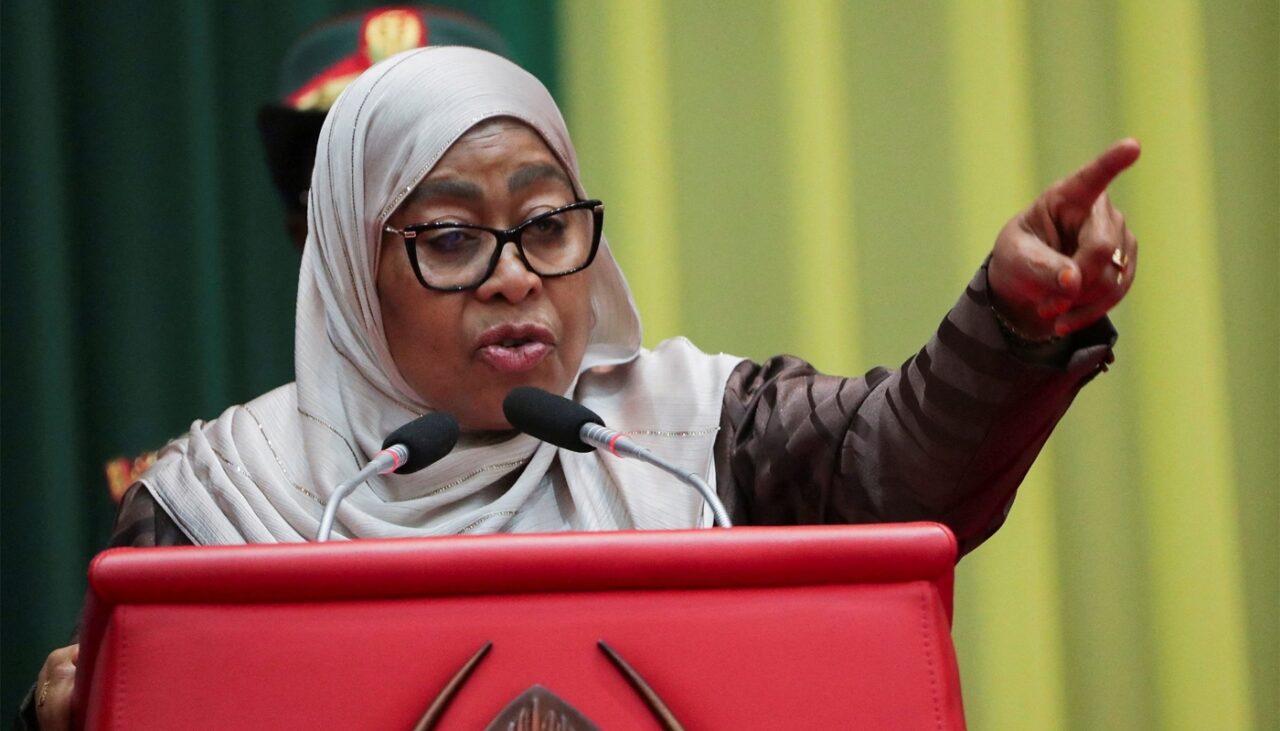
Tanzania is making one of the boldest infrastructure bets in Africa’s modern economic history, banking on the $10 billion to $11 billion Bagamoyo Port and Special Economic Zone (SEZ) project to reshape regional trade routes, attract billions in foreign investment, and challenge Kenya’s long-established position as East Africa’s primary maritime gateway.
After more than a decade of political disagreements, contract reviews, and negotiations, the ambitious project officially entered its construction phase in late 2025 and early 2026 under a revised public-private partnership framework. Tanzanian authorities view the coastal megaproject as a cornerstone of the country’s long-term strategy to become the region’s leading logistics, manufacturing, and trade hub.
One of the main drivers behind the Bagamoyo project is its unprecedented scale.
Tanzania’s current principal seaport, located in Dar es Salaam, has struggled with congestion, limited capacity, and costly delays. Bagamoyo is being developed as a next-generation deep-water port capable of handling the largest cargo vessels operating on global shipping routes.
Upon full completion, the port is expected to feature 28 berths and an annual handling capacity of approximately 20 million twenty-foot equivalent units (TEUs). That figure would be roughly twenty-five times greater than the current throughput of Dar es Salaam and significantly larger than facilities at the Port of Mombasa and the Lamu Port.
The scale of the project is specifically intended to position Tanzania as the preferred destination for ultra-large cargo ships serving East and Central Africa.
A major strategic objective of Bagamoyo is securing transit trade from some of Africa’s fastest-growing landlocked markets.
Countries including Uganda, Rwanda, Burundi, Zambia, Malawi, and the eastern regions of the Democratic Republic of the Congo rely heavily on neighboring coastal states to access global markets.
Tanzania aims to leverage Bagamoyo alongside major infrastructure projects such as the Standard Gauge Railway (SGR) expansion and the East African Crude Oil Pipeline to create a faster and more cost-efficient trade corridor. Officials believe the integrated transport network could offer a compelling alternative to Kenya’s long-established Northern Corridor, potentially redirecting a substantial share of regional cargo flows through Tanzanian territory.
The Bagamoyo project extends far beyond maritime infrastructure.
At the heart of the development is a 9,800-hectare Special Economic Zone designed to accommodate as many as 760 heavy and light manufacturing industries. The industrial park is intended to attract companies involved in processing, assembly, logistics, and export-oriented production.
The development has already generated significant investor interest, with approximately $1.5 billion reportedly allocated toward industrial investments as initial construction advances.
Rather than exporting raw materials in their unprocessed form, Tanzania hopes to establish coastal manufacturing and value-addition industries capable of transforming agricultural products, minerals, and other commodities before they enter global markets.
The Bagamoyo initiative comes at a time when Tanzania has been experiencing growing investor confidence.
Recent investment data indicates that Tanzania has attracted increasing levels of foreign direct investment, benefiting from government efforts to improve the business environment and attract international capital. Under the leadership of Samia Suluhu Hassan, the government has promoted regulatory reforms, political stability, and investor-friendly policies to position the country as a premier destination for global businesses.
International investment forums have become a key part of this strategy, with Tanzanian officials actively courting multinational infrastructure, logistics, and manufacturing firms. Major global operators, including Adani Ports and Africa Global Logistics (AGL), have been among the companies linked to discussions surrounding Tanzania’s expanding transport and logistics sector.
Tanzania’s coastline is increasingly becoming a focal point for international economic and strategic interests.
Chinese companies remain deeply involved in infrastructure development and mining ventures across the country, while major resource discoveries continue to attract foreign attention. Recent rare earth exploration projects in the Njombe region have further strengthened Tanzania’s position within global critical minerals supply chains.
Meanwhile, Russian logistics interests have expanded their presence in East Africa through new shipping connections designed to strengthen trade links with Tanzania. At the same time, leading African industrial investors are exploring opportunities in energy, refining, and manufacturing projects along the Tanzanian coast.
Among the figures frequently associated with Tanzania’s industrial ambitions is Aliko Dangote, whose conglomerate has been linked to discussions about large-scale energy and industrial investments in the region.
For Tanzania, Bagamoyo is far more than a port development project. It represents a strategic effort to convert the country’s geographic advantages into long-term economic power.
By combining world-class maritime infrastructure, extensive industrial zones, railway expansion, energy corridors, and aggressive investment promotion, Tanzania is attempting to reposition itself at the center of East Africa’s trade ecosystem.
If successfully completed and fully integrated with regional transport networks, Bagamoyo could fundamentally alter commercial flows across East and Central Africa, potentially transforming Tanzania from a regional competitor into one of the continent’s most influential logistics and manufacturing hubs.
Source: Omanghana