Omanghana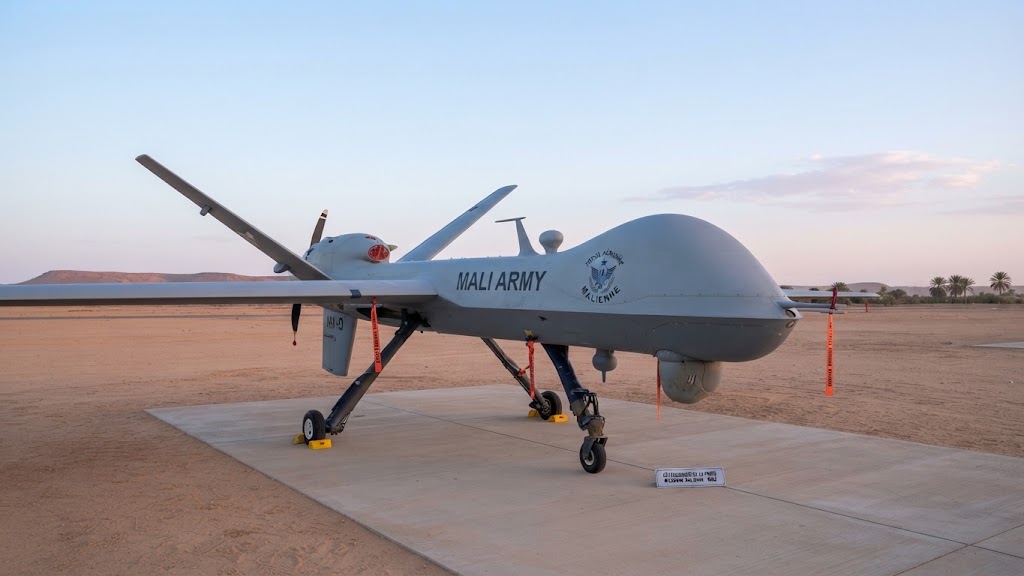
Human rights organisations are demanding investigations into a series of Malian military drone strikes that allegedly killed civilians, including infants and school-aged children, as the country intensifies operations against armed groups.
Witness accounts and rights investigations indicate that several attacks struck markets, residential compounds and other locations where civilians had gathered. The incidents have raised questions about target identification, precautions taken before attacks and the military’s compliance with international humanitarian law.
One of the documented attacks occurred on October 21, 2024, in Inadiatafane in Mali’s northern Timbuktu region. Amnesty International said at least eight civilians, including six children, were killed when multiple drone strikes hit a busy market. About 15 other people were injured.
Witnesses told the organisation that a drone had been circling above the market for hours before the attack. The first strike reportedly hit motorcycles beneath a metal shelter, while subsequent explosions struck vehicles belonging to traders.
Among those killed were infants and young children. Several seriously injured victims died while being transported to Timbuktu because of the distance to advanced medical care.
The Inadiatafane attack followed other reported strikes involving high numbers of child casualties. Amnesty said an operation in Amasrakadh in the Gao region on March 17, 2024, killed 13 civilians, including seven children.
Six days later, another strike in Douna reportedly killed 14 civilians, 11 of whom were children.
The Malian military has increasingly relied on armed drones as it battles fighters affiliated with al-Qaeda, the Islamic State group and Tuareg-led separatist movements. The remotely operated aircraft allow the military to monitor and strike locations across Mali’s vast and difficult terrain.
However, residents have described the constant presence of surveillance aircraft as psychologically distressing. Some witnesses said drones hovered above communities for long periods before releasing munitions, leaving families unsure whether they were being watched or targeted.
Mali’s military-led government has strengthened security cooperation with Russia since ordering French forces to leave the country. Russian personnel operating under the Africa Corps have supported Malian forces in their campaign against armed groups.
In a separate case, Human Rights Watch accused the Russia-linked force of carrying out an unlawfully indiscriminate airstrike in Kyrnia, in Mali’s Mopti region, on June 15, 2026.
The organisation said a Russian Sukhoi Su-24 aircraft dropped at least two munitions on the village, killing eight civilians, including three children. One explosion struck near the village chief’s home, while another hit a nearby cattle market.
Africa Corps said it had attacked a gathering place used by terrorists. Human Rights Watch, however, said its investigation found no evidence that fighters were killed and concluded that the attack did not appear to have been directed at a specific military objective. Reuters was unable to independently verify the incident, while Malian and Russian authorities did not respond to requests for comment.
International humanitarian law requires parties to a conflict to distinguish between civilians and combatants and to take all feasible precautions to minimise civilian harm. An attack that fails to distinguish between civilian and military targets may constitute a violation of the laws of war.
Amnesty International has called on Malian authorities to disclose the rules governing the military’s use of armed drones and investigate how targets are selected and approved.
Rights campaigners have also demanded independent investigations into attacks that caused civilian casualties, with those responsible held accountable where evidence of unlawful conduct is established.
The growing number of reported child deaths has intensified fears among communities already affected by armed violence, displacement and limited access to healthcare. Advocates warn that the continued use of aerial weapons without greater transparency and stronger civilian-protection measures risks deepening public mistrust and prolonging Mali’s humanitarian crisis.
Source: Omanghana