Omanghana
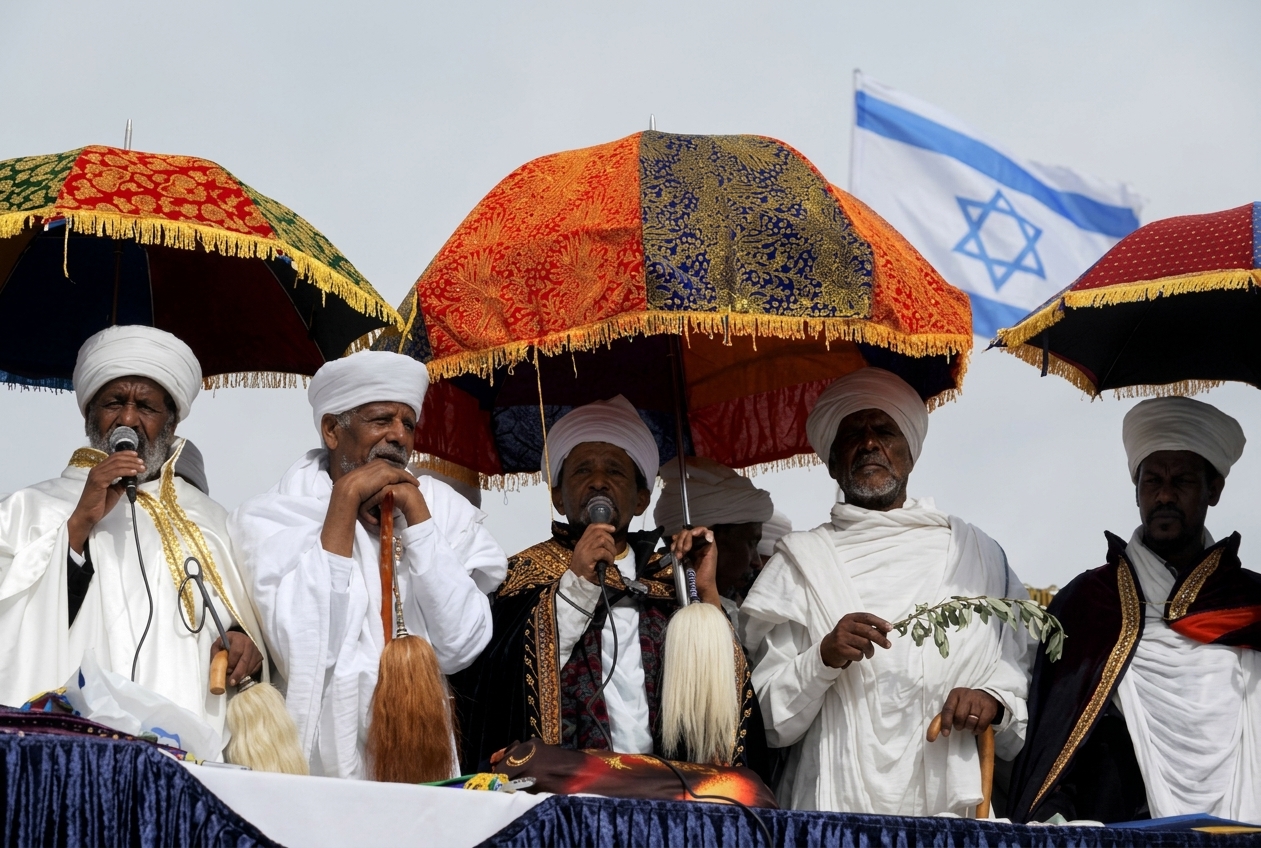
Thousands of Ethiopian Jews gathered in Jerusalem on Monday, November 9, 2026, to observe Sigd, a sacred holiday dedicated to prayer, reflection and the renewal of their covenant with God.
Families and community members assembled at the Armon Hanatziv promenade, overlooking Jerusalem’s Old City, for a ceremony that brought together faith, history and Ethiopian Jewish heritage.
Celebrated 50 days after Yom Kippur, Sigd has been observed for generations by the Beta Israel community. For Ethiopian Jews, the holiday has long represented both spiritual renewal and a longing for Jerusalem.
Prayers and cultural traditions
Ethiopian Jewish spiritual leaders, known as Kessim, led the ceremony in traditional attire beneath colorful ceremonial umbrellas.
The observance includes readings from the books of Exodus, Deuteronomy and Nehemiah, with prayers recited in Ge’ez, the ancient liturgical language of Ethiopian Jewry.
Many participants fast during the morning before breaking their fast later in the day. Families and community members also mark the occasion with traditional food, music and dancing.
From Ethiopia to Jerusalem
In Ethiopia, members of the community traditionally climbed mountains to fast and pray. The elevated setting reflected the religious significance of Mount Sinai and provided a place to express their hope of reaching Jerusalem.
Many Ethiopian Jews later travelled to Israel, including during Operation Solomon in 1991, when approximately 14,500 people were airlifted from Ethiopia in less than two days.
Today, Israel is home to an estimated 180,000 people of Ethiopian Jewish heritage. For many families, Sigd remains an opportunity to remember the journey of earlier generations and pass their traditions on to younger people.
Recognition and family reunification
Israel’s parliament, the Knesset, officially recognised Sigd as a national holiday in 2008, giving the observance a place in the country’s wider cultural calendar.
Despite the community’s progress, some families continue to seek reunification with relatives who remain in Ethiopia. Community members and advocates say administrative obstacles have delayed some immigration applications.
Kes Michael Maharat welcomed the progress made by Ethiopian Jews in Israel and expressed hope that those still waiting would eventually be able to join their families.
Source: Omanghana