Omanghana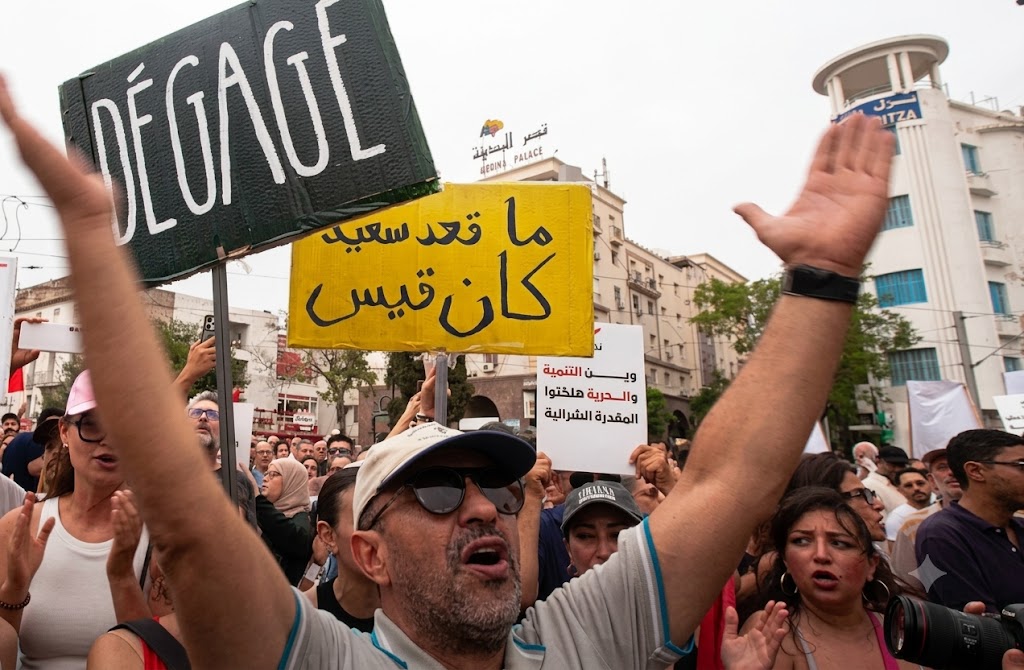
The demonstration marked five years since President Kais Saied seized emergency powers, as anger over political repression, economic hardship, power outages and water shortages intensified across Tunisia.
Thousands of Tunisians marched through the capital on Saturday, July 25, 2026, demanding the immediate resignation of President Kais Saied amid mounting frustration over his increasingly centralized rule and the country’s worsening economic and social conditions.
Organized by the opposition coalition Nafas, the demonstration coincided with the fifth anniversary of Saied’s July 25, 2021, decision to freeze parliament, dismiss the prime minister and assume sweeping executive authority.
Protesters filled Habib Bourguiba Avenue, the historic center of political demonstrations in Tunis, chanting slogans associated with the 2011 Arab Spring uprising. Among the most prominent was: “The people want the fall of the regime.”
The rally brought together opposition supporters, civil society activists, families of detained political figures and citizens angered by persistent shortages of electricity, water and essential goods.
Five Years of Centralized Rule
Saied’s supporters initially presented his 2021 intervention as a necessary response to political paralysis, corruption and deteriorating public services. However, opposition groups argue that the president used the crisis to dismantle Tunisia’s democratic institutions and concentrate power in the presidency.
Following the suspension of parliament, Saied began governing by decree and later introduced a new constitution that significantly expanded presidential authority. Critics say the changes weakened legislative oversight, reduced institutional checks and placed greater pressure on the judiciary.
The president’s opponents now describe Tunisia’s political system as one in which major state decisions are made with limited accountability or meaningful parliamentary scrutiny.
Saturday’s demonstration reflected growing dissatisfaction with that transformation. Protesters called for the restoration of democratic institutions, the release of political detainees and guarantees for judicial independence and press freedom.
Power and Water Cuts Fuel Public Anger
Although the march was primarily political, it also became an outlet for anger over the country’s deepening public-service crisis.
A severe heatwave has increased electricity demand, contributing to recurring power outages in Tunis and several other regions. Residents have also reported prolonged water cuts, sometimes during the hottest periods of the day.
The disruptions have affected homes, businesses and public institutions, adding to concerns about the government’s ability to maintain essential infrastructure.
For many demonstrators, the utility crisis symbolized the wider deterioration of state services. Protesters accused the government of focusing on political consolidation while failing to address the everyday challenges confronting ordinary citizens.
Small businesses have been particularly affected by the outages, with some reporting spoiled goods, interrupted production and additional operating costs. Water shortages have also created sanitation and health concerns in densely populated communities.
Economic Pressures Deepen
Tunisia’s prolonged economic difficulties were another major source of frustration during the protest.
Demonstrators denounced rising food prices, shortages of basic commodities and limited employment opportunities, particularly for university graduates. Food inflation has reportedly been running at approximately three times the country’s overall inflation rate, placing severe pressure on low- and middle-income households.
The rising cost of bread, cooking oil, dairy products and other essentials has forced many families to reduce their spending or rely on informal support networks.
Unemployment among young graduates also remains a persistent concern. Many young Tunisians say their academic qualifications have not translated into stable employment, contributing to growing disillusionment and renewed interest in migration.
The country’s public finance difficulties have been compounded by the government’s failure to finalize a financial support agreement with the International Monetary Fund. Saied has resisted proposed reforms that he argues could impose unacceptable hardship on Tunisians and threaten national sovereignty.
However, economists warn that the absence of an agreement has restricted Tunisia’s access to external financing and made it more difficult for the government to manage public debt, subsidize essential goods and fund critical services.
Protest Follows Abir Moussi’s Prison Sentence
The demonstration took place one day after a Tunisian court sentenced prominent opposition politician Abir Moussi to 12 years in prison.
Moussi, a vocal critic of Saied and leader of the Free Destourian Party, has become one of the most prominent opposition figures caught up in the government’s widening legal campaign against political opponents.
Protesters carried photographs of Moussi and other imprisoned politicians, journalists, lawyers and activists. Many demanded the immediate release of individuals they described as political prisoners.
Human rights organizations and opposition parties have accused the government of using the courts and security agencies to silence dissent. Some activists have described Tunisia as an “open-air prison,” arguing that fear of arrest has narrowed the space for political participation and free expression.
The government rejects those accusations, insisting that the judiciary operates independently and that those facing prosecution are being investigated for criminal or national security offenses rather than their political views.
Saied Defends His Policies
President Saied has repeatedly denied that Tunisia is experiencing democratic backsliding or authoritarian rule.
He maintains that his actions are part of a broader institutional reform project intended to dismantle corruption, restore the authority of the state and protect Tunisia from individuals he describes as internal conspirators and traitors.
Saied has also argued that the political system created after the 2011 revolution became dominated by self-serving parties that failed to improve living standards or deliver effective public services.
His supporters say the president remains committed to national sovereignty and is resisting pressure from political elites and foreign financial institutions. They also accuse sections of the opposition of attempting to destabilize the country and return Tunisia to the political dysfunction of previous years.
Opposition groups, however, argue that the president’s anti-corruption campaign has increasingly been used to justify the suppression of political competition.
Tunisia Faces a Critical Test
The July 25 demonstration highlighted the convergence of Tunisia’s political, economic and social crises.
Five years after Saied’s seizure of emergency powers, the country remains deeply divided. His supporters continue to view him as a reformer confronting a corrupt establishment, while opponents believe he has dismantled one of the Arab Spring’s most significant democratic achievements.
The growing combination of political detentions, economic stagnation, youth unemployment, food inflation and failing public services could place further pressure on the government in the coming months.
Whether the latest protest develops into a sustained nationwide movement remains uncertain. However, the large turnout in central Tunis showed that opposition to Saied’s leadership remains active despite arrests, prosecutions and restrictions on political organizing.
For many demonstrators, the message was unmistakable: Tunisia’s struggle is no longer solely about constitutional arrangements or party politics, but also about jobs, food, water, electricity and the ability of citizens to criticize their government without fear.
Source: Omanghana