Omanghana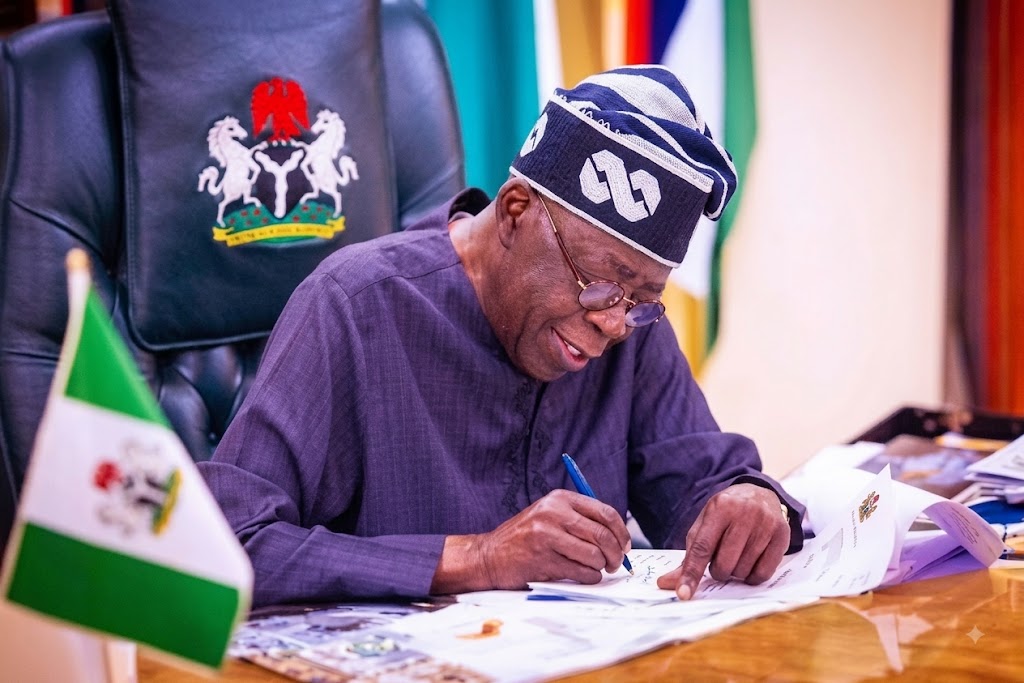
President Bola Tinubu has approved a major fiscal policy aimed at attracting as much as $50 billion in investment to Nigeria’s deepwater oil and gas industry.
The Deep Offshore Oil and Gas Projects Incentives (Tax Remission) Order, 2026, is intended to improve Nigeria’s competitiveness for global energy capital and revive large offshore developments that have remained stalled for years.
The new policy replaces the previous system of negotiating fiscal and commercial terms separately for each project. That approach was frequently criticized for creating uncertainty, prolonging negotiations and delaying final investment decisions.
Under the 2026 order, investors will instead operate within a standardized framework offering clearly defined tax incentives and eligibility requirements. The government expects the rules-based system to provide greater fiscal certainty and make it easier for companies to assess the commercial viability of deepwater projects.
Existing deep-offshore leaseholders must reach a final investment decision by December 31, 2029, to qualify for the order’s full standard incentives. The deadline is designed to encourage companies to move projects from planning into development more quickly.
Local content requirements form a central part of the policy. Companies seeking the incentives must maximize domestic project execution wherever doing so is technically and commercially feasible.
The requirement is expected to generate employment and create additional opportunities for Nigerian businesses involved in engineering, fabrication, marine logistics and other oilfield services. It is also intended to ensure that a larger proportion of offshore investment remains within the domestic economy.
Shell’s Bonga South West-Aparo development is expected to become the first major project to benefit from the new fiscal regime.
Estimated at approximately $10 billion, Bonga South West-Aparo is one of Nigeria’s largest undeveloped deepwater oil opportunities. The project has been considered for several years but repeatedly failed to reach a final investment decision amid regulatory and fiscal uncertainty.
The framework followed discussions between Tinubu and Shell Chief Executive Officer Wael Sawan on the measures required to unlock Nigeria’s pipeline of offshore energy projects.
The government’s wider $50 billion investment target is based on the potential development of 22 major offshore projects between 2026 and 2030. Advancing those projects could increase crude oil production, expand government revenue and strengthen Nigeria’s energy-service industry.
The shift toward deepwater production also carries a security advantage. Offshore facilities are generally less exposed to the pipeline vandalism, illegal connections and crude oil theft that have disrupted Nigeria’s onshore petroleum operations for decades.
The policy’s success will ultimately depend on consistent implementation, regulatory stability and investors’ willingness to commit capital before the 2029 deadline. If the targeted projects proceed, the initiative could produce one of the largest waves of investment in Nigeria’s petroleum industry in years.
Source: Omanghana