Omanghana
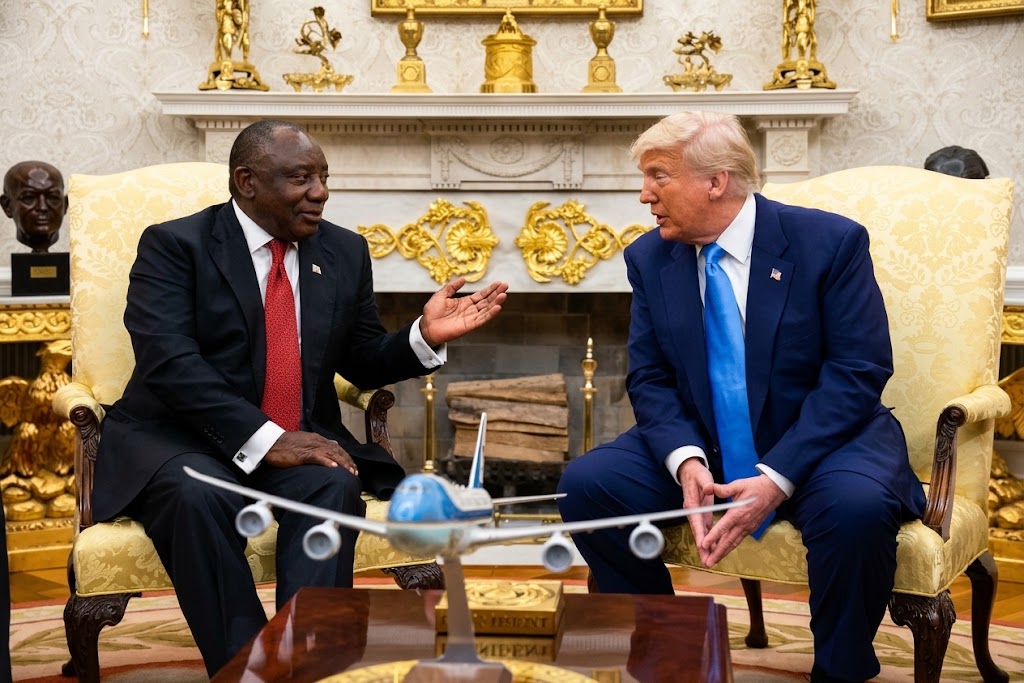
United States President Donald Trump has notified Congress of his intention to remove South Africa and Rwanda from the African Growth and Opportunity Act (AGOA), a trade progra that gives eligible African countries preferential access to the American market.
The planned removal is due to take effect on January 1, 2027, following an annual review of countries’ eligibility for the program.
US Trade Representative Jamieson Greer said the review found that both countries were engaging in practices inconsistent with AGOA’s requirements. He cited concerns about barriers to American trade and investment, as well as threats to US national security and foreign policy interests in the region.
AGOA, introduced in 2000, provides eligible sub-Saharan African countries with duty-free access to the US market for thousands of products. The program has been extended through December 2028, although countries remain subject to eligibility reviews.
US Cites Trade and Governance Concerns
The US Trade Representative’s office said its concerns about South Africa included barriers to American trade and investment, corruption, and issues affecting US national security and foreign policy interests.
For Rwanda, the administration also cited concerns about the rule of law, political pluralism, workers’ rights and human rights. Greer’s announcement did not identify specific incidents behind the national security concerns.
The decision comes amid strained relations between Washington and Pretoria. Trump has criticized South Africa’s land and affirmative action policies, alleging discrimination against white citizens. South Africa has rejected allegations that it persecutes white people.
Washington has also criticized South Africa’s foreign policy, including its case against Israel at the International Court of Justice. Israel denies the genocide allegations brought against it.
In Rwanda’s case, the announcement follows US sanctions imposed on the country’s Ministry of Defense over alleged support for the M23 rebel group in eastern Democratic Republic of Congo. Rwanda has denied backing the group.
What the Decision Means for Trade
Removal from AGOA would not stop either country from trading with the United States. It would, however, end AGOA preferences for qualifying goods, potentially increasing duties on some products. The tariff applied would depend on the product and any other applicable trade rules.
South Africa has been the program’s largest beneficiary. South African officials have estimated that the country exported about $1.7 billion worth of goods to the US under AGOA in 2025. A US Congressional Research Service report estimated the value at approximately $1.6 billion.
Products that could be affected include vehicles and automotive parts, as well as agricultural exports such as citrus and wine. South Africa’s trade ministry has said AGOA exports account for about 10% of the country’s exports to the US and roughly 1% of its global exports.
Rwanda’s trade with the US is smaller. US goods imports from Rwanda totaled $43.3 million in 2025; that figure covers all goods imports, not only those receiving AGOA benefits.
Rwanda had already lost AGOA duty-free benefits for clothing in 2018 following a dispute over its restrictions on imported used clothing. Other eligible Rwandan goods continued to benefit from the program.
South Africa Looks to Other Markets
South Africa’s trade ministry has said it will support affected sectors and continue pursuing trade and investment opportunities with the United States while expanding access to other markets.
Ahead of the announcement, Trade Minister Parks Tau said the government was prepared for either outcome and remained open to dialogue with Washington. He also pointed to South Africa’s Butterfly Strategy, which seeks to develop trade across Africa and with partners in Asia, Europe and the Americas.
President Cyril Ramaphosa had also said South Africa needed to prepare for the possibility of losing AGOA benefits by seeking new markets and strengthening trade relationships with other partners.
Source: Omanghana