Omanghana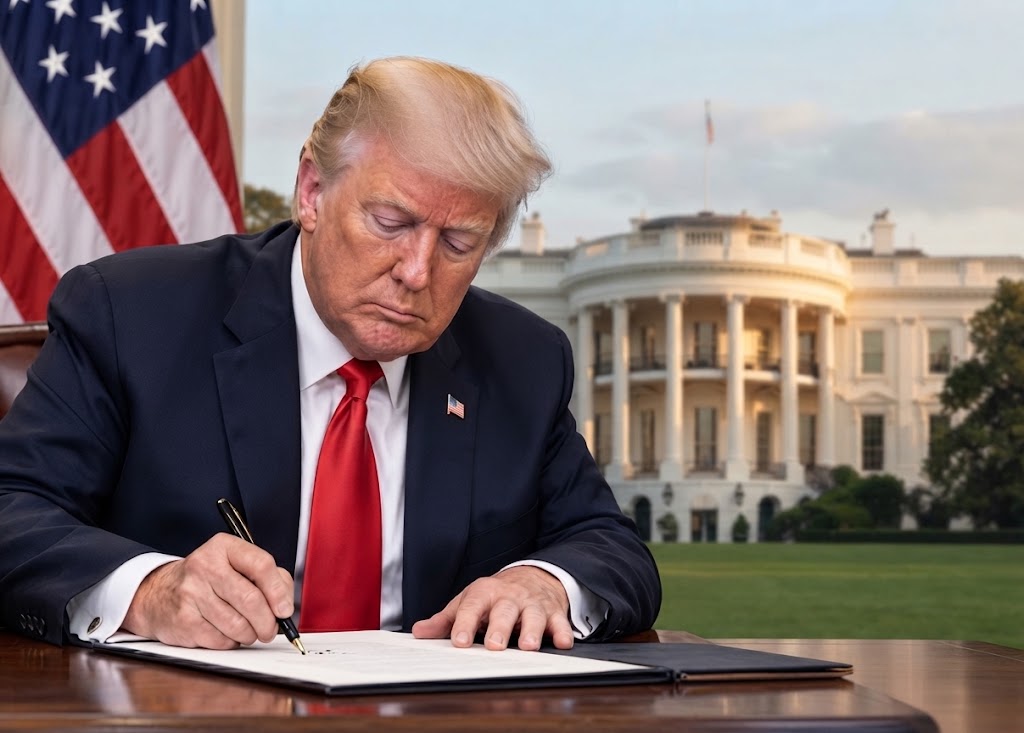
United States President Donald Trump has signed a sweeping sanctions law granting him authority to impose tariffs of up to 100% on countries that remain among the largest purchasers of Russian oil and natural gas.
The Lindsey O. Graham Sanctioning Russia and Iran Act of 2026 was signed on September 18 after receiving broad bipartisan support in Congress. It passed the Senate by 86 votes to 11 and the House of Representatives by 262 votes to 159.
The legislation seeks to reduce the energy revenue available to Moscow as it continues its war against Ukraine. It also introduces sanctions targeting Russian officials, financial institutions, defense interests and the “shadow fleet” of tankers used to transport oil while avoiding existing restrictions.
One of the law’s most consequential provisions allows the US president to impose additional tariffs on goods from the five largest importers of Russian oil or natural gas. China and India face the greatest exposure because they have become the leading buyers of Russian crude since Western countries reduced their purchases following Russia’s 2022 invasion of Ukraine.
The measure does not automatically impose a 100% tariff on all Chinese or Indian products. Instead, it gives the president authority to introduce duties of up to that level, depending on how the law is implemented.
The legislation includes exemptions and waiver provisions for countries that demonstrate meaningful efforts to reduce their dependence on Russian energy. This gives Washington room to adjust the tariffs based on negotiations, national-interest considerations and changes in a country’s purchasing patterns.
India and China could face difficult choices under the new framework because Russian crude has become an important part of their energy supplies. Reducing those purchases could require them to seek more expensive alternatives, while continued imports could expose their exports to heavy US tariffs.
Trade experts have warned that the measures could create uncertainty for global supply chains and increase costs for companies that depend on access to the American market.
The law also extends sanctions targeting Iran’s energy and weapons sectors. Civilian nuclear transactions and certain uranium-related imports are exempted, limiting potential disruption to the US nuclear-energy industry.
Supporters of the legislation say it will strengthen economic pressure on Russia and push Moscow towards serious peace negotiations. Critics have expressed concern that the expanded tariff authority could affect American consumers and businesses while creating new tensions with major trading partners.
Source: Omanghana