Omanghana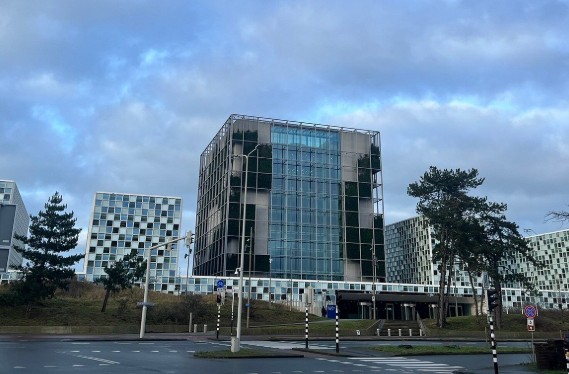
Two Ghanaian nationals have formally asked the International Criminal Court to open a preliminary examination into years of anti-migrant violence in South Africa, arguing that the pattern of attacks on foreign nationals is severe and sustained enough to qualify as crimes against humanity potentially.
The petition was filed with the ICC prosecutor’s office on July 15 by Palgrave Boakye-Danquah, a former Ghanaian government spokesperson on governance and security issues, and Emmanuel Kotin, a counter-terrorism and security analyst. It alleges a “widespread and systematic” campaign of violence against African migrants in South Africa stretching from 2015 through this year, encompassing killings, assaults, looting and forced displacement. The petitioners argue that South African authorities have consistently failed to prevent the attacks or hold perpetrators accountable, allowing what they describe as a cycle of impunity to continue.
Kotin told the Associated Press that the effort was a private initiative rather than an action by the Ghanaian government, framing it simply as a request for the court to look into the allegations. The petitioners have been careful to distinguish their complaint from an attack on South Africans broadly, describing South Africa as a “sister nation” and stressing that their motivation is accountability and the African concept of Ubuntu, a shared sense of humanity across the continent rather than antagonism toward its people.
In their submission, the two invoked the precedent of Liberian warlord-turned-president Charles Taylor, who was eventually held accountable at an international tribunal after his government failed to protect civilians, arguing that a similar standard should apply here. They contend that violence against migrants from Nigeria, Ghana, Zimbabwe, Mozambique, Malawi and elsewhere cannot be allowed to become normalized simply because it occurs between African nationals.
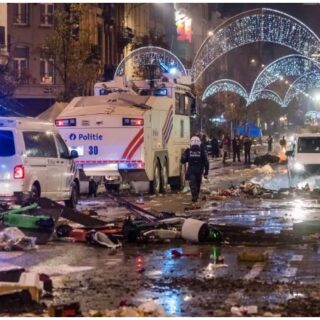
The complaint arrives after a fresh wave of anti-immigrant sentiment in South Africa, where protesters have blamed foreign nationals for high unemployment, crime and strain on public services. The unrest has been serious enough in recent months that Nigeria, Ghana and Malawi each moved to repatriate citizens and summoned South African diplomats over the violence. South Africa has in fact seen recurring outbreaks of anti-migrant unrest for close to two decades, a pattern human rights organizations have repeatedly flagged while pressing authorities to do more on prevention and prosecution.
The ICC has confirmed it received the communication, which the petitioners made public themselves, though receipt of a complaint does not obligate the court to open a formal investigation, under the Rome Statute, the prosecutor’s office independently assesses such submissions before deciding whether to proceed.
South Africa’s government has pushed back firmly. A Department of International Relations and Cooperation spokesperson described the petition as opportunistic and said the country retains full confidence in its own domestic legal system to handle such matters, according to South African outlet News24. President Cyril Ramaphosa has previously warned South Africans against using immigration grievances as cover for attacks on other African migrants, though his government has not directly addressed whether it will change its response to the recurring violence in light of the ICC petition.
It remains to be seen whether the prosecutor’s office will act on the complaint, a process that in past ICC cases has sometimes taken months or years before any decision on whether to open a full investigation.
Source: Omanghana/SP