Omanghana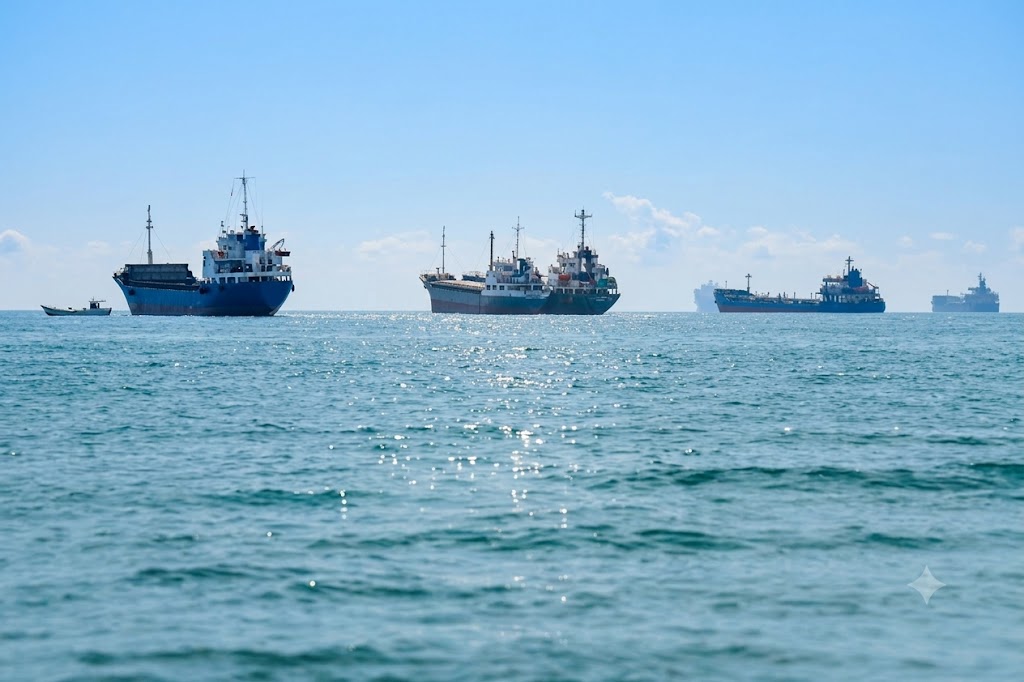
The United States military has carried out a large-scale wave of retaliatory airstrikes against more than 80 targets across Iran following attacks on three commercial vessels transiting the strategically vital Strait of Hormuz.
The operation, announced by U.S. Central Command (CENTCOM) on July 7, 2026, was described as a direct response to what Washington called Iranian aggression and a “clear violation of the ceasefire” agreement reached only weeks earlier.
The strikes mark a significant escalation in tensions and threaten to unravel the fragile truce that sought to end the conflict that began on February 28.
CENTCOM Targets Iran’s Military Infrastructure
According to CENTCOM, the operation was designed to weaken Iran’s ability to conduct future maritime attacks by targeting key military infrastructure along the country’s southern coastline.
The U.S. military said precision-guided munitions were used to strike more than 80 military sites, including:
- Air defense systems.
- Coastal radar installations.
- Command and control centers.
- Launch sites for anti-ship cruise missiles.
- Drone operating facilities.
CENTCOM stated that the strikes focused on degrading Iran’s capabilities to threaten commercial shipping and international maritime traffic in the Persian Gulf.
More Than 60 IRGC Fast-Attack Boats Reportedly Destroyed
The U.S. military also reported that the operation targeted naval assets belonging to Iran’s Islamic Revolutionary Guard Corps (IRGC).
According to CENTCOM, more than 60 IRGC fast-attack boats positioned near the Strait of Hormuz were destroyed or rendered inoperable during the strikes.
The vessels have long been viewed by the United States and its allies as a key component of Iran’s strategy for projecting military power in the Gulf and disrupting international shipping.
Explosions Reported Across Southern Iran
Iranian state media confirmed explosions in several southern coastal areas following the U.S. operation.
Reports indicated that blasts were heard in Bandar Abbas, Sirik, Qeshm Island, and the strategically important Kharg Island oil terminal.
Authorities also reported injuries caused by shrapnel, although official casualty figures had not been released.
The affected locations are among Iran’s most important maritime and energy hubs, playing central roles in the country’s shipping and oil export operations.
Tanker Attacks Triggered U.S. Response
The U.S. said the military action was prompted by missile and drone attacks targeting three commercial vessels navigating the Strait of Hormuz.
The ships included:
- M/T Al Rekayyat, a Marshall Islands-flagged liquefied natural gas tanker operating for Qatar.
- M/T Wedyan, a Saudi Arabia-flagged crude oil tanker.
- M/T Cyprus Prosperity, a Liberian-flagged merchant vessel.
Washington accused Iran of carrying out the attacks, describing them as an unacceptable threat to freedom of navigation and international commerce.
Many commercial vessels have increasingly relied on U.S. naval guidance while transiting the Omani side of the Strait of Hormuz, avoiding routes closer to Iranian territorial waters.
U.S. Tightens Economic Pressure
The military operation followed fresh economic measures announced by Washington.
Before the strikes, the U.S. Treasury Department revoked a 60-day sanctions waiver that had temporarily allowed Iran to sell oil on international markets using U.S. dollars.
Iran’s Foreign Ministry condemned the decision, arguing that it violated the Memorandum of Understanding (MoU) underpinning the recent ceasefire arrangements.
Oil Prices Rise as Markets React
The renewed conflict immediately affected global energy markets.
International oil prices surged following news of the strikes, with Brent crude rising approximately 5.5 percent to nearly $76 per barrel as investors reacted to fears of supply disruptions through one of the world’s most important shipping corridors.
The Strait of Hormuz carries a significant share of the world’s seaborne oil exports, making any military escalation in the region a major concern for global markets.
Peace Talks Stall Amid Renewed Conflict
The latest escalation has also disrupted diplomatic efforts aimed at ending the conflict.
Indirect negotiations being held in Qatar have reportedly stalled as tensions between Washington and Tehran intensified.
The renewed fighting comes during a sensitive period for Iran, whose leadership has been navigating political uncertainty following the death of former Supreme Leader Ayatollah Ali Khamenei earlier in the conflict.
Trump Addresses NATO Summit
Speaking during the NATO summit in Turkey, U.S. President Donald Trump defended the military operation, characterizing it as part of a broader “denuclearization operation.”
He also expressed frustration with several European allies, arguing that they had not provided sufficient support during the crisis.
With both military and diplomatic tensions rising, analysts warn that the latest developments could further destabilize the Middle East, disrupt global energy markets, and complicate efforts to restore the ceasefire that had briefly reduced hostilities.
Source: Omanghana