Omanghana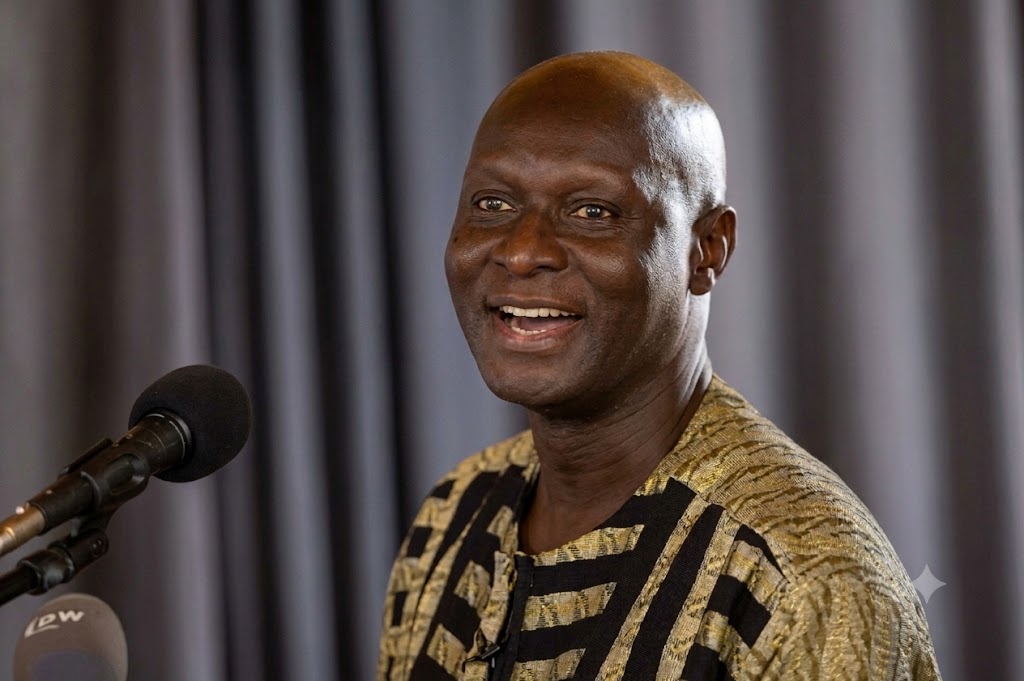
Veteran Ugandan diplomat and former opposition leader Olara Otunnu has officially joined the race to become the next Secretary-General of the United Nations.
Uganda formally submitted Otunnu’s nomination in a letter dated July 24, 2026, addressed to the presidents of the UN General Assembly and Security Council. His entry brings the number of declared candidates seeking the organization’s top position to seven.
The 75-year-old diplomat is seeking to succeed António Guterres, whose second five-year term ends on December 31, 2026. The next secretary-general will assume office on January 1, 2027.
Otunnu’s nomination adds an experienced African contender to a field that includes former presidents, senior diplomats and current leaders of international organizations.
Nomination marks political turnaround
The Ugandan government’s support represents a notable change in relations between Otunnu and the administration of President Yoweri Museveni.
Otunnu previously served as president of the Uganda People’s Congress and contested the country’s 2011 presidential election as an opposition candidate. During that period, he was a prominent critic of Museveni’s government and campaigned to end the president’s lengthy rule.
Kampala’s decision to nominate its former political rival is therefore being viewed as a significant act of political reconciliation and a demonstration of national support for a Ugandan seeking one of the world’s most influential diplomatic positions.
The endorsement could also strengthen Uganda’s international profile and give the country a more prominent role in discussions about the future of the UN.
Four decades of diplomatic experience
Otunnu brings extensive experience in diplomacy, international security and human-rights advocacy.
He served as Uganda’s Permanent Representative to the United Nations from 1980 to 1985 and later became the country’s foreign affairs minister. He also led the International Peace Academy before joining the UN’s senior leadership.
From 1997 to 2005, Otunnu served as UN Under-Secretary-General and Special Representative of the Secretary-General for Children and Armed Conflict.
In that role, he helped place the protection of children affected by war more firmly on the international agenda. His work contributed to the development of systems for identifying armed forces and groups accused of recruiting children or committing other grave violations against them.
Otunnu is also credited with helping introduce the anonymous straw-poll procedure used by the Security Council when assessing candidates for secretary-general during an earlier period of UN service.
At 75, he is the oldest candidate currently in the race.
Reform agenda outlined
Otunnu’s platform focuses on strengthening the UN’s ability to prevent and resolve conflicts while making the organization more efficient and responsive.
His proposals include reducing internal bureaucracy, improving decision-making and ensuring that UN resources are directed toward programs with measurable results.
He has also called for stronger international oversight of artificial intelligence. His campaign supports the creation of a global framework or institution capable of addressing the security, ethical and economic challenges created by rapidly developing AI technologies.
Climate policy is another major part of his agenda. Otunnu argues that environmental action should be aligned with the development needs of lower-income countries, particularly those in the Global South.
His position is expected to emphasize climate finance, economic growth and greater support for countries experiencing the most severe effects of climate change despite contributing relatively little to global emissions.
Seven candidates in the race
Otunnu joins six other declared candidates:
- Rafael Grossi of Argentina, Director-General of the International Atomic Energy Agency
- Michelle Bachelet of Chile, former president and former UN human-rights chief
- Rebeca Grynspan of Costa Rica, Secretary-General of the UN Conference on Trade and Development
- María Fernanda Espinosa of Ecuador, former president of the UN General Assembly
- Carolyn Rodrigues-Birkett of Guyana, former foreign affairs minister
- Macky Sall, former president of Senegal
The field could expand further before the Security Council makes its recommendation.
Latin America and the Caribbean are widely viewed as having a strong regional claim to the position under the UN’s informal rotation tradition. There is also growing pressure for the organization to appoint its first female secretary-general.
Africa has previously produced two UN secretaries-general: Egypt’s Boutros Boutros-Ghali and Ghana’s Kofi Annan.
How the UN leader will be selected
The Security Council will hold closed-door consultations and anonymous straw polls to assess the candidates.
To advance, a candidate must secure the support of at least nine of the council’s 15 members and avoid a veto from any of its five permanent members: China, France, Russia, the United Kingdom and the United States.
The council will eventually recommend one candidate to the 193-member General Assembly, which will make the formal appointment.
Although the General Assembly confirms the appointment, the decisive stage takes place in the Security Council because opposition from any permanent member can block a candidate.
Otunnu’s international experience and familiarity with the UN system could strengthen his campaign. However, his prospects will also depend on regional alliances, relations with the permanent members and whether African governments unite behind a single candidate.
The selection is expected to conclude later in 2026, allowing the successful candidate to prepare to take office at the beginning of 2027.
Source: Omanghana