Omanghana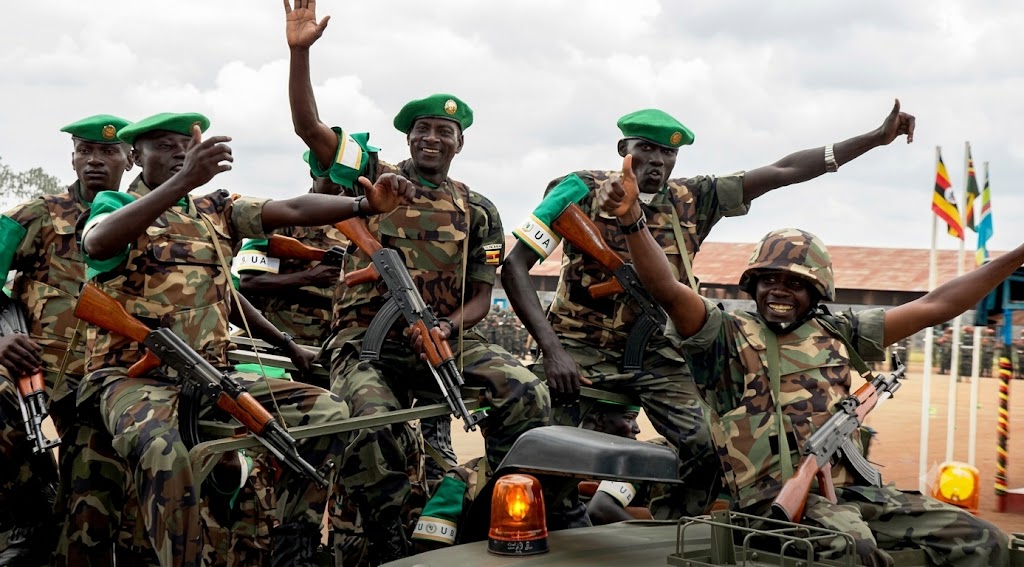
Uganda’s Parliament has approved the deployment of troops to the Gaza Strip as part of a proposed multinational security mission.
Lawmakers passed the motion on Thursday, August 6, 2026, marking Uganda’s first publicly announced commitment to a peacekeeping or peace-enforcement operation in the Middle East.
The parliamentary authorization reportedly followed a direct request from US President Donald Trump to Ugandan President Yoweri Museveni.
UPDF to Join International Stabilization Force
The Uganda People’s Defense Forces would serve within a proposed 20,000-member International Stabilization Force.
The mission was introduced in February by the Trump administration’s transitional “Board of Peace” and is expected to be commanded by US Major General Jasper Jeffers.
Under the proposed framework, Uganda would contribute personnel alongside countries including Morocco, Albania, Kosovo and Kazakhstan.
The size of the Ugandan contingent and the exact date of deployment have not yet been announced.
Mission to Protect Civilians and Aid Corridors
The force is expected to operate under United Nations Security Council Resolution 2803.
Its proposed responsibilities include maintaining order after a ceasefire, protecting civilians and securing humanitarian corridors used to deliver food, medicine and other essential supplies.
The force would also assist with demobilization efforts in parts of Gaza that are no longer under the direct control of the Israeli military.
Plans include establishing a base on the Israeli side of the border with the capacity to accommodate as many as 500 troops.
Uganda’s participation remains subject to the completion of a Status of Forces Agreement setting out the mission’s legal protections, responsibilities and operational arrangements.
Opposition Raises Neutrality Concerns
Although the ruling majority supported the motion, several opposition legislators questioned the risks associated with sending Ugandan troops into Gaza.
They warned that participation in the highly sensitive conflict could weaken Uganda’s diplomatic neutrality in the wider Israeli-Palestinian dispute.
Opposition lawmakers also raised concerns about the safety of UPDF personnel and the possibility of Uganda becoming involved in a mission without a clearly defined exit strategy.
Lawmakers Demand Transparency and Fair Compensation
Kampala Woman Member of Parliament Shamim Malende called on the Ministry of Defense to provide detailed information about the mission’s funding and operational arrangements.
While expressing support for international stability, she said Parliament must ensure that deployed soldiers receive adequate compensation, appropriate protection and fair treatment.
Lawmakers also requested clarity about who would finance the operation and whether Uganda would bear any direct costs.
Defense Minister Defends Deployment
Defense and Veteran Affairs Minister Kiryowa Kiwanuka defended the decision by pointing to the UPDF’s experience in regional peace and stabilization missions.
He cited Uganda’s military involvement in Somalia, South Sudan and the Democratic Republic of the Congo as evidence that its forces possess the experience required for complex international operations.
The minister maintained that Uganda could contribute meaningfully to efforts aimed at restoring security and supporting humanitarian operations in Gaza.
Deployment Remains Uncertain
Despite Parliament’s approval, the mission has not been given a confirmed launch date.
The stabilization force is expected to become operational after a phased withdrawal of Israeli troops. However, the broader post-war arrangement has faced delays because of unresolved security and political disagreements.
Israel has continued to raise concerns about the proposed disarmament of militant groups and the security conditions required for reducing its military presence.
Until those issues are resolved and the necessary international agreements are finalized, it remains unclear when Ugandan troops will be deployed.
Source: Omanghana