Omanghana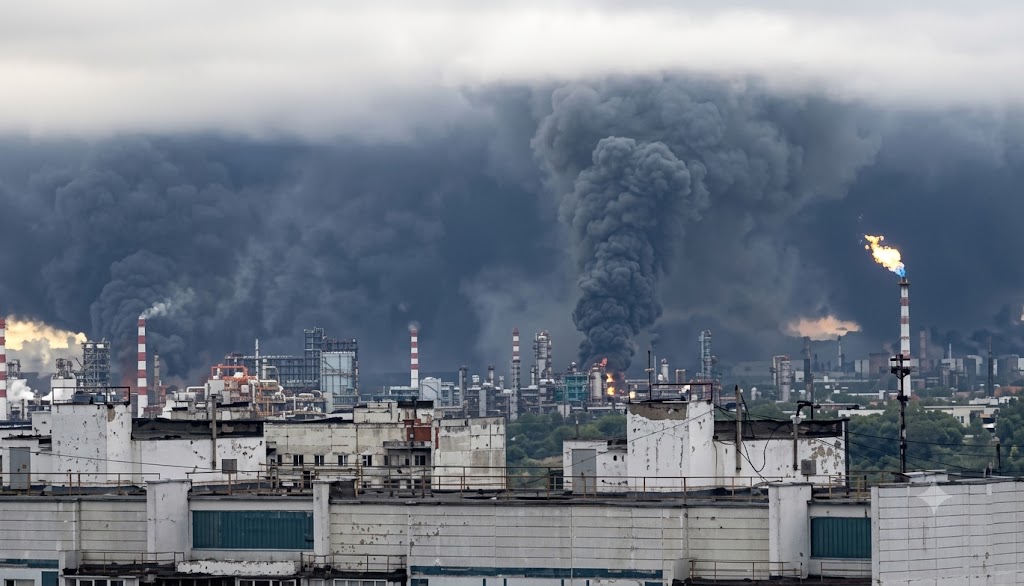
Persistent Ukrainian drone attacks on key energy infrastructure are reportedly placing growing pressure on Russia’s fuel supply network, prompting emergency government measures to stabilize distribution and maintain deliveries in several regions, including the capital, Moscow.
The disruption has been particularly severe following strikes targeting the Kapotnya oil refinery, one of the country’s most strategically important fuel-processing facilities. The refinery is estimated to provide around 40% of Moscow’s fuel supply, making any prolonged outage a significant challenge for the city’s transportation and logistics sectors.
Emergency Measures Introduced
In response to tightening fuel supplies, Russian authorities have reportedly implemented emergency rationing measures while easing restrictions on the movement of tanker trucks in an effort to accelerate deliveries to affected regions.
The temporary policy changes are designed to improve fuel distribution and prevent further shortages as officials seek alternative supply routes and increase imports from other domestic refineries.
Motorists in some areas have reportedly encountered long queues at filling stations, while businesses dependent on diesel and gasoline supplies are monitoring the situation closely amid concerns over potential disruptions to transport and commercial operations.
Kapotnya Refinery Damage Raises Long-Term Concerns
Industry analysts believe the damage sustained by the Kapotnya refinery could have lasting consequences for Russia’s fuel market.
Some experts estimate that repairs and restoration efforts may take an extended period, with forecasts suggesting the facility may not return to full operational capacity until 2027. If that timeline proves accurate, authorities could face continued pressure to rebalance fuel production and distribution across the country.
The refinery’s importance to Moscow’s energy network means that prolonged downtime may require increased reliance on fuel shipments from other regions, potentially raising transportation costs and creating logistical challenges.
Impact on Consumers and Businesses
Reports of fuel shortages have fueled concerns among consumers, with queues forming at some service stations as motorists seek to secure supplies. Businesses involved in freight transport, agriculture, and construction could also face higher operating costs if shortages persist or distribution becomes more constrained.
Government efforts to prioritize deliveries to essential sectors are expected to play a key role in minimizing the economic impact, although analysts warn that prolonged infrastructure disruptions could continue to strain domestic fuel markets.
Energy Infrastructure Remains a Strategic Target
Since the escalation of the conflict between Russia and Ukraine, energy facilities have increasingly become targets for long-range drone operations. Refineries, storage depots, and logistics hubs have all been affected at various points, highlighting the vulnerability of critical infrastructure far from the front lines.
The latest disruption underscores how attacks on refining capacity can have ripple effects beyond military objectives, affecting civilian transportation networks, industrial production, and day-to-day economic activity.
As repairs continue and emergency measures remain in place, Russian authorities will likely focus on maintaining stable fuel supplies while strengthening protections for key energy assets against future attacks.
Source: Omanghana