Omanghana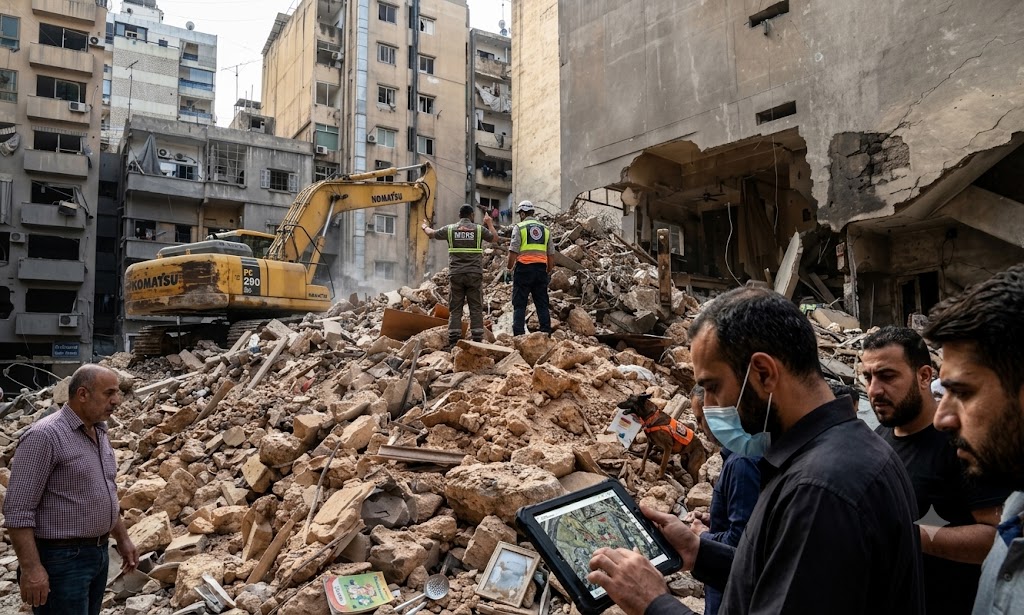
United Nations High Commissioner for Human Rights Volker Türk has warned that violations committed during Israeli military operations in Lebanon may amount to war crimes and, under certain circumstances, other crimes under international law.
Speaking at the conclusion of an official visit to Beirut on July 27, 2026, Türk said his office had documented large-scale violations of international humanitarian law since fighting between Israel and Hezbollah sharply escalated on March 2.
He described the destruction and suffering he witnessed in Lebanon as devastating, citing continuing airstrikes, shelling, ground operations and the use of explosive weapons in densely populated areas.
“My office has recorded large-scale violations of international humanitarian law, some possibly amounting to war crimes,” Türk said. “Under certain circumstances, they may also constitute crimes under international law.”
The warning does not represent a final judicial determination. War-crime findings can only be made after an investigation establishes the facts, identifies those responsible and assesses their conduct under the applicable law.
More Than 4,300 People Killed
According to figures provided by Lebanese authorities and cited by Türk, more than 4,300 people have been killed and approximately 12,200 injured since the latest escalation began.
More than one million people—roughly one-fifth of Lebanon’s population—have been displaced. Many families have fled more than once after attempted returns were prevented by renewed attacks, military restrictions or the destruction of their communities.
During his visit, Türk met displaced civilians at a school converted into a shelter for approximately 1,000 people. Some residents told him they had recently tried to return to southern Lebanon but discovered that their villages had been destroyed or rendered uninhabitable.
The humanitarian emergency has placed additional pressure on a country already struggling with a prolonged economic crisis, damaged public institutions and limited capacity to provide housing, healthcare, water and electricity.
Food insecurity has also worsened. UN estimates indicate that about 1.24 million people could face crisis or emergency levels of food insecurity through August.
Health System Sustains Heavy Damage
Lebanon’s healthcare system has suffered repeated attacks and operational disruptions during the conflict.
More than 135 healthcare workers have been killed, while numerous others have been injured. World Health Organization figures previously documented more than 200 attacks affecting healthcare services, including hospitals, ambulances and medical personnel.
At least 17 hospitals have reportedly sustained damage, while several hospitals and dozens of primary healthcare centers have been forced to suspend operations.
The deaths and damage have reduced access to emergency surgery, maternity care, treatment for chronic illnesses and other essential services at a time when mass casualties have increased demand.
Journalists and media workers have also been killed while reporting on the fighting, raising further concerns about the protection of civilians performing professional duties in conflict zones.
Hospitals, ambulances and medical personnel are granted special protection under international humanitarian law. They may lose that protection only under narrowly defined circumstances, such as when a facility is being used outside its humanitarian function to commit acts harmful to an opposing force. Even then, warning and proportionality requirements generally continue to apply.
Israel has previously accused Hezbollah of using civilian and medical infrastructure for military purposes. Lebanese health officials and human-rights organizations have disputed several of those allegations and called for independent investigations.
Villages and Essential Infrastructure Destroyed
Türk said entire villages south of the Litani River had been razed or left uninhabitable.
Homes, schools, medical facilities, water-distribution systems, electricity infrastructure, places of worship and agricultural land have been destroyed or severely damaged.
Israeli forces also continue to control parts of southern Lebanon, preventing many displaced residents from returning to their communities.
Türk warned that military conduct resulting in large-scale displacement and the continued denial of civilian returns could, depending on the evidence and circumstances, constitute international crimes.
Forced displacement is prohibited under international humanitarian law unless the temporary evacuation of civilians is required for their safety or demanded by an imperative military necessity. Civilians must be permitted to return once the conditions requiring their evacuation no longer exist.
Broad evacuation orders do not remove an attacking force’s obligation to distinguish between civilians and combatants. People who cannot or choose not to evacuate remain protected civilians unless they directly participate in hostilities.
Concerns Over Heavy Weapons in Urban Areas
The UN Human Rights Office has raised concerns about possible failures to observe the core principles of distinction, proportionality and precaution.
The principle of distinction requires parties to direct attacks only against military objectives and combatants. Indiscriminate attacks that cannot distinguish between civilian and military targets are prohibited.
Proportionality prohibits an attack when the expected civilian harm would be excessive compared with the concrete and direct military advantage anticipated.
The obligation to take precautions requires military forces to verify targets, select methods that reduce civilian harm and provide effective warnings when circumstances permit.
Türk said Israel’s continued use of explosive weapons in densely populated areas had caused immense civilian casualties, destruction and displacement. Heavy munitions with wide-area effects present particularly serious risks when used near homes, hospitals, schools and essential infrastructure.
The similarity between some of the destruction documented in Lebanon and patterns previously reported in Gaza has intensified demands for international scrutiny.
Ceasefire Announcements Fail to End Fighting
An initial cessation of hostilities was announced on April 17, followed by several rounds of negotiations aimed at containing the conflict.
Despite those efforts, Israeli airstrikes and ground operations have continued. Hezbollah has also launched rockets into populated areas of Israel, causing civilian casualties and damaging civilian infrastructure.
International humanitarian law applies equally to every party in an armed conflict, regardless of the reasons offered for military action or allegations that an opponent violated the law first.
Türk called on Hezbollah and all other parties to stop attacks affecting civilians and comply with their legal obligations.
UN Mission Collecting Evidence
An impartial and independent assessment mission from the UN Human Rights Office is already operating in Lebanon.
The mission was announced in June following an agreement with the Lebanese government. Its investigators are collecting information and evidence concerning alleged violations of international human rights law and international humanitarian law committed by all parties since March 2.
The team’s work is expected to include examining individual attacks, identifying broader operational patterns and preserving evidence that could support future accountability proceedings.
However, the mission is an assessment body rather than a criminal court. It does not have the same powers as an international commission of inquiry or judicial institution to compel testimony, issue arrest warrants or prosecute suspects.
Türk emphasized that credible and independent investigations remain essential to determining responsibility and delivering justice to victims.
He also warned against allowing political negotiations or ceasefire arrangements to prevent accountability for serious violations. Sustainable peace, he argued, cannot be built by ignoring the rights of victims or granting blanket protection to those responsible for international crimes.
Pressure for a Durable Settlement
The continuing hostilities have complicated efforts to restore Lebanese state authority in the south, secure Israel’s withdrawal and address the future of Hezbollah’s weapons.
Lebanon’s government has reaffirmed its support for a diplomatic framework intended to end the fighting, deploy national forces across the south and enable displaced civilians to return safely.
Türk stressed that reconstruction must go beyond rebuilding roads, homes and public facilities. He said Lebanon must also strengthen its institutions, restore public trust and ensure that all communities are treated with dignity.
The UN rights chief called for full respect for Lebanon’s sovereignty and territorial integrity, stronger civilian protection and accountability for violations committed by every party to the conflict.
His warning underscores the growing international concern that continued attacks, prolonged displacement and widespread destruction could deepen Lebanon’s humanitarian crisis long after the fighting ends.
Source: Omanghana