Omanghana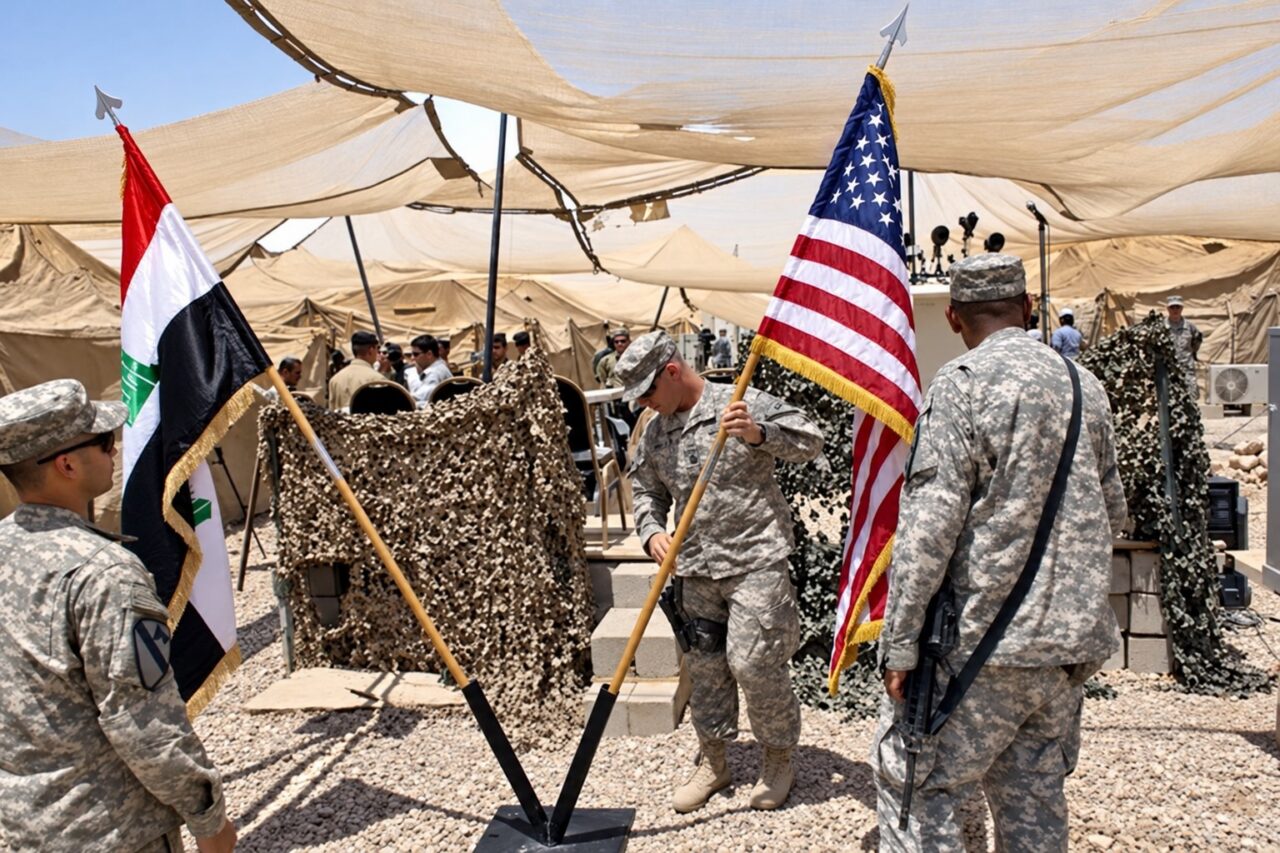
The United States is completing the withdrawal of its remaining military personnel from Iraq, bringing an end to an extensive military presence that began with the 2003 invasion that removed Saddam Hussein from power.
Under a phased agreement between Washington and Baghdad, all remaining American and coalition forces are expected to leave Iraq by September 30, 2026.
The withdrawal concludes the US-led coalition’s military mission against the Islamic State group inside Iraq and transfers primary responsibility for domestic security and counterterrorism operations to Iraqi forces.
American troops have spent years training, advising and supporting Iraqi security personnel following the territorial defeat of IS. Although the extremist group continues to operate through scattered cells, Iraqi authorities are now expected to lead operations against its remaining networks.
The United States had about 2,500 troops in Iraq in recent years, a sharp reduction from the more than 170,000 deployed at the height of the war in 2007.
US forces initially withdrew in 2011 but returned in 2014 at the invitation of the Iraqi government after the Islamic State seized large parts of Iraq and neighboring Syria.
In January 2026, Iraqi forces assumed full control of Ain al-Asad Airbase in western Iraq following the departure of US personnel. Remaining American forces were largely concentrated in the Kurdish region as the final phase of the agreement was implemented.
The departure marks a significant transition in relations between Washington and Baghdad. Rather than maintaining a permanent troop presence, the two governments are expected to focus on conventional diplomatic, economic, energy and security cooperation.
American businesses will continue operating in Iraq, while future defense engagement may include arms sales, intelligence sharing and other forms of non-permanent military cooperation requested by Baghdad.
The withdrawal also raises questions about Iraq’s ability to manage security threats independently, particularly from IS remnants and armed groups operating outside full government control.
Iran-backed militias have frequently cited the presence of American troops as justification for retaining their weapons. Several powerful groups, however, have signaled that they may not disarm following the US departure.
Iraq’s Kurdish region has also raised concerns about potential security vulnerabilities after the removal of American personnel and air-defense systems.
Despite those challenges, the Iraqi government says its security forces are capable of protecting the country and leading counterterrorism operations without foreign troops stationed on its territory.
The final withdrawal closes a major chapter in modern US and Middle Eastern history, more than 23 years after the invasion that reshaped Iraq and the wider region.
Source: Omanghana