Omanghana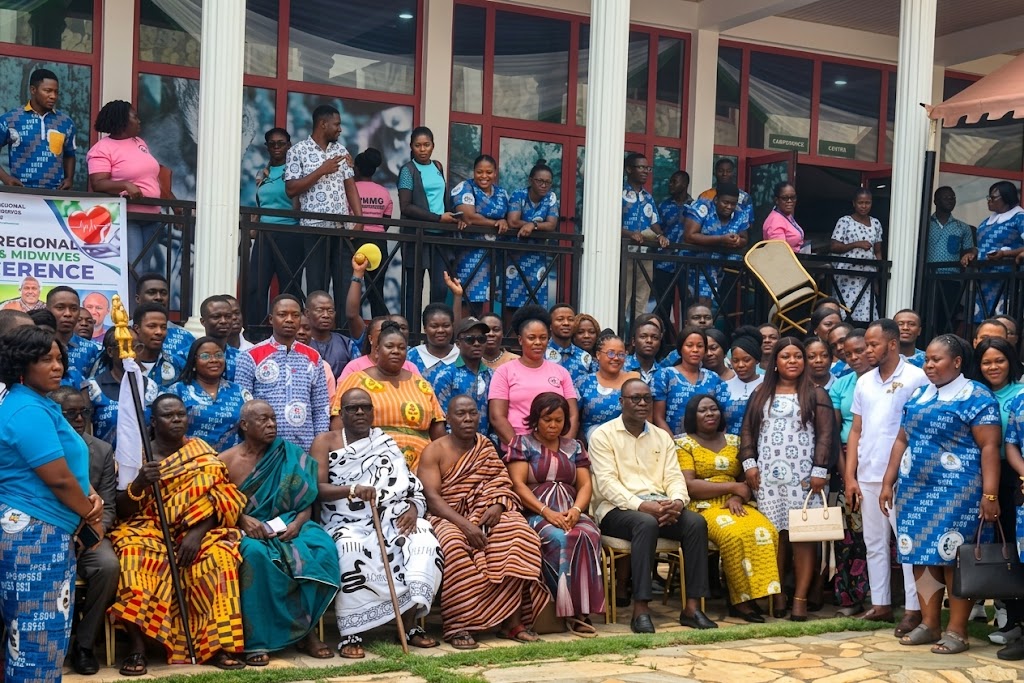
The National President of the Union of Professional Nurses and Midwives, Ghana, Maxwell Oduro Yeboah, has called on the government and health sector employers to fully implement negotiated conditions of service to help curb the growing migration of nurses and midwives.
Speaking at the Volta Regional Nurses and Midwives Conference in Ho, Oduro Yeboah warned that repeated delays in fulfilling agreed employment packages were weakening trust, reducing morale and encouraging more health professionals to seek opportunities abroad.
The conference was held under the theme, “Forging a Healthy Employer-Employee Relationship for Optimum Productivity and Job Satisfaction – A Shared Responsibility.”
According to the UPNMG president, negotiated agreements must produce tangible improvements in the lives of workers and should not be treated as documents that can be repeatedly ignored or postponed.
“It is not the document that dies; it is the trust. And when trust dies, we all bury it,” he said, stressing that asking unions to wait month after month undermines confidence between employers and employees.
Oduro Yeboah argued that a productive health workforce depends heavily on fair compensation, professional respect and adequate working conditions. Using a popular analogy, he told employers: “If you want the hen to continue laying eggs, you must feed the hen.”
He explained that the quality of healthcare available to the public is directly connected to how well nurses, midwives and other professionals are supported. Expecting workers to deliver excellent services without proper motivation, equipment and remuneration, he said, was neither realistic nor sustainable.
The union leader also rejected suggestions that nurses and midwives leaving Ghana lacked patriotism. He maintained that many professionals were relocating because they wanted to work in environments where their contributions would be fairly rewarded and respected.
According to him, health workers are increasingly forced to choose between remaining in the country under difficult conditions and moving abroad to secure improved salaries, better career opportunities and greater job satisfaction.
Despite the challenges, Oduro Yeboah commended nurses and midwives working across the Volta Region for their resilience and commitment to patient care.
He highlighted progress in maternal healthcare, postnatal services and emergency care, noting that these gains had been achieved despite staffing shortages and serious logistical constraints.
Ghana’s health sector has faced growing pressure from the migration of experienced medical professionals to countries such as the United Kingdom, the United States and Canada. Poor remuneration, workplace burnout, limited equipment and delays in posting newly trained professionals have frequently been cited among the factors driving the trend.
The continued departure of experienced nurses and midwives risks placing additional pressure on those who remain, particularly in rural and underserved communities where staffing levels are already inadequate.
UPNMG has consequently intensified its demand for long-term measures to retain essential healthcare professionals. Its proposals include faster postings for qualified personnel, competitive salaries, rural incentive packages and duty waivers on vehicles imported by medical workers.
The union believes that implementing these measures, together with negotiated conditions of service, would help restore employee confidence and strengthen Ghana’s healthcare delivery system.
Oduro Yeboah urged both employers and employees to embrace dialogue, mutual respect and accountability, warning that Ghana cannot build a resilient healthcare system without protecting and motivating the professionals responsible for delivering essential services.
Source: Omanghana