Omanghana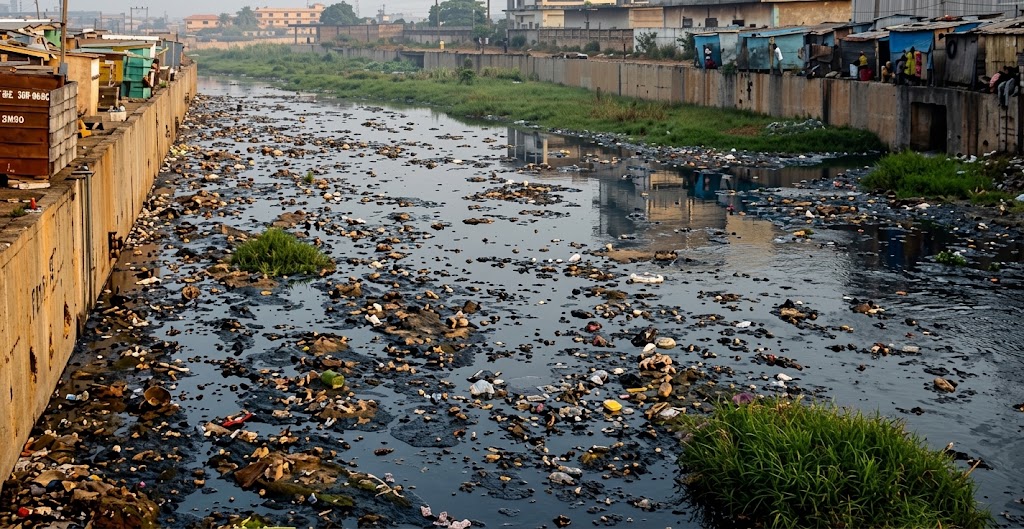
Associate Professor Isaac Arthur, Director of the Centre for Urban Management Studies at the University of Ghana, has urged the government to conduct comprehensive planning and engineering studies before proceeding with the proposed redevelopment of the Korle Lagoon enclave.
Prof. Arthur said rehabilitating the environmentally degraded area was necessary but warned that a rushed housing project could create additional environmental, safety and urban-planning challenges.
His caution follows an announcement by the Minister for Local Government, Chieftaincy and Religious Affairs, Mahama Ayariga, that the government intends to clear accumulated waste, dredge the lagoon and transform the surrounding informal settlement into a more organized community.
The government is considering low-cost, high-rise accommodation that would house residents on a smaller portion of the land instead of relocating them far from their places of work.
Speaking during an interview, Prof. Arthur said extensive geographical, topographical and engineering assessments should be undertaken to determine whether high-density housing would be suitable for the area.
He recalled that planning schemes developed for the Accra-Korle Lagoon area in the 1970s reserved between 80% and 90% of the enclave for green and recreational spaces, including football and cricket grounds.
According to him, those open spaces were intended to support drainage and flood management rather than accommodate dense residential development.
Prof. Arthur also questioned whether container-based housing would be an appropriate and sustainable option for the lagoon area.
He argued that any housing design must account for the enclave’s geography, environmental conditions and long-term maintenance requirements.
Beyond engineering concerns, Prof. Arthur drew attention to the economic circumstances contributing to pollution in the area.
He said some low-income residents could not afford formal waste-collection services, resulting in refuse being dumped into the lagoon.
Constructing new housing without addressing residents’ ability to pay for sanitation and other essential services could allow existing environmental problems to reappear within the redeveloped community.
Prof. Arthur encouraged the government to consider alternative locations for social housing if technical studies determine that the lagoon enclave is unsuitable for dense residential construction.
He nevertheless acknowledged the government’s concern that many residents provide essential services within central Accra and could lose access to employment if relocated to distant communities.
Ayariga has said the proposed redevelopment would seek to balance environmental restoration with the welfare and rights of residents.
The government intends to work with private investors and development partners to create more sustainable living spaces and economic opportunities within the area. The ministries responsible for Defense, Finance, Roads and Local Government are expected to participate in the exercise.
Prof. Arthur maintained that the redevelopment should form part of a long-term urban resilience and flood-management strategy rather than be treated only as a waste-removal or housing project.
He warned that without detailed planning, construction within Accra’s sensitive drainage system could create future environmental and public-safety problems.
Source: Omanghana