Omanghana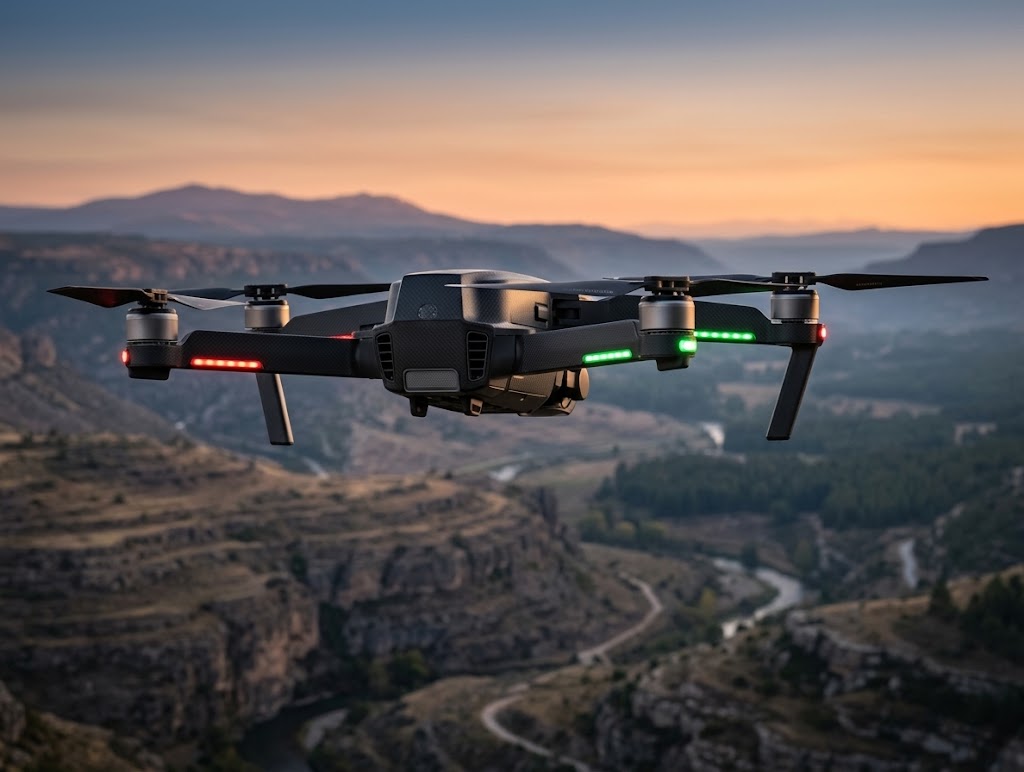
American defense technology is taking on a wider security role in Nigeria as advanced surveillance systems previously associated with military operations are deployed to protect oil and gas infrastructure in the Niger Delta.
US-based Textron Systems has secured a contract involving the delivery of three Aerosonde Mk 4.7 vertical take-off and landing unmanned aircraft systems for operations supporting Tantita Security Services Nigeria Limited.
Tantita is a private Nigerian security company involved in protecting pipelines and other critical petroleum assets from crude theft, vandalism, sabotage and illegal bunkering.
The agreement represents a shift in the use of American-made security equipment in Nigeria, extending it from conventional counterterrorism operations to the protection of strategically important economic infrastructure.
Three Aerosonde Systems to Be Delivered
Textron Systems announced the contract in December 2025, confirming that three Aerosonde Mk 4.7 VTOL systems would be provided for Tantita’s oil and gas security operations.
The award was made through Arco Worldwide Services, a Nigerian unmanned-aircraft solutions provider that will supply contracted UAS services in support of Tantita.
Textron said the aircraft would be delivered in an International Traffic in Arms Regulations-free configuration designed to simplify export to international customers.
“The Aerosonde system’s demonstrated performance and benchmark-setting reliability will enable the Tantita team to expand its capabilities to protect the oil and gas infrastructure essential to Nigerian security and prosperity,” the company stated. Textron Systems
The agreement reportedly includes training and the possibility of acquiring additional aircraft as Tantita expands its surveillance capacity.
Drones Suited to Niger Delta Terrain
Protecting Nigeria’s petroleum infrastructure presents significant geographical and logistical challenges.
Pipelines, wellheads, flow stations and other facilities are spread across vast networks of creeks, mangrove swamps, waterways and offshore locations.
The terrain can be difficult to monitor through ground patrols alone, while conventional aircraft may require runways and supporting infrastructure unavailable in remote areas.
The Aerosonde Mk 4.7 combines fixed-wing flight with vertical take-off and landing technology. It can therefore launch and recover from confined locations without a conventional runway.
That capability makes the platform particularly suited to surveillance operations in the Niger Delta and around offshore petroleum assets.
Live Surveillance and Intelligence
The unmanned aircraft can carry sensors and other equipment for intelligence, surveillance and reconnaissance missions.
From the air, the systems can monitor large geographical areas and transmit information to command-and-control centers.
This could allow security teams to detect suspicious movements around pipelines, identify possible illegal connections and direct response personnel to locations requiring investigation.
The drones may also complement patrol boats and ground teams by providing a wider view of waterways and difficult-to-reach areas.
Aerial monitoring can help operators assess a suspected incident before dispatching personnel, potentially improving response times and reducing exposure to dangerous environments.
Details about the exact sensors, surveillance coverage and operating procedures to be used by Tantita have not been fully disclosed publicly.
From Counterterrorism to Infrastructure Protection
American-made security equipment has played a prominent role in Nigeria’s campaign against Boko Haram and Islamic State West Africa Province in the northeast.
The Aerosonde arrangement reflects a different type of security mission centered on economic infrastructure rather than an armed insurgency.
Nigeria depends heavily on petroleum exports for foreign-exchange earnings and public revenue. Pipeline attacks, theft and prolonged shutdowns can therefore have consequences extending far beyond individual oil companies.
Protecting production and export infrastructure is closely connected to the country’s fiscal stability, energy output and ability to fund public expenditure.
The Textron arrangement is a commercial security-technology transaction involving private companies. It should not, by itself, be treated as a new state-to-state defense agreement between the United States and Nigeria.
It nevertheless shows how US-made security systems are expanding into the protection of Nigeria’s energy sector.
Nigeria Records Six-Year Production High
The drone acquisition comes as Nigeria works to rebuild oil output after years of losses caused by theft, ageing infrastructure, underinvestment and operational disruptions.
The Nigerian Upstream Petroleum Regulatory Commission reported that crude production reached an average of 1.56 million barrels per day in June 2026.
When approximately 175,000 barrels per day of condensates were included, combined production rose to 1.735 million barrels per day.
The crude-only figure represented Nigeria’s highest production level since April 2020 and exceeded its Organization of the Petroleum Exporting Countries quota of 1.5 million barrels per day by about 4%.
Combined output increased from 1.483 million barrels per day in February to 1.546 million in March, 1.663 million in April, 1.700 million in May and 1.735 million in June. NUPRC
Improved Pipeline Reliability Supports Output
The regulator attributed the June performance primarily to stable operations across most producing assets and the absence of major pipeline outages.
Improved production uptime and more reliable crude evacuation also contributed to the increase.
Although a limited number of facilities experienced temporary shutdowns, the disruptions reportedly had little effect on overall national production.
Nigeria’s combined crude and condensate output subsequently fell to about 1.67 million barrels per day in July because of operational problems at the Erha and Akpo fields. Crude-only production nevertheless averaged approximately 1.505 million barrels per day, allowing the country to meet its OPEC quota for a third consecutive month.
Technology Could Strengthen Anti-Theft Operations
The production rebound cannot be attributed directly to the Textron Tantita arrangement. The contract was announced in December 2025, and detailed information about when all three systems entered full operational service has not been publicly provided.
The deal should instead be viewed as part of Nigeria’s broader effort to combine physical patrols, intelligence gathering and surveillance technology to protect petroleum production.
If effectively integrated with command centers and response teams, the Aerosonde systems could help reduce blind spots across oil-producing areas.
Their value will depend on factors including sensor coverage, operator training, maintenance, coordination with state security agencies and the speed at which information is converted into enforcement action.
Advanced surveillance alone cannot eliminate crude theft. Authorities must still investigate illegal networks, secure compromised pipelines and prosecute those involved.
The deployment nevertheless marks a notable expansion of American-made security hardware in Nigeria from supporting operations on the battlefield to monitoring the pipelines, waterways and facilities at the center of the country’s oil economy.
Source: Omanghana