Omanghana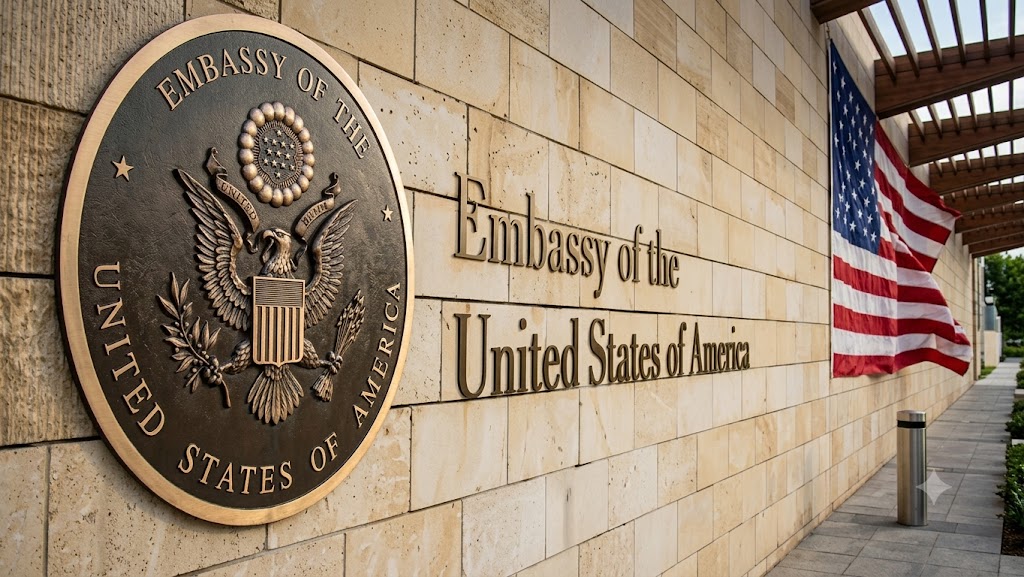
The United States Department of State has announced a major realignment of its visa operations in Africa, with routine processing scheduled to end at the U.S. Embassy in Abuja and 24 other diplomatic posts from August 1, 2026.
Under the new arrangement, routine immigrant and nonimmigrant visa services will be transferred to 20 designated regional hubs across the continent.
The State Department said the restructuring is intended to strengthen national security by promoting consistent screening, vetting and adjudication standards while improving operational efficiency.
Although routine visa processing will end at the affected locations, the United States stressed that it is not closing any embassy or consulate as part of the changes. The diplomatic missions will continue performing their other official duties.
Nigerian Applicants Directed to Lagos
For Nigeria, routine visa processing will be consolidated at the U.S. Consulate General in Lagos, which will serve as the country’s designated regional hub.
From August 1, Nigerians and legal residents applying for routine tourist, business, student and other nonimmigrant visas will be required to use the designated Lagos processing location.
Routine immigrant visa categories, including family-based, employment-based, Diversity Visa, adoption and fiancé or fiancée applications, will also be handled through designated processing locations. Immigrant visa interviews for Nigerian applicants were already being conducted in Lagos before the latest restructuring.
Applicants with appointments scheduled at the Abuja embassy have been advised to monitor their email for specific instructions from the U.S. government.
Those who paid a Machine-Readable Visa fee at an affected post must schedule an appointment there by July 31. The State Department warned that fees paid at posts moving to limited services will not be refunded if applicants fail to schedule before the deadline.
Valid Visas Remain Unaffected
The policy does not cancel or invalidate existing U.S. visas. Travelers holding valid visas may continue using them in accordance with their approved terms and applicable entry requirements.
The Abuja embassy will also remain operational despite the end of routine visa processing. Its diplomatic functions and services for American citizens will not be affected by the restructuring, while applicants requiring exceptional assistance must follow instructions issued by the embassy.
Diplomatic Posts Affected
The 25 African locations where routine visa processing will be realigned are:
- Antananarivo, Madagascar
- Abuja, Nigeria
- Asmara, Eritrea
- Bamako, Mali
- Banjul, The Gambia
- Brazzaville, Republic of the Congo
- Bujumbura, Burundi
- Conakry, Guinea
- Cotonou, Benin
- Durban, South Africa
- Freetown, Sierra Leone
- Gaborone, Botswana
- Harare, Zimbabwe
- Juba, South Sudan
- Libreville, Gabon
- Lilongwe, Malawi
- Lusaka, Zambia
- Maputo, Mozambique
- Maseru, Lesotho
- Mbabane, Eswatini
- N’Djamena, Chad
- Niamey, Niger
- Nouakchott, Mauritania
- Ouagadougou, Burkina Faso
- Windhoek, Namibia
Many of these locations will continue providing American Citizen Services and limited nonimmigrant visa assistance after the realignment.
Twenty Regional Visa Hubs Approved
Routine visa services in Africa will be concentrated at U.S. embassies and consulates in:
- Abidjan
- Accra
- Addis Ababa
- Cape Town
- Dakar
- Dar es Salaam
- Djibouti
- Johannesburg
- Kampala
- Kigali
- Kinshasa
- Lagos
- Lomé
- Luanda
- Malabo
- Monrovia
- Nairobi
- Port Louis
- Praia
- Yaoundé
Applicants must use the processing location specifically assigned to their country of nationality or residence. They cannot simply select any regional hub based on shorter appointment waiting times.
The State Department’s updated guidance generally requires nonimmigrant visa applicants to attend interviews in their country of nationality or legal residence. Where routine services are unavailable, applicants must use the officially designated alternative post.
The changes do not override other U.S. immigration measures. Existing travel restrictions under Presidential Proclamation 10998, visa-bond requirements and pauses affecting certain immigrant visa applicants will remain in force.
Source: Omanghana