Omanghana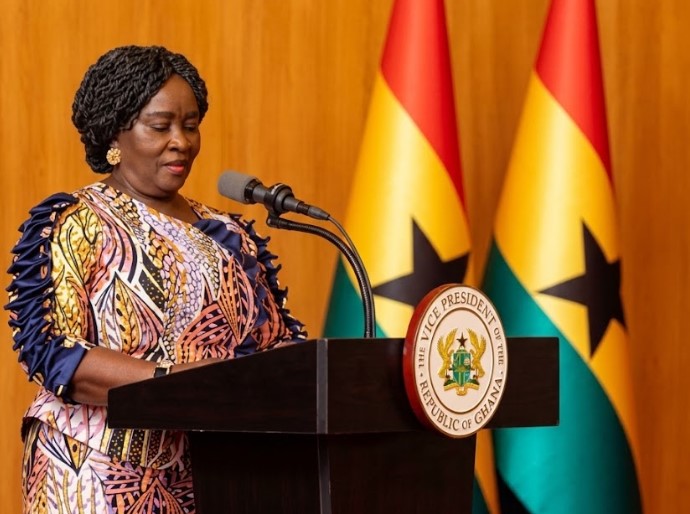
Ghana’s Vice President, Professor Naana Jane Opoku-Agyemang, has called for greater African ownership and participation in the continent’s energy sector, stressing that stronger indigenous businesses and technical institutions are essential to transforming Africa’s vast natural resources into sustainable economic prosperity.
Speaking at a high-level stakeholder forum in Accra organized by the Ghana National Petroleum Corporation (GNPC) and ExxonMobil ahead of the 2026 Africa Oil Week, Prof. Opoku-Agyemang said Africa must move beyond being a passive participant in the exploitation of its own resources.
She argued that the continent’s energy wealth should become a catalyst for industrialization, job creation, technological advancement and broader economic transformation.
Africa Must Move Beyond Raw Resource Exports
The Vice President emphasized that greater ownership of Africa’s energy resources should extend beyond control over extraction.
According to her, African countries must develop the infrastructure and industrial capacity required to process their natural resources locally and build competitive downstream industries.
For decades, many resource-rich African economies have exported crude oil, gas, minerals and other raw materials while importing higher-value products manufactured from those same resources.
Prof. Opoku-Agyemang said changing that model requires deliberate investment in domestic processing facilities, energy infrastructure and integrated value chains capable of supporting local industries.
She maintained that reliable and affordable energy remains fundamental to Africa’s industrial ambitions and broader economic development.
Energy Sector Must Create Jobs for Africa’s Youth
Prof. Opoku-Agyemang also highlighted the employment potential of developing Africa’s energy resources locally.
With the continent’s youth population continuing to expand, she said governments must ensure that investments in oil, gas and emerging energy technologies translate into meaningful employment and entrepreneurial opportunities.
Rather than allowing most high-value technical and commercial activities to take place outside the continent, African countries should position their citizens and businesses to participate throughout the energy value chain.
Greater local participation, she argued, could create opportunities for engineers, technicians, researchers, entrepreneurs and other skilled professionals while stimulating the growth of supporting industries.
The Vice President said Africa’s resources should ultimately improve living standards and provide economic opportunities for the people who live in the countries where those resources are found.
Stronger Technical Institutions Needed
Building local expertise will be critical to achieving that ambition, according to Prof. Opoku-Agyemang.
She called for stronger collaboration among governments, universities, research institutions and energy companies to develop the technical skills required by a rapidly changing global energy industry.
Training African engineers, scientists, researchers and technicians would help reduce dependence on foreign expertise while enabling indigenous companies to operate at internationally competitive standards.
The Vice President also stressed the importance of strengthening institutions capable of supporting research, innovation and technology development within Africa.
Such investments, she said, would allow African countries to participate not merely as resource owners but as innovators and technical leaders in the global energy economy.
International Partnerships Still Important
Despite advocating greater African ownership and self-reliance, Prof. Opoku-Agyemang acknowledged the important role international energy companies can play in the continent’s development.
She said partnerships with companies such as ExxonMobil can provide access to investment capital, advanced technology and specialized technical knowledge.
However, she emphasized that such partnerships should contribute directly to African development priorities through skills transfer, local content development and meaningful participation by indigenous businesses.
The objective, she suggested, should be partnerships in which international expertise complements rather than replaces African capacity.
Energy Development Must Support Africa’s Industrial Future
The Accra forum brought together stakeholders ahead of Africa Oil Week 2026 to discuss the future of the continent’s energy industry and the role of partnerships in unlocking investment and development opportunities.
For Ghana, the discussion comes as the country seeks to maximize the economic benefits generated by its petroleum resources while strengthening domestic participation throughout the industry.
Prof. Opoku-Agyemang maintained that Africa possesses the resources necessary to support substantial economic transformation, but achieving that potential will require deliberate policies that connect energy development to industrialization.
Her message was that ownership must extend beyond having natural resources beneath African soil. It must include the knowledge, technology, businesses, infrastructure and skilled workforce needed to develop those resources and capture a greater share of their economic value.
By strengthening local enterprises and technical institutions while pursuing mutually beneficial international partnerships, she said African countries can turn their energy resources into a foundation for industrial growth, high-skilled employment and long-term economic independence.
Source: Omanghana