Omanghana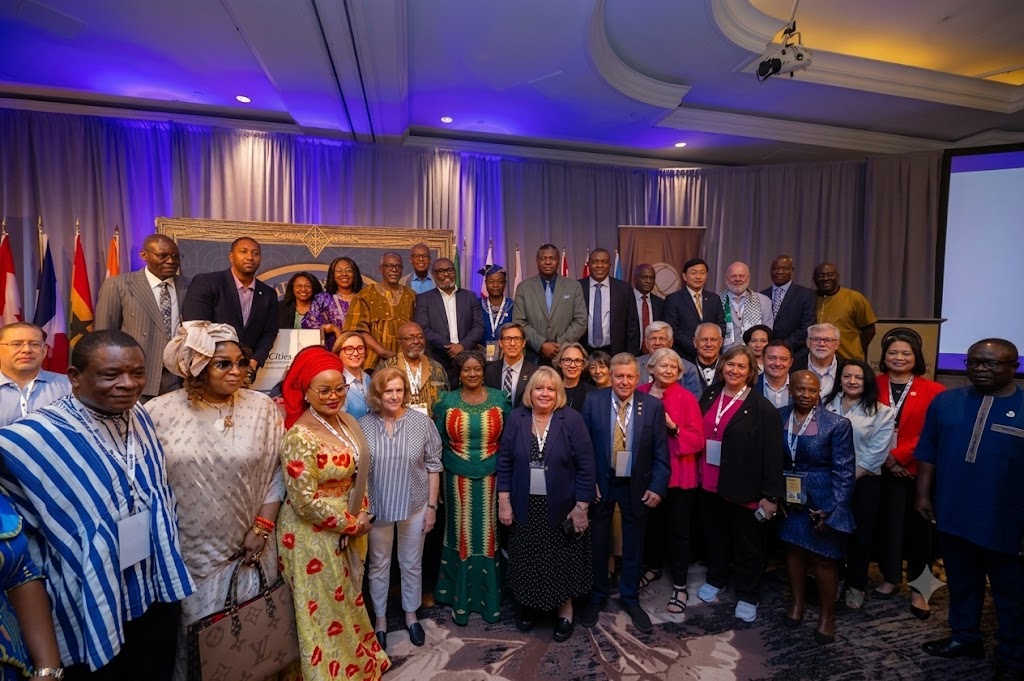
Ghana’s vice president says municipal diplomacy can help African cities expand trade, support young innovators and develop practical solutions to growing urban challenges.
Ghanaian Vice President Professor Naana Jane Opoku-Agyemang has called for stronger city-to-city partnerships across Africa to promote sustainable economic development, innovation and international trade.
Delivering the opening keynote address at the Sister Cities International 70th Anniversary Homecoming Conference in Washington, D.C., Prof. Opoku-Agyemang described municipal diplomacy as an important tool for strengthening local governance and building resilient institutions.
Her address focused on the theme, “Forging Stronger Partnerships in Africa for Sustainable Economic Development.”
The vice president said cooperation among cities should extend beyond ceremonial relationships and be transformed into practical arrangements that improve public services, attract investment and address the complex challenges facing urban communities.
AfCFTA Creates Opportunities for Municipal Cooperation
Prof. Opoku-Agyemang highlighted the African Continental Free Trade Area as a major platform through which municipalities can expand economic cooperation.
Ghana hosts the AfCFTA Secretariat in Accra, placing the country at the center of efforts to create a single African market for goods and services.
The vice president said cities could use the continental agreement to establish partnerships in trade, investment, digital transformation, tourism and skills development.
Municipal authorities could also connect local businesses with markets in partner cities, exchange information on investment opportunities and support small and medium-sized enterprises seeking to operate beyond their national borders.
She noted that the success of continental trade would depend partly on the ability of local governments to develop the infrastructure, institutions and business environments required to support commerce.
Partnerships Can Empower Africa’s Youth
The vice president also emphasized the importance of Africa’s growing youth population.
She said well-structured sister-city arrangements could create opportunities for young Africans to participate in education, entrepreneurship, technology and cultural-exchange programs.
Such partnerships could connect students, researchers, start-ups and local businesses with international institutions. They could also support mentorship, professional training and knowledge-sharing in emerging sectors.
Prof. Opoku-Agyemang encouraged municipal leaders to ensure that young people are not treated merely as beneficiaries of development policies but are given opportunities to help design and build the industries of the future.
Africa’s young population, she suggested, could become a major economic advantage if cities invest adequately in education, digital skills and employment creation.
Cities Urged to Cooperate on Shared Crises
Prof. Opoku-Agyemang warned that countries and municipalities cannot effectively respond to modern challenges in isolation.
Rapid urbanization, climate change, public-health emergencies, waste-management problems and natural disasters increasingly affect communities across national borders.
She urged cities to share technical knowledge, planning methods and practical solutions in areas such as flood prevention, sanitation, affordable housing and emergency preparedness.
Municipal partnerships can also help local authorities learn from projects that have succeeded elsewhere, reducing the cost and time required to develop new programs.
The vice president said this form of cooperation would allow cities to strengthen their resilience while improving the quality of services provided to residents.
Ghana Records 37 Partnerships with US Communities
Prof. Opoku-Agyemang disclosed that Ghana currently has 37 active sister-city partnerships with communities across the United States.
According to her, the relationships have produced long-term benefits in education and infrastructure while promoting cultural understanding between Ghanaian and American communities.
She presented the partnerships as evidence that municipal cooperation can generate measurable development outcomes when it is supported by clear objectives and sustained institutional commitment.
The vice president encouraged more African and international cities to develop similar relationships based on shared interests, mutual respect and practical development priorities.
Local Government Central to Ghana’s Reset Agenda
Prof. Opoku-Agyemang linked international municipal cooperation to the decentralization policies being pursued under President John Dramani Mahama’s administration.
She said Metropolitan, Municipal and District Assemblies are being positioned as the foundation of Ghana’s national development under the government’s Reset Agenda.
The administration is directing additional resources to local authorities to strengthen their ability to plan and execute projects that respond to the specific needs of their communities.
According to the vice president, national progress will be difficult to achieve unless local governments are adequately funded, professionally managed and directly involved in development planning.
GH¢4.4 Billion Allocated to District Assemblies
The government’s decentralization program is being supported by a GH¢4.4 billion allocation to the District Assemblies Common Fund.
The funding is intended to give local authorities greater capacity to improve infrastructure and manage development programs in areas such as education, healthcare and community safety.
Prof. Opoku-Agyemang said empowering assemblies financially would allow them to respond more quickly to local challenges and reduce their dependence on centralized decision-making.
International city partnerships could complement these public resources by providing technical support, institutional training and access to additional development networks.
Ghana Ready to Host Future Sister Cities Events
The vice president reaffirmed Ghana’s commitment to the global sister-city movement and announced the country’s readiness to host future regional engagements in Africa.
Hosting such events, she said, would provide an opportunity for African municipal leaders to exchange ideas, establish new partnerships and showcase locally developed solutions to urban problems.
Prof. Opoku-Agyemang’s address presented city diplomacy as a practical development strategy rather than a symbolic relationship between municipalities.
She urged African cities to build partnerships capable of creating jobs, strengthening institutions and improving living conditions.
As Africa’s population becomes increasingly urban, she said cooperation among local authorities will be essential to building inclusive, innovative and economically resilient communities.
Source: Omanghana