Omanghana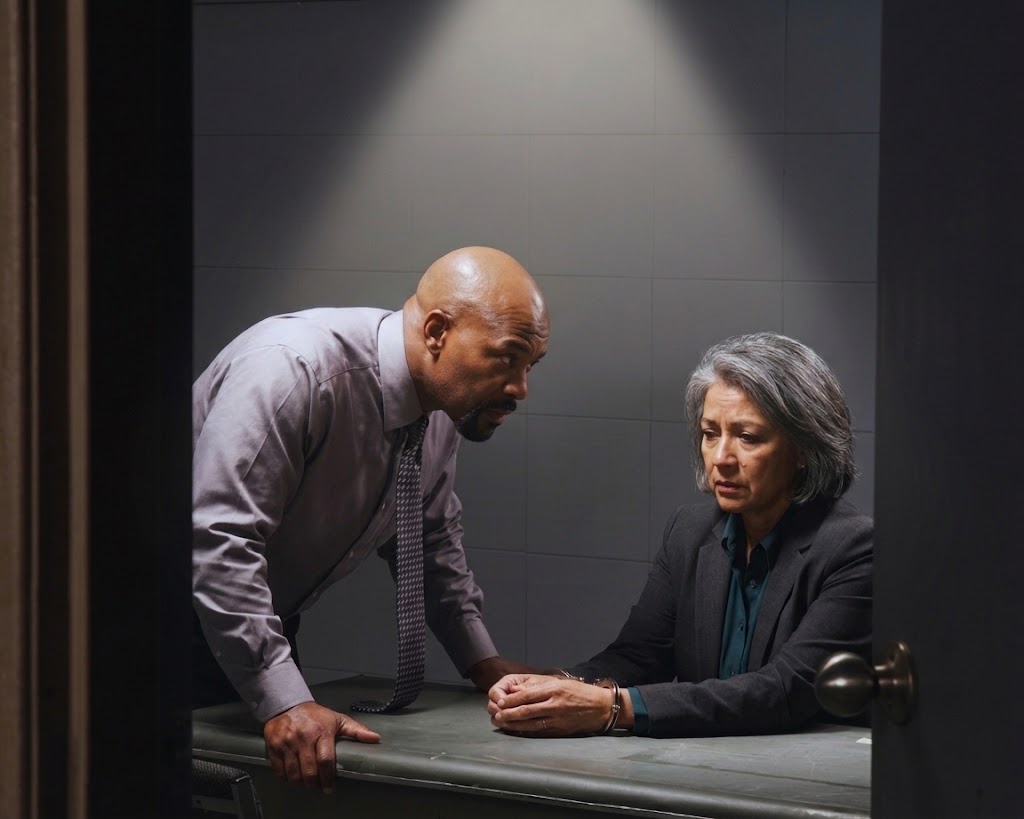
A confession may be declared legally invalid and excluded from a criminal trial when it was obtained involuntarily, in violation of the accused person’s constitutional rights or under circumstances that make it fundamentally unreliable.
Under United States criminal procedure, the principal protections arise from the Fourth, Fifth, Sixth and Fourteenth Amendments to the Constitution. Similar safeguards exist in many international and national legal systems, although the precise rules differ by jurisdiction.
For a confession to be admissible, it generally must be made voluntarily. Any waiver of protected rights must also be knowing and intelligent.
One of the clearest grounds for excluding a confession is coercion. A statement obtained through physical violence, threats or the denial of food, water, sleep or medical treatment is considered involuntary.
Threatening a suspect’s family or using other forms of extreme pressure may produce the same result. Courts also consider psychological coercion, including prolonged isolation, relentless interrogation and manipulation capable of overwhelming a suspect’s free will.
In Spano v. New York, the U.S. Supreme Court examined whether interrogation tactics and psychological pressure made a confession involuntary under the Due Process Clause.
Promises made during questioning can also affect admissibility. An explicit and unauthorized promise of release, immunity or another major benefit in direct exchange for a confession may contribute to a finding that the statement was not voluntary.
Miranda violations provide another basis for suppressing certain statements. Before conducting a custodial interrogation, law enforcement officers generally must inform a suspect of the right to remain silent and the right to legal counsel.
Under Miranda v. Arizona, an unwarned statement obtained during custodial interrogation generally cannot be introduced as evidence in the prosecution’s main case.
A suspect may waive Miranda rights, but the decision must be voluntary, knowing and intelligent. A waiver may be challenged if the person did not understand the warning because of a serious language barrier, severe intoxication, intellectual disability or another substantial impairment.
Police must also respect a clear invocation of protected rights. If a suspect unambiguously requests an attorney during custodial interrogation, questioning generally must stop until counsel is present, unless the suspect initiates further communication.
The rule established in Edwards v. Arizona was designed to prevent police from pressuring a suspect into reversing a request for legal representation.
The Sixth Amendment provides a separate right to counsel after formal criminal proceedings have begun. Following an indictment, arraignment or comparable initiation of charges, law enforcement officers and their agents generally cannot deliberately obtain statements about the charged offence from a defendant without respecting that right.
This principle was established in Massiah v. United States, which involved incriminating statements deliberately obtained after formal charges had been filed.
A confession may also face exclusion if it resulted directly from an unlawful arrest or detention. Under the Fourth Amendment’s exclusionary rule, courts examine whether the statement was obtained through the exploitation of an illegal seizure.
In Brown v. Illinois, the Supreme Court held that providing Miranda warnings alone does not automatically remove the effect of an unlawful arrest. Courts must determine whether intervening events sufficiently weakened the connection between the illegality and the confession.
The age, health and mental condition of the accused person are also relevant. Courts generally assess voluntariness by examining the totality of the circumstances rather than relying on a single factor.
Confessions by juveniles receive heightened scrutiny because minors may be more vulnerable to intimidation, suggestion and pressure from authority figures.
Mental illness, intellectual disability and intoxication do not automatically make a confession inadmissible. However, a statement may be excluded when the person’s condition, combined with police conduct or other circumstances, prevented a voluntary and meaningful decision.
When the defense challenges a confession, counsel may file a motion to suppress the statement. The court will then hold a pretrial evidentiary proceeding, often called a suppression hearing or Jackson v. Denno hearing.
During the hearing, the judge considers testimony, interrogation recordings and other evidence surrounding the statement. The prosecution generally bears the burden of proving by a preponderance of the evidence that the confession was voluntary and lawfully obtained.
If the motion succeeds, the confession may be excluded from the prosecution’s main case. Evidence discovered through an unconstitutional confession may also be suppressed in some circumstances, although the treatment of derivative evidence depends on the particular constitutional violation and applicable exceptions.
Because confession law is highly fact-specific and varies among jurisdictions, admissibility ultimately depends on the circumstances of the interrogation and the governing law.
Source: Omanghana