Omanghana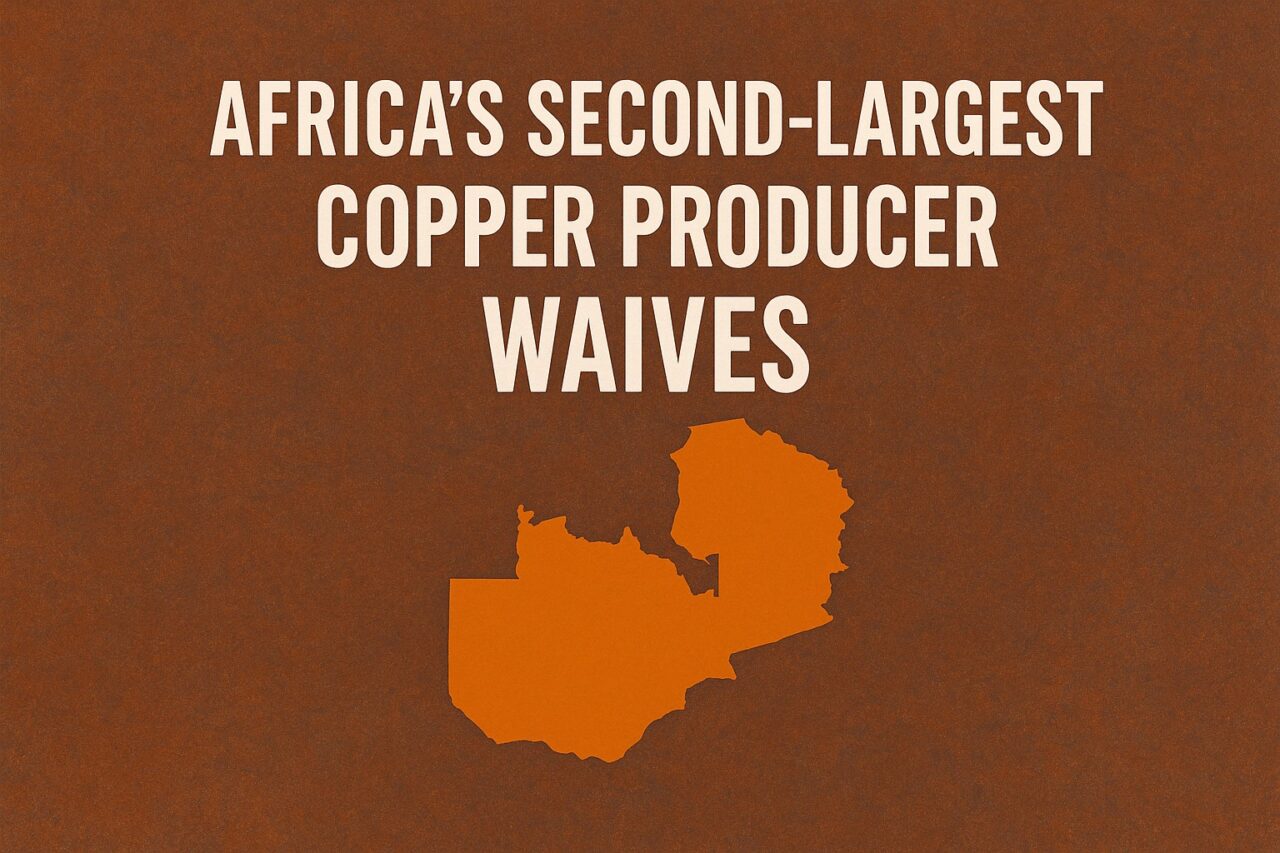
LUSAKA, Zambia — Zambia has extended a temporary suspension of its 10% export tax on copper concentrates, allowing mining companies to ship approximately 271,742 metric tons of copper concentrate duty-free through September 30, 2026.
The decision comes as the country grapples with mounting stockpiles of unprocessed copper resulting from reduced domestic smelting capacity. Several major smelters have remained offline due to maintenance work and technical challenges, limiting the industry’s ability to process copper concentrates locally.
As Africa’s second-largest copper producer after the Democratic Republic of the Congo, Zambia traditionally exports refined copper cathodes rather than raw concentrates. However, ongoing disruptions at key processing facilities have forced mining companies to seek alternative export routes to prevent production bottlenecks and maintain output levels.
Mining Companies Receive Export Allocations
The government has distributed duty-free export quotas among some of the country’s largest mining operations. Mopani Copper Mines received the largest allocation of 100,000 metric tons, followed by Lumwana Mining Company with 56,986 metric tons.
Other beneficiaries include First Quantum Minerals and Nkana Mining and Minerals Processing, each receiving approximately 43,000 metric tons. Lubambe Copper Mine was allocated 15,000 metric tons, while Konkola Copper Mines received 12,541 metric tons.
Supporting Production During Processing Constraints
The tax waiver is intended to provide relief to mining companies facing limited domestic processing options. By temporarily removing the export duty, the government aims to reduce operational costs, prevent production slowdowns, and ensure that excess copper concentrate can reach international markets while local smelters undergo repairs.
The move also reflects Zambia’s effort to strike a balance between its long-term strategy of increasing local mineral beneficiation and the immediate need to sustain mining operations, which remain a critical pillar of the national economy.
Copper Remains Central to Zambia’s Economic Growth
Copper continues to be Zambia’s most valuable export commodity and a major source of foreign exchange earnings. The country exported 890,346 metric tons of copper in 2025 and has set an ambitious goal of increasing annual production to 3 million metric tons by 2031.
The target is driven by rising global demand for copper, a metal that plays a vital role in electric vehicles, renewable energy systems, power transmission networks, battery technologies, and data center infrastructure.
Growing Demand Meets Infrastructure Challenges
Zambia’s latest export tax waiver highlights the increasingly important role African copper producers are expected to play in the global energy transition. At the same time, it underscores the infrastructure and processing challenges that many resource-rich nations face as they seek to maximize the value of their mineral wealth.
With demand for copper projected to remain strong over the coming decade, investments in smelting capacity and mining infrastructure are likely to become central to Zambia’s strategy for maintaining its position as one of Africa’s leading copper-producing nations.
Source: Omanghana