Omanghana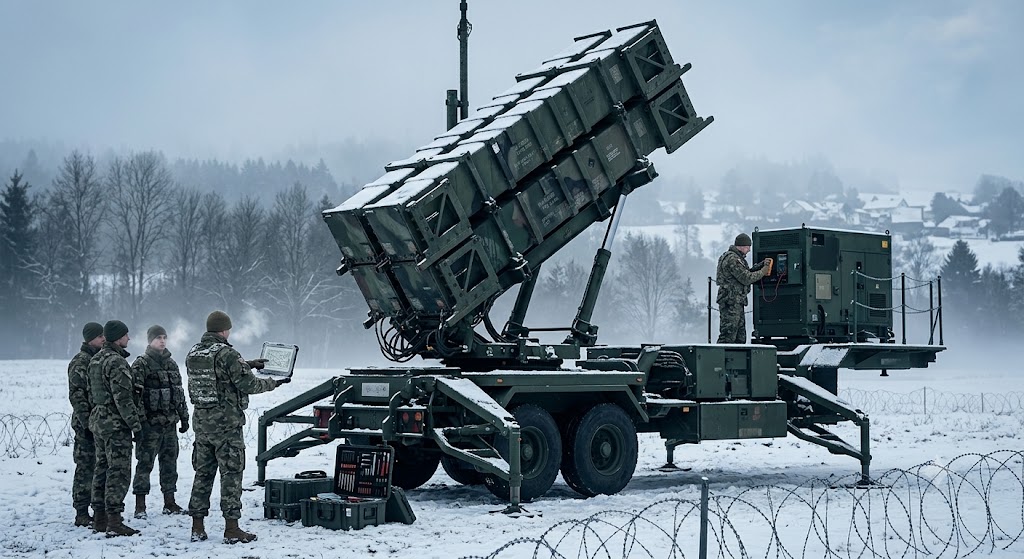
Ukrainian President Volodymyr Zelenskyy has confirmed that several technical, legal, and industrial hurdles must be overcome before Ukraine can begin producing U.S.-designed Patriot air-defense missiles under a proposed licensed manufacturing agreement.
The announcement follows a political breakthrough reached during the NATO summit in Ankara, where U.S. President Donald Trump pledged to support a licensing arrangement that would allow Ukraine to manufacture Patriot interceptor missiles domestically. The proposal is aimed at strengthening Ukraine’s air defense capabilities as it continues to face intensified Russian missile and drone attacks.
While welcoming the agreement, Zelenskyy emphasized that significant work remains before production can begin.
Technical and Legal Requirements Still Pending
According to the Ukrainian president, government officials and technical experts must now work with their U.S. counterparts to finalize the licensing framework and secure the necessary manufacturing documentation.
One of the immediate challenges will be coordinating with the companies responsible for producing the Patriot system. President Trump acknowledged that the primary defense contractors—Lockheed Martin and RTX Corporation (formerly Raytheon)—had not yet been formally consulted regarding the proposed licensing arrangement.
Ukraine will also need to satisfy strict U.S. security requirements before any production facilities can be approved. These include rigorous physical security measures and cybersecurity protections designed to safeguard highly sensitive military technology.
Defense analysts note that bypassing these reviews could expose classified systems and manufacturing processes to espionage, making the approval process a critical component of the project.
Supply Chain Challenges
Even if the licensing agreement is completed, manufacturing Patriot missiles presents significant industrial challenges.
The advanced interceptor relies on a highly specialized global supply chain involving sophisticated electronic components, propulsion systems, and precision guidance technologies. If Ukraine is unable to manufacture many of these components domestically, it will remain dependent on international suppliers, particularly U.S. production lines that are already experiencing substantial demand.
Experts estimate that establishing a fully operational production line for such an advanced air-defense system could take approximately two years under normal circumstances, even with political support and financial investment.
Growing Pressure from Russian Missile Attacks
Ukraine’s push to manufacture Patriot missiles locally comes as Russian aerial attacks continue to intensify.
Ukrainian officials say Russia is producing roughly 120 ballistic missiles each month and has increasingly targeted critical infrastructure and major cities. They also cited a large-scale missile assault in early July during which Ukrainian air defenses were reportedly unable to intercept incoming ballistic missiles aimed at Kyiv, underscoring the country’s urgent need for additional interceptor capacity.
At the same time, global supplies of Patriot missiles have come under increasing pressure.
Recent military operations involving the United States, Israel, and Iran have significantly reduced available inventories, with Gulf countries reportedly using more than 1,100 Patriot interceptors during regional defense operations. The heightened demand has placed additional strain on production and international stockpiles.
Ukraine Pursues a Three-Part Air Defense Strategy
With U.S. stockpiles under pressure, President Trump has indicated that Washington does not currently intend to supply additional Patriot batteries directly to Ukraine.
In response, Zelenskyy outlined a broader strategy to strengthen the country’s air defenses.
The first priority is to accelerate the licensing process and establish domestic Patriot missile production as quickly as possible.
The second involves expanding cooperation with European partners to secure additional air-defense systems and interceptor missiles. Ukraine is also exploring opportunities for manufacturing partnerships with countries that already produce Patriot components under license, including Japan through Mitsubishi Heavy Industries.
The third and longer-term objective is the development of an entirely indigenous Ukrainian air-defense system. Zelenskyy said the government has instructed the Ministry of Defense to advance domestic research and production capabilities that would reduce reliance on foreign suppliers while strengthening Ukraine’s long-term defense posture.
The proposed Patriot manufacturing initiative marks a significant step in Ukraine’s efforts to build a more self-sufficient defense industry, though officials acknowledge that substantial technical, industrial, and security challenges must first be addressed before production can become a reality.
Source: Omanghana