Omanghana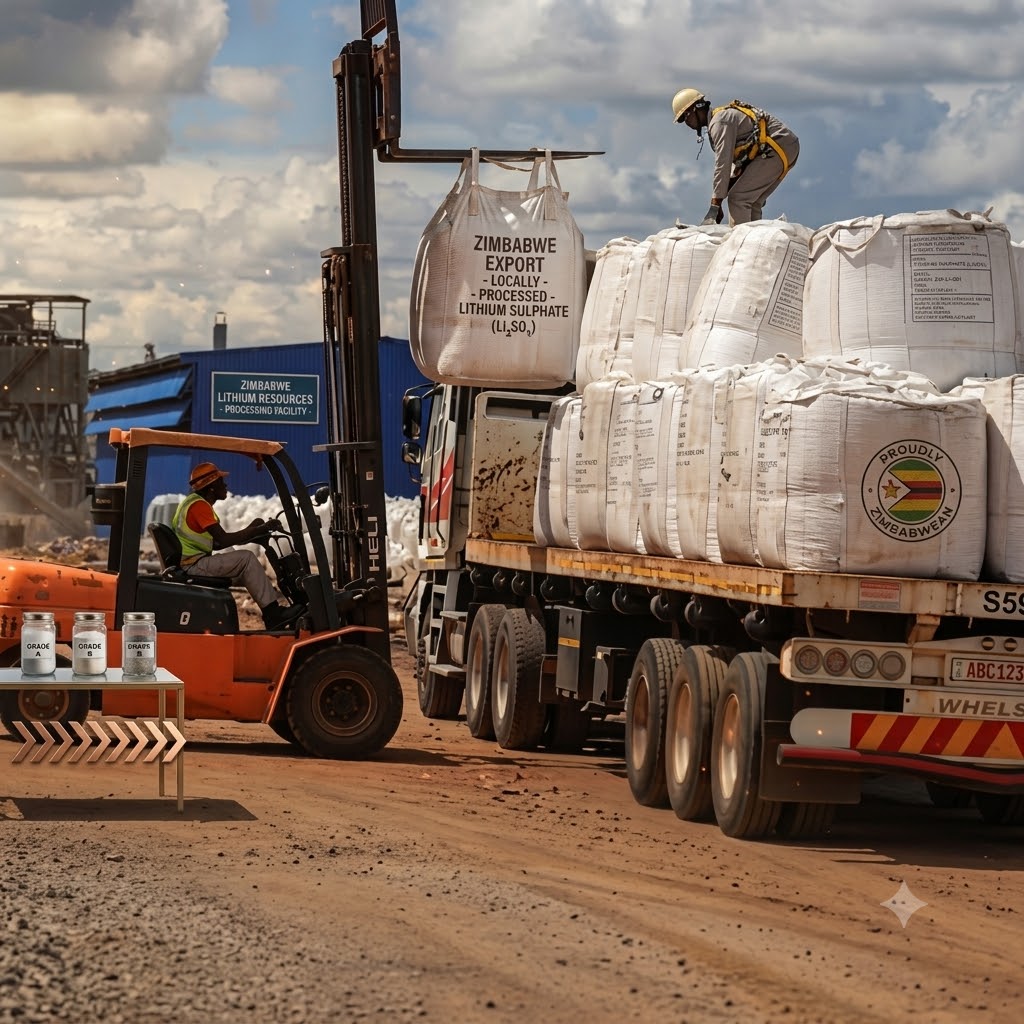
Zimbabwe has launched its first dedicated freight rail corridor for transporting lithium concentrate to the Port of Maputo in Mozambique, marking a major milestone in the country’s drive to strengthen its mining export infrastructure.
The National Railways of Zimbabwe (NRZ), in collaboration with private logistics partners, announced the launch of the new route, which is designed to move bulk lithium exports more efficiently by rail instead of relying on congested and costly road transport.
First Shipment Successfully Completed
The corridor officially began operations with the transportation of a 1,000-metric-ton shipment of lithium concentrate from the Gwanda Lithium Mine, owned by China’s Tsingshan Holding Group.
The pilot shipment demonstrates the viability of a rail-based logistics system that is expected to improve the movement of one of Zimbabwe’s fastest-growing mineral exports.
A 1,000-Kilometre Export Route
The new corridor spans approximately 1,000 kilometres, connecting Zimbabwe’s lithium-producing regions directly to the Indian Ocean through the Port of Maputo.
The route follows several key rail segments:
- The journey begins at the Gwanda Lithium Mine and travels approximately 180 kilometres on the Beitbridge Bulawayo Railway (BBR) to the Beitbridge border.
- From Beitbridge, the cargo moves along 300 kilometres of the National Railways of Zimbabwe network to the Chicualacuala border crossing.
- The shipment then enters Mozambique’s 522-kilometre Limpopo railway line, which provides direct access to the Port of Maputo for international export.
The integrated rail network creates a dedicated freight corridor capable of handling large volumes of mineral exports more efficiently.
Public-Private Partnership Strengthens Rail Capacity
To address longstanding shortages of locomotives and rail infrastructure, the state-owned NRZ partnered with South African logistics company Grindrod, through its Beitbridge Bulawayo Railway subsidiary, as well as Zimbabwean logistics firm Silvergill.
The collaboration is expected to improve operational capacity while supporting the country’s broader infrastructure modernization efforts.
Lower Transport Costs for Mining Companies
The shift from road to rail is expected to significantly reduce transportation costs for mining companies.
Previously, bulk lithium exports relied heavily on trucks, exposing producers to:
- Border congestion and lengthy customs delays.
- Rising fuel and freight costs.
- Increased wear and damage to national road infrastructure.
By using rail, exporters can move larger volumes more efficiently while lowering overall logistics expenses and improving supply chain reliability.
Supporting Zimbabwe’s Growing Lithium Industry
The new freight corridor is expected to benefit major Chinese investors, including Zhejiang Huayou Cobalt and Sinomine Resource Group, which have collectively invested more than US$2 billion in Zimbabwe’s lithium sector.
The improved transport network comes at a critical time as global lithium prices remain well below their 2022 peaks, prompting producers to focus on reducing operating costs and improving efficiency rather than expanding production alone.
Reviving Zimbabwe’s Rail Network
The corridor also represents an important opportunity for the National Railways of Zimbabwe, whose freight volumes have declined sharply over the past three decades due to years of underinvestment.
Annual cargo volumes have fallen from approximately 12 million tonnes during the 1990s to about 2 million tonnes in recent years.
Securing long-term mineral transport contracts could help restore rail freight activity while providing Zimbabwe with a more reliable export system for its growing mining industry.
Zimbabwe remains Africa’s largest lithium producer and currently supplies an estimated 15% of China’s lithium concentrate imports. At the same time, the government continues to enforce domestic mineral processing policies aimed at increasing local value addition by encouraging the production of higher-value products such as lithium sulphate before export.
Source: Omanghana