Omanghana
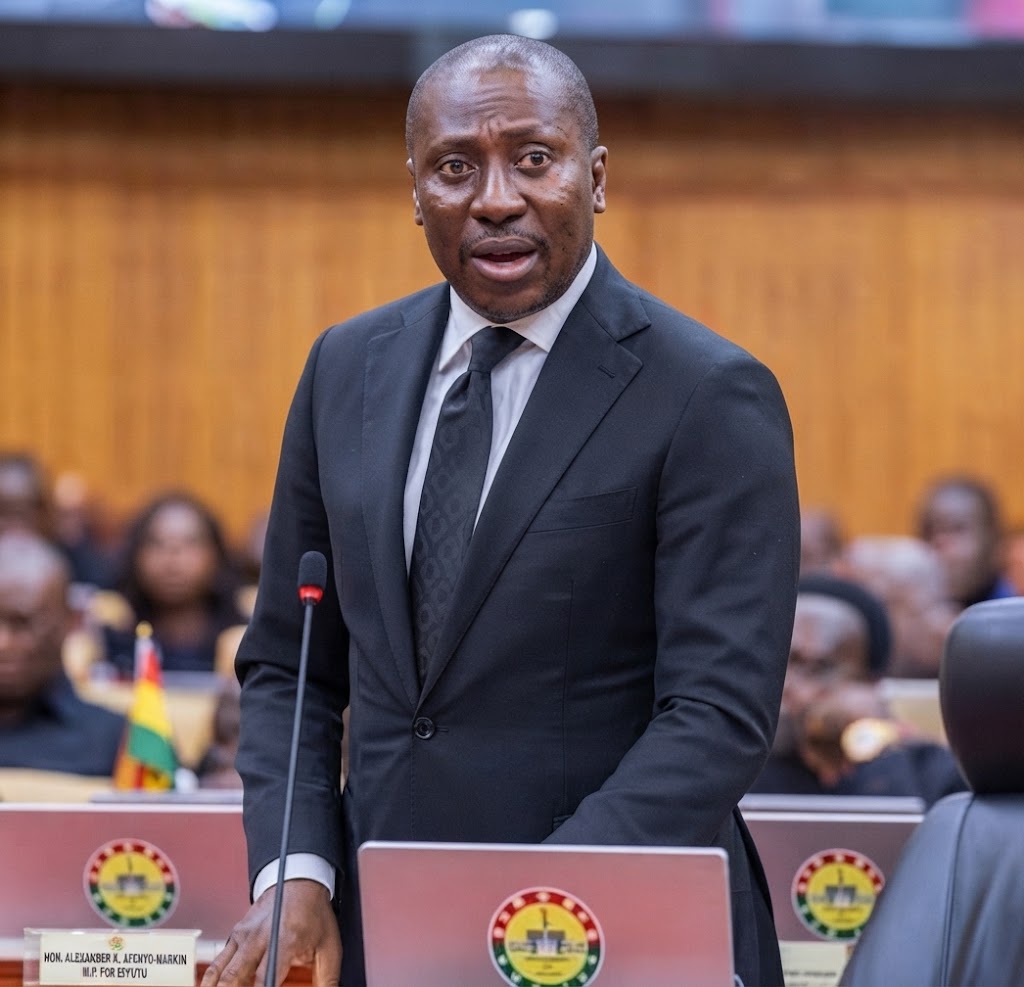
Minority Leader Alexander Afenyo-Markin has sharply criticized Speaker Alban Bagbin’s rejection of a motion seeking a bipartisan parliamentary inquiry into recent major cocaine seizures, describing the decision as a “sad day for our democracy”.
Speaking to journalists after an emergency parliamentary sitting on September 29, 2026, the Effutu MP argued that the ruling undermined Parliament’s oversight responsibilities and denied lawmakers an opportunity to examine institutional failures connected to narcotics trafficking.
He accused the Majority Caucus of using its numerical advantage, with the Speaker’s support, to weaken legislative scrutiny. In his view, the rejection of the motion reflected an unwillingness by the governing side to subject state institutions to parliamentary examination.
Speaker Bagbin ruled the motion inadmissible over concerns that the proposed inquiry could overlap with ongoing criminal investigations and legal proceedings. Afenyo-Markin, however, disputed that reasoning, maintaining that the Minority’s proposed investigation had a separate purpose.
Citing Articles 93(2) and 103 of the 1992 Constitution, the Minority Leader argued that Parliament has a mandate to scrutinize state agencies and investigate systemic weaknesses. He maintained that such an inquiry could proceed independently of criminal trials without interfering with the judiciary.
His argument drew a distinction between determining criminal responsibility and examining whether public institutions had adequately discharged their duties. The Minority’s position is that ongoing legal proceedings should not prevent Parliament from pursuing questions of institutional accountability.
Afenyo-Markin further contended that the decision fell short of the integrity expected of Parliament in carrying out its responsibilities. In a pointed criticism of the administration, he declared that its “24-hour economy has turned into 24-hour cocaine”.
Despite the setback, the Minority Leader said his caucus would continue pursuing the matter through available constitutional and parliamentary procedures.
He indicated that the opposition was examining provisions of the Constitution and Parliament’s Standing Orders to identify alternative ways of bringing concerns about narcotics transshipment before the House.
Parliament was adjourned indefinitely following the contentious ruling, leaving the timing of any renewed effort uncertain. Afenyo-Markin nevertheless insisted that the Minority would not allow the issue to rest.
Source: Omanghana