Omanghana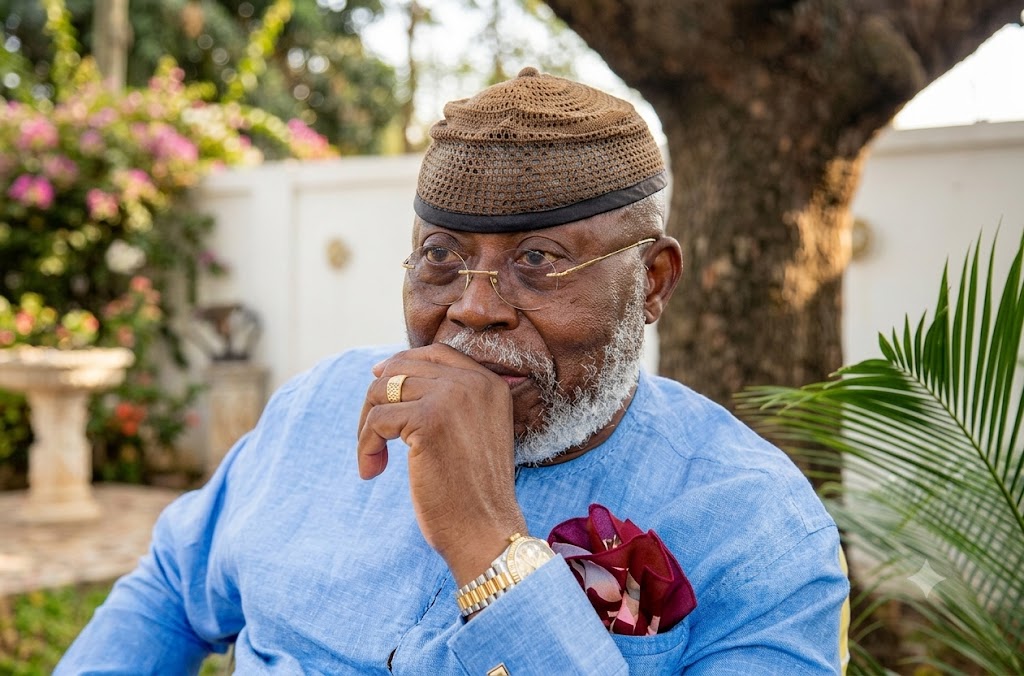
Dr. Nyaho Nyaho-Tamakloe, a founding member of the opposition New Patriotic Party, has argued that former Vice President Dr. Mahamudu Bawumia would not have qualified to become Nana Addo Dankwa Akufo-Addo’s running mate if the party had strictly enforced its internal rules.
His comments followed a landmark Supreme Court judgment delivered on July 29, 2026, declaring the restricted delegate systems used by Ghana’s major political parties inconsistent with constitutional democratic principles.
In a 5–2 majority decision, the court ruled that political parties cannot limit the selection of presidential and parliamentary candidates to a comparatively small electoral college while excluding most registered members in good standing.
The judgment followed a constitutional action filed by Dr. Nyaho-Tamakloe, Professor Kwabena Frimpong-Boateng and former minister Dr. Christine Amoako-Nuamah.
The plaintiffs challenged provisions in the constitutions and electoral regulations of the NPP, National Democratic Congress and Convention People’s Party.
They maintained that restricting voting to party executives, officeholders and selected delegates violated Article 55(5) of the 1992 Constitution, which requires the internal organization of political parties to conform to democratic principles.
Nyaho-Tamakloe Revisits Bawumia’s Selection
Reacting to the ruling, Dr. Nyaho-Tamakloe applied the principle of strict internal democracy retrospectively to Bawumia’s emergence as Akufo-Addo’s running mate.
He said Bawumia was a disciplined and respectable individual but questioned whether he met the NPP’s membership requirements when Akufo-Addo selected him for the 2008 presidential election.
According to the veteran politician, some members strongly opposed the choice because Bawumia had not completed the required period of active service within the party.
He alleged that the membership requirement was ultimately bypassed through decisions taken by powerful figures at the highest levels of the NPP.
Under a system in which party regulations were enforced consistently and candidates emerged through broader participation, Nyaho-Tamakloe argued, Bawumia would not have qualified at the time of his initial selection.
The former vice president later became Akufo-Addo’s running mate in the 2008, 2012 and 2016 elections. He served as Ghana’s vice president from January 2017 to January 2025 before leading the NPP into the 2024 general election.
Concerns About Independent Decision-Making
Dr. Nyaho-Tamakloe also renewed his criticism of Bawumia’s ability to make firm and independent political decisions.
While describing him as a gentleman, he argued that effective political leadership requires the confidence to resist pressure from influential groups and make difficult choices in the national interest.
He recalled that after Bawumia entered frontline politics, Akufo-Addo asked him and the late former Vice President Alhaji Aliu Mahama to assist with his political orientation and development.
Nyaho-Tamakloe said the process was intended to help Bawumia understand the NPP’s traditions, internal structures and political philosophy.
His latest remarks reflect his broader criticism that decisions within the party have increasingly been shaped by small groups of powerful individuals rather than its wider membership.
Supreme Court Orders Major Party Reforms
The Supreme Court judgment is expected to transform the way political parties select their parliamentary and presidential candidates.
The affected parties have been given one year to amend their internal constitutions and electoral regulations to comply with the ruling.
Under the new framework, registered party members in good standing are expected to receive equal and direct voting rights in candidate-selection elections.
The order covers the NPP, NDC and CPP, which were named as defendants in the case. Its constitutional interpretation is also expected to influence the operations of other registered political parties.
The Electoral Commission will be required to strengthen its supervision of internal party elections and ensure compliance with Article 55(5) and the Political Parties Act, 2000.
The plaintiffs had accused the commission of failing to enforce legal requirements that political parties maintain democratic internal structures.
Debate Over Money and Delegate Politics
Supporters of universal voting argue that the delegate system has contributed to the growing monetization of Ghanaian politics.
Because aspiring candidates need to persuade only a limited number of delegates, internal elections can become vulnerable to vote buying, gifts and pressure from party power brokers.
Expanding the electorate to include all qualified members could make it more difficult and expensive to improperly influence an entire primary.
Advocates also believe broader participation will give grassroots members a meaningful role in choosing candidates who ultimately compete for public office.
Critics of universal voting, however, are likely to raise concerns about the accuracy of party membership registers, the cost of nationwide primaries and the possibility of rival parties infiltrating internal elections.
Political parties will therefore need reliable membership databases, transparent qualification rules and credible procedures for resolving disputes.
A Victory for Grassroots Participation
Nyaho-Tamakloe described the ruling as a victory for ordinary party members who have historically been excluded from crucial decisions.
He has repeatedly argued that backroom negotiations, financial influence and elite control have weakened the NPP’s founding principles and damaged public confidence in the party.
According to him, the Danquah-Busia-Dombo tradition should be rooted in democratic participation, accountability and respect for clearly established rules.
The judgment now gives Ghana’s political parties a limited period to replace their delegate-based electoral colleges with more inclusive systems ahead of future presidential and parliamentary primaries.
Source: Omanghana