Omanghana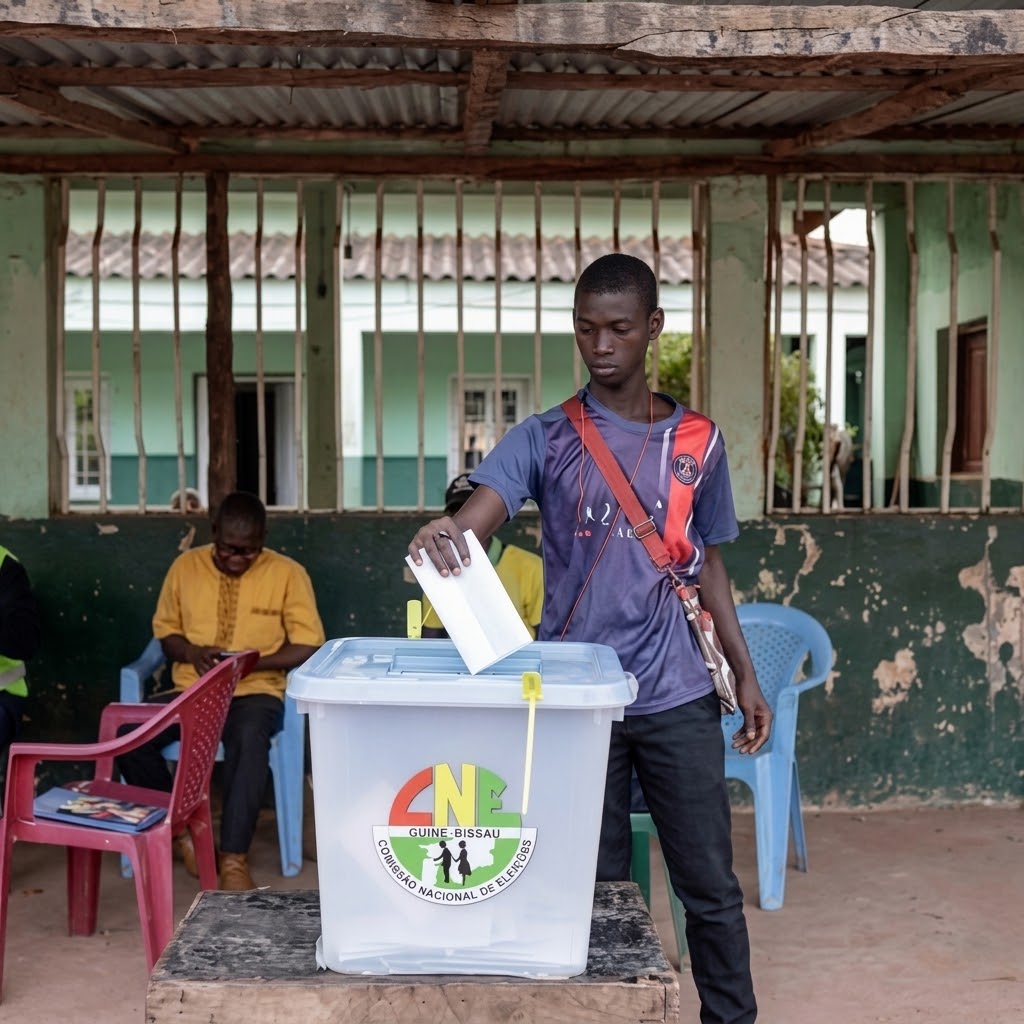
Voters in Guinea-Bissau have gone to the polls in a constitutional referendum that could significantly increase the authority of the presidency and restructure the country’s political system.
The August 30 vote is taking place under a military-led transitional government established after the disputed November 2025 elections and subsequent coup.
Supporters describe the proposed constitution as necessary to reduce recurring conflicts between the presidency, government and legislature. Opposition groups, however, argue that it would weaken democratic safeguards and concentrate excessive power in the executive.
Proposed Constitution Strengthens Presidency
Guinea-Bissau currently operates a semi-presidential system in which authority is divided between the president and a prime minister supported by parliament.
Under the proposed constitution, the president would gain greater control over the government, including expanded authority to appoint and dismiss the prime minister and members of the Cabinet.
The draft would also allow the presidency to play a stronger role in creating, reorganizing or abolishing government institutions.
Supporters believe a more powerful executive could reduce the political deadlock that has repeatedly paralyzed state institutions. Critics fear the changes would weaken the prime minister and parliament while removing essential checks on presidential authority.
Parliamentary Seats to Be Reduced
The proposal would reduce the number of seats in the National People’s Assembly from 102 to 65.
It would also cut the number of electoral districts from 29 to 12, substantially changing the structure of parliamentary representation.
Additional provisions would introduce tougher requirements for individuals and political parties seeking to contest elections. Presidential candidates would reportedly be required to deposit 50 million CFA francs, equivalent to approximately $90,000.
Political parties sponsoring candidates would also need to demonstrate that they have at least 5,000 registered members, including a minimum level of representation in every region.
Critics argue that the financial and organizational requirements could disadvantage smaller parties and independent candidates. The transitional authorities maintain that the measures would strengthen political institutions and ensure that participating parties have meaningful national support.
Opposition Calls for Boycott
Several opposition parties urged their supporters to boycott the referendum, questioning the legitimacy of a constitutional process organized under military rule.
Opposition figures contend that the draft was not developed through sufficiently broad public consultation and could institutionalize executive dominance rather than restore democratic government.
The boycott appeal contributed to reports of low participation at some polling centers, although official nationwide turnout figures had not been released at the time of reporting.
Some voters also expressed uncertainty about the contents of the proposed constitution, raising concerns about whether the public had received enough information before being asked to approve the document.
The transitional authorities insist that the reforms are intended to address the institutional rivalries that have contributed to decades of instability.
Referendum Follows 2025 Military Takeover
Guinea-Bissau’s military seized power in November 2025 after former President Umaro Sissoco Embaló and opposition candidate Fernando Dias both claimed victory in a disputed presidential election.
The military subsequently established a transitional administration and created a 65-member National Transitional Council to perform legislative functions and oversee political and constitutional reforms.
The transitional charter prevented senior military-appointed leaders from contesting elections expected at the end of the transition period.
The referendum is therefore being closely watched as an important test of the military government’s stated commitment to restoring constitutional rule.
Country Has Long History of Political Instability
Guinea-Bissau has experienced repeated coups, attempted takeovers and institutional disputes since gaining independence from Portugal in 1974.
Only one elected president has completed a full term in office. Competition between the presidency, parliament, political parties and the armed forces has repeatedly disrupted governance.
The country is also among the poorest in West Africa despite its natural resources and strategically important coastline. Its weak institutions have helped make it a major transit point for cocaine trafficked from South America to Europe.
Voting has concluded in some areas, but certified results must be issued by Guinea-Bissau’s national electoral authorities. Until an official declaration is made, turnout estimates and claims about the referendum’s outcome remain provisional.
Source: Omanghana