Omanghana
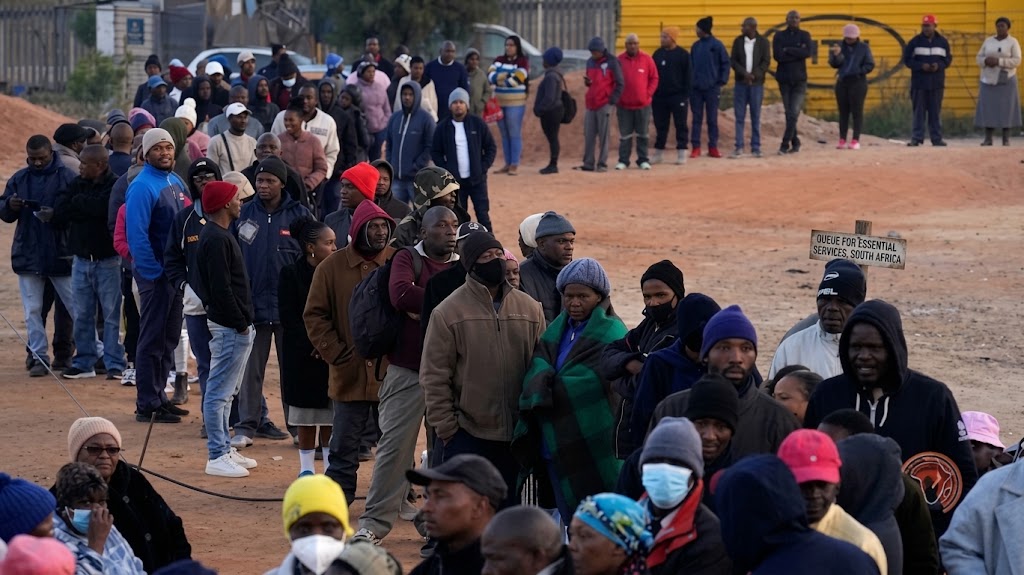
South Africa has begun counting votes from its municipal elections, with the governing African National Congress (ANC) facing a test of its support amid public frustration over water shortages, electricity outages and deteriorating infrastructure.
Voters went to the polls on Wednesday, November 4, 2026, to choose municipal councilors who will help determine the leadership of cities and towns across the country.
Voting and early results
The Electoral Commission of South Africa (IEC) said 29.2 million people were registered to vote at 23,696 voting stations. Stations were scheduled to close at 9:00 p.m. local time, although voters already in the queue were allowed to cast their ballots.
By 5:00 p.m. on election day, approximately 12 million people had voted, according to preliminary IEC figures. That represented roughly 41% of registered voters at that point; the final turnout figure was not yet available.
As of 6:12 a.m. South African time on Thursday, November 5, early results showed the ANC with about 32% of the counted vote and the Democratic Alliance (DA) with about 30%, with approximately 12% of votes counted. The partial tally was not yet representative of the national picture, with relatively few districts reporting in Gauteng and KwaZulu-Natal.
The IEC must ordinarily declare municipal results within seven days of voting, although it may ask the Electoral Court for an extension. Ballots are counted at voting stations before results are verified and declared.
A test for the ANC
The election comes after years of declining support for the ANC. The party received approximately 45.6% of the vote in the 2021 municipal elections and lost its national parliamentary majority in 2024, when it won about 40.2%. Pre-election polls suggested it could lose further ground, though the final 2026 outcome remains uncertain.
Service delivery dominated the campaign, alongside concern about crime and unemployment. Statistics South Africa reported an official unemployment rate of 33.6% in the second quarter of 2026.
Major cities to watch
Several metropolitan contests could determine whether parties govern alone or must negotiate coalitions:
- Johannesburg: The DA campaigned with former party leader Helen Zille as its proposed mayoral candidate. Pre-election polling indicated that no party was likely to secure an outright majority.
- eThekwini: Former President Jacob Zuma’s uMkhonto weSizwe (MK) Party mounted a strong challenge in the municipality that includes Durban.
- Tshwane: The metro containing Pretoria remained a closely watched contest, with the possibility of another coalition council.
- Cape Town: The DA entered the election as the favorite to retain control of the city.
Voters elect councilors in municipal elections; the councils subsequently choose their mayors. Where no party wins a majority of seats, negotiations between parties will determine who leads.
The results will also be watched for indications of the national political mood ahead of the 2029 general election and as Ramaphosa’s term as ANC leader approaches its end in 2027.
Source: Omanghana