Omanghana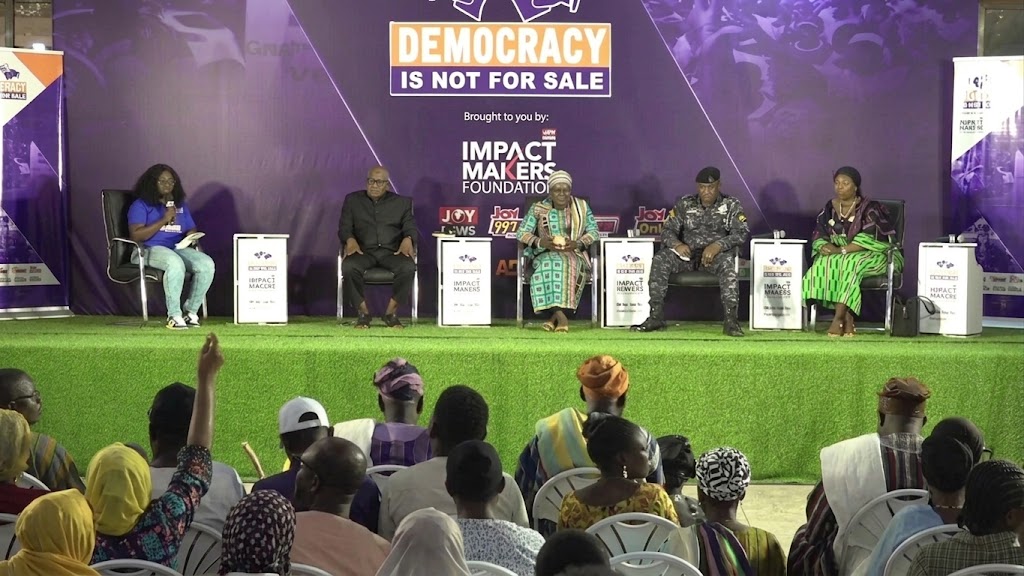
Deputy Director of the Electoral Commission in the Eastern Region, Edward Gyamfi, has blamed the persistence of vote buying in Ghana on the unwillingness of political actors and voters to condemn the practice openly.
Speaking at the “Democracy Is Not For Sale” public dialogue in Koforidua, Mr Gyamfi said both those offering electoral inducements and those accepting them understand the damage caused to democratic governance but often choose to ignore it.
“Most of us are aware that vote buying isn’t good for our democracy. However, both the giver and the receiver have made up their minds that they are going to ignore that fact,” he stated.
Vote Buying Weakens Public Accountability
Mr Gyamfi cautioned voters that accepting money or other inducements from candidates could weaken their moral authority to demand accountability after an election.
He argued that when citizens treat their votes as commodities, elected officials may also regard the transaction as completed and feel less obligated to deliver effective leadership.
“Some people forget that after taking a bribe, you can’t go and ask the person for accountability. You have taken your share, no matter how small the bribe was,” he said.
According to him, voters possess sovereign power under the 1992 Constitution and temporarily entrust that authority to elected leaders to govern in the national interest.
“Even the preamble of our Constitution says sovereignty lies in the people, so the people have the utmost power, which they entrust in the leader to rule the country to make it better,” he explained.
Electoral Inducements Disguised as Transport Money
The Electoral Commission official also drew attention to the use of expressions such as “transportation allowance” to disguise alleged electoral inducements.
He said political actors generally deny bribing voters even when money is distributed during electoral activities.
“If you ask any politician, they will tell you they don’t bribe. Some even call it transportation fee to voters. We all see it, but who bears the cost?” he asked.
Mr Gyamfi further observed that some voters wait for money to be distributed before reporting to polling stations, despite being informed in advance about the voting schedule.
The practice, he said, has contributed to normalizing financial inducements as part of Ghana’s electoral culture.
Warning Over Influence on Children
Mr Gyamfi expressed particular concern that inducement-based politics was gradually influencing younger generations.
He said the practice had become visible even in some primary-school elections, where children allegedly offer sweets to persuade classmates to vote for them.
“It is so bad that even in primary schools, the kids use toffees to lure their mates to vote for them,” he stated.
He called on parents, schools, civic organizations and political leaders to address the problem before children grow up believing that elections must always involve gifts or financial rewards.
“We need to take a critical look at it and fix it before it gets out of hand,” he added.
Citizens Urged to Uphold Electoral Laws
Mr Gyamfi reminded participants that Ghana already has laws governing elections and defining the responsibilities of state institutions, political actors and citizens.
“We have the laws, so it is up to us to use honesty and work with the laws. The law is very transparent; everything is guided by the law,” he said.
He also cited Article 46 of the Constitution, which protects the Electoral Commission’s independence in the performance of its functions.
While acknowledging that money is necessary in society and political organization, he warned that using it to influence voting decisions could undermine the country’s democratic stability.
“Money is good, but if we are not careful of bribery, that will cost us as a country,” he cautioned.
Dialogue Examines Money in Ghanaian Politics
The public forum was held at the Ascension Hall in Koforidua and organized by Adom Brands of the Multimedia Group Limited in partnership with the JoyNews Impact Makers Foundation.
It brought together election officials, civic organizations and other stakeholders to examine the growing influence of money on Ghana’s democratic processes.
Participants discussed electoral bribery, campaign financing, voter education, enforcement and the need for collective action to protect the integrity of elections.
Mr Gyamfi urged citizens to assess candidates according to their competence, character and policy proposals rather than financial inducements.
His remarks at the Koforidua dialogue emphasized that ending vote buying will require action from politicians and voters, since both sides sustain the transactions that weaken electoral accountability.
Source: Omanghana