Omanghana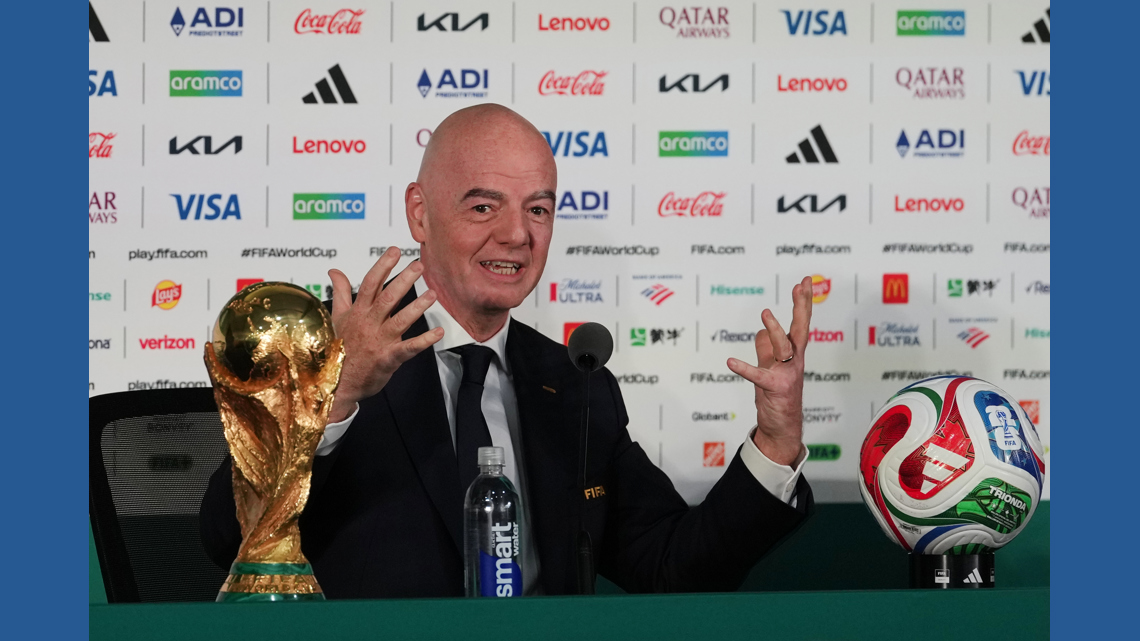
FIFA President Gianni Infantino has described the United States’ decision to deny entry to Somali referee Omar Artan as “unfortunate,” while urging critics to remain calm and acknowledging the limits of FIFA’s authority over national immigration policies.
Speaking at a press conference in Mexico City on the eve of the 2026 FIFA World Cup, Infantino addressed growing controversy surrounding the exclusion of Artan, who had been selected to officiate at the tournament and was poised to make history as the first Somali referee to participate in a World Cup.
The incident has sparked debate over the intersection of international sport, national security policies, and FIFA’s role in protecting officials and participants at global competitions.
Infantino Calls for Patience Amid Criticism
Responding to mounting criticism from fans, lawmakers, and football stakeholders, Infantino defended FIFA’s handling of the situation and pushed back against calls for the organization to directly challenge U.S. authorities.
“Of course, it is unfortunate as well what happened to Omar, the referee from Somalia, but again we don’t control everything,” Infantino said.
“Maybe sometimes it’s good as well to just chill, relax. Sometimes to immediately start screaming and shouting has the opposite effect of finding a solution.”
The FIFA president later clarified that his remarks were intended as a call for patience while efforts continue behind the scenes to address complex issues involving tournament operations and government authorities.
FIFA’s Limits on Immigration Matters
Infantino stressed that FIFA remains a sporting organization and does not possess the authority to override the immigration or border-control policies of sovereign nations.
He argued that while FIFA works closely with host governments to facilitate the movement of players, officials, and fans, final decisions on entry and security screening remain the responsibility of national authorities.
To illustrate his point, Infantino questioned whether countries hosting future FIFA events would accept external influence over their own immigration systems, emphasizing that FIFA must respect the laws of host nations regardless of the circumstances.
The FIFA chief also defended his working relationship with U.S. President Donald Trump, noting that successful delivery of a tournament as large as the World Cup requires extensive cooperation between FIFA and the host government.
According to Infantino, logistical support from federal authorities is essential to the operation of the month-long global event.
U.S. Authorities Cite Security Concerns
The controversy intensified after U.S. officials provided additional details regarding the decision to deny Artan entry into the country.
While initial reports referenced unspecified vetting concerns, officials later stated that information uncovered during the screening process raised national security questions.
According to U.S. authorities, Artan was detained and questioned upon arrival at Miami International Airport before being denied entry under provisions of American immigration law.
Officials maintained that the decision was based on security assessments and insisted that border enforcement standards would not be altered because of a major sporting event.
The allegations have generated significant debate, with supporters of the referee questioning the basis of the claims and calling for greater transparency.
Hero’s Welcome Awaits Artan in Somalia
Despite missing the opportunity to participate in the World Cup, Artan returned to Somalia to an outpouring of public support.
Upon arriving at Aden Adde International Airport in Mogadishu on Wednesday, June 10, he was welcomed by government officials and supporters who gathered to celebrate his achievements.
The reception continued with a large public event, where fans draped him in the Somali national flag and praised his role in elevating the country’s profile on the international football stage.
Many Somali politicians and citizens condemned the U.S. decision, describing it as unfair and discriminatory. Critics linked the incident to broader concerns about travel restrictions affecting Somali nationals.
Referee Remains Optimistic
Despite the disappointment of missing football’s biggest tournament, Artan struck a positive tone during public remarks following his return home.
Thanking FIFA and supporters for their encouragement, he urged young Somalis not to lose hope in the face of setbacks.
“What happened has happened and it was fate,” he said. “I will attend the next World Cup.”
His comments have resonated with many supporters, who view his journey as a symbol of perseverance and resilience despite the circumstances surrounding his exclusion.
Political Controversy Overshadows Tournament Build-Up
As the 2026 FIFA World Cup prepares to get underway, the controversy surrounding Artan’s exclusion has become one of the most politically sensitive stories of the tournament’s opening week.
The dispute has highlighted the challenges FIFA faces when global sporting events intersect with national immigration policies and security concerns. It has also reignited debate over how host nations balance border enforcement with the inclusive spirit that international sporting competitions seek to promote.
While FIFA officials continue preparations for the tournament, the case of Omar Artan remains a powerful reminder that some of the biggest stories at a World Cup can occur far away from the pitch.
Source: Omanghana