Omanghana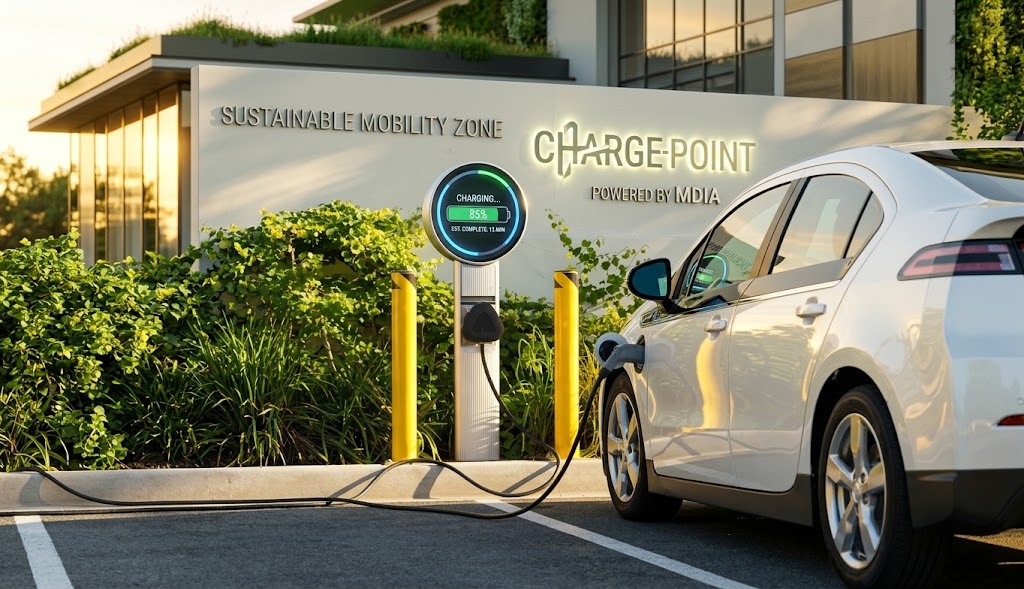
The government is preparing comprehensive legislation to regulate the establishment and operation of electric vehicle charging stations as Ghana’s transition to cleaner transportation gathers momentum.
The proposed framework is intended to protect the reliability of the national electricity grid, manage rising power demand and ensure that charging infrastructure develops in an orderly manner.
Minister of Energy and Green Transition Dr. John Abdulai Jinapor announced the plans during the 2026 Future of Energy Conference in Accra. The conference was organized by the Africa Centre for Energy Policy.
Operators to Seek Energy Commission Approval
Under the proposed legislation currently before Parliament, private companies will be required to obtain authorization from the Energy Commission before installing public EV charging stations.
The approval process will allow regulators and electricity distribution companies to assess the available capacity within each proposed location.
Where the existing network cannot safely accommodate the expected demand, operators may be required to install dedicated transformers or finance other necessary infrastructure upgrades.
The measure is expected to prevent businesses from connecting high-capacity charging systems to local distribution networks without first determining whether the infrastructure can support them.
Fast Chargers Place Pressure on Transformers
The rapid development of charging technology has made it possible for some electric vehicles to receive significant power within five to 10 minutes.
Although fast charging offers greater convenience to motorists, it also creates a high level of instantaneous electricity demand. Several chargers operating at the same location could place substantial pressure on nearby transformers and distribution lines.
Unregulated installations may consequently create local bottlenecks, voltage instability or transformer failures, particularly in densely populated urban areas where electricity demand is already high.
The proposed regulatory system will help authorities determine where fast-charging facilities can be installed safely and which areas require additional network investment.
Growing EV Adoption Requires Careful Planning
Interest in electric vehicles is increasing as motorists seek alternatives to petrol- and diesel-powered transportation.
Research cited during the discussion suggests that switching to an EV can reduce motorists’ running and fuel-related expenses by approximately 40%.
Lower operating costs, improved battery technology and growing environmental awareness could accelerate adoption in the coming years.
However, the government said increased EV usage must be supported by careful power-sector planning. A rapid rise in electricity demand from transportation could affect supply to homes and other productive sectors if the necessary generation and distribution capacity is not developed in advance.
Manufacturing companies, mining operations, data centers and residential consumers all depend on a stable electricity supply. Authorities must therefore ensure that the expansion of electric mobility does not weaken the reliability of power available to existing users.
Regulation Not Intended to Discourage Investment
The Ministry of Energy and Green Transition maintained that the proposed rules are not designed to prevent private investment or slow the adoption of clean transportation.
Instead, the policy is expected to provide clear standards for investors, improve long-term energy security and ensure that electricity tariffs for charging services are transparent and predictable.
A regulated system could also give businesses greater certainty about licensing, technical requirements and the cost of connecting charging stations to the grid.
By coordinating investment with utility companies, operators will be able to identify suitable locations and avoid installing equipment in areas where the distribution network is already under severe pressure.
Grid Expansion Needed for Green Transition
Ghana’s transition to electric mobility will require investment beyond the installation of charging points.
The country will need stronger distribution networks, additional transformers, smart metering systems and improved demand-management technology. Electricity generation capacity must also grow in line with the increasing demand created by vehicles and other emerging industries.
Authorities may need to encourage charging during off-peak periods when electricity consumption is lower. Time-based tariffs could help distribute demand more evenly and reduce the number of motorists charging their vehicles during peak hours.
Renewable energy and battery storage could also support charging infrastructure by reducing dependence on the national grid during periods of high demand.
Parliament to Consider Proposed Framework
Parliament’s consideration of the legislation will determine the licensing, technical and operational standards that charging-station providers must meet.
The regulatory framework is expected to define the respective responsibilities of the Energy Commission, utility companies, charging operators and other institutions involved in Ghana’s electric mobility transition.
The government believes that establishing clear rules at an early stage will help the country avoid infrastructure failures as EV adoption expands.
More information on the effect of fast-charging demand on distribution infrastructure is available in the video report, Government Moves To Tighten Regulation Over Transformer Strain.
Source: Omanghana