Omanghana
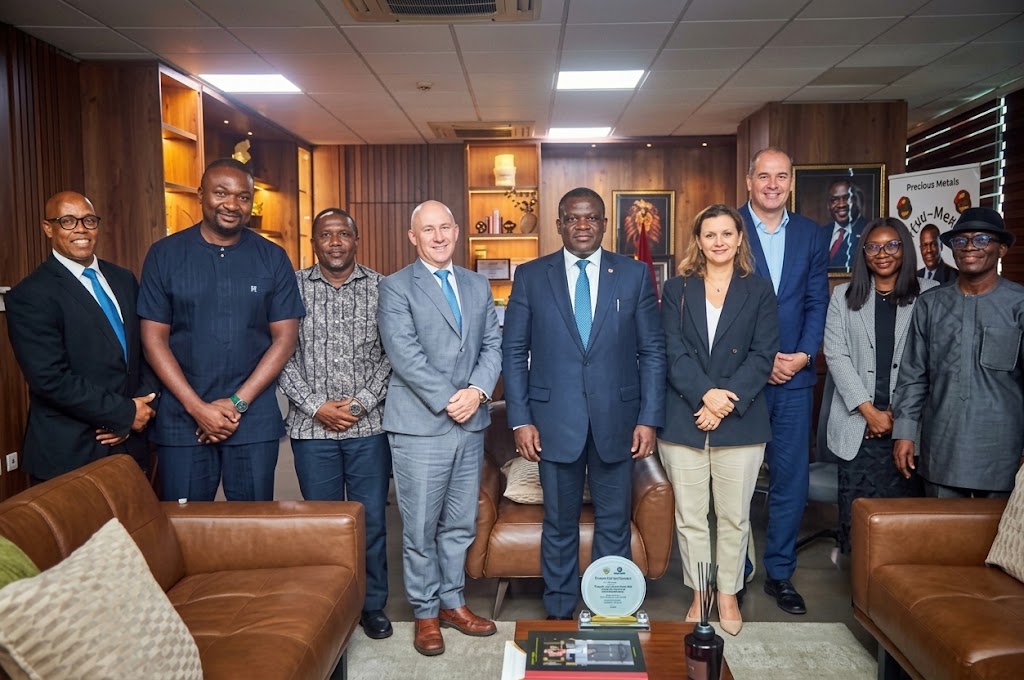
Ghana’s Minister for Communication, Digital Technology and Innovations, Samuel Nartey George, has held strategic discussions with the leadership of global telecommunications technology company Ericsson as part of efforts to strengthen the country’s digital economy.
The bilateral meeting focused on improving Ghana’s telecommunications infrastructure, accelerating its digital transformation agenda and creating sustainable economic opportunities for young people interested in technology.
A major issue discussed was the frequent destruction of fiber-optic cables during road construction and other infrastructure projects. The minister expressed concern that uncoordinated excavation activities continue to damage critical telecommunications infrastructure and disrupt services.
Apart from affecting network quality, repeated fiber cuts impose significant repair costs on telecommunications companies. Sam George said reducing these incidents would allow operators to redirect resources towards expanding broadband services in rural and underserved communities.
The discussion was connected to the government’s “Dig Once” policy, which seeks to improve coordination between road construction agencies, utility providers and telecommunications companies.
Under the initiative, the laying of fiber-optic cables and other underground infrastructure would be incorporated into road construction plans. This is expected to minimize repeated excavation, prevent avoidable damage and reduce the cost of deploying digital infrastructure.
The minister and Ericsson’s leadership also discussed measures to strengthen the resilience of Ghana’s communications networks. Particular attention was given to infrastructure supporting digital financial services and cross-border payment systems.
Reliable telecommunications services have become increasingly important to mobile money, electronic commerce, banking and public service delivery. A major network disruption can therefore affect individuals, businesses and government institutions simultaneously.
Both parties explored the development of offline capabilities that could allow selected financial and essential public services to remain available during temporary network disruptions. Such systems could provide continuity during subsea cable outages and other major infrastructure failures.
The meeting also examined opportunities for Ericsson to support the government’s One Million Coders Program. The initiative is intended to equip young Ghanaians with practical digital skills and prepare them for opportunities in the expanding technology industry.
Sam George emphasized the need for the program to go beyond introductory coding lessons. He called for structured career pathways that would help participants move from training into apprenticeships, industry placements and long-term employment.
The minister indicated that partnerships with major global technology companies could expose beneficiaries to international standards and provide them with practical experience within the wider technology ecosystem.
Such collaboration could also help ensure that the skills offered under the program match the needs of employers. This would improve the employment prospects of participants and support Ghana’s ambition to develop a competitive digital workforce.
The discussion further addressed the protection of telecommunications infrastructure at the international level.
Sam George disclosed that Ghana intends to advocate at an upcoming International Telecommunication Union conference for stronger global legal protections for civilian telecommunications systems.
He argued that communications networks should be recognized as critical public infrastructure because they support emergency response, healthcare, financial transactions and other essential services.
The minister maintained that damage to telecommunications facilities can have consequences extending beyond the communications sector, particularly when communities depend on those networks for emergency assistance and access to essential information.
The engagement with Ericsson forms part of the government’s broader effort to attract strategic partnerships, improve connectivity and position Ghana as a leading digital economy in Africa.
It also highlights the government’s focus on combining physical infrastructure development with skills training, employment creation and stronger protection for the systems supporting Ghana’s growing digital economy.
Source: Omanghana