Omanghana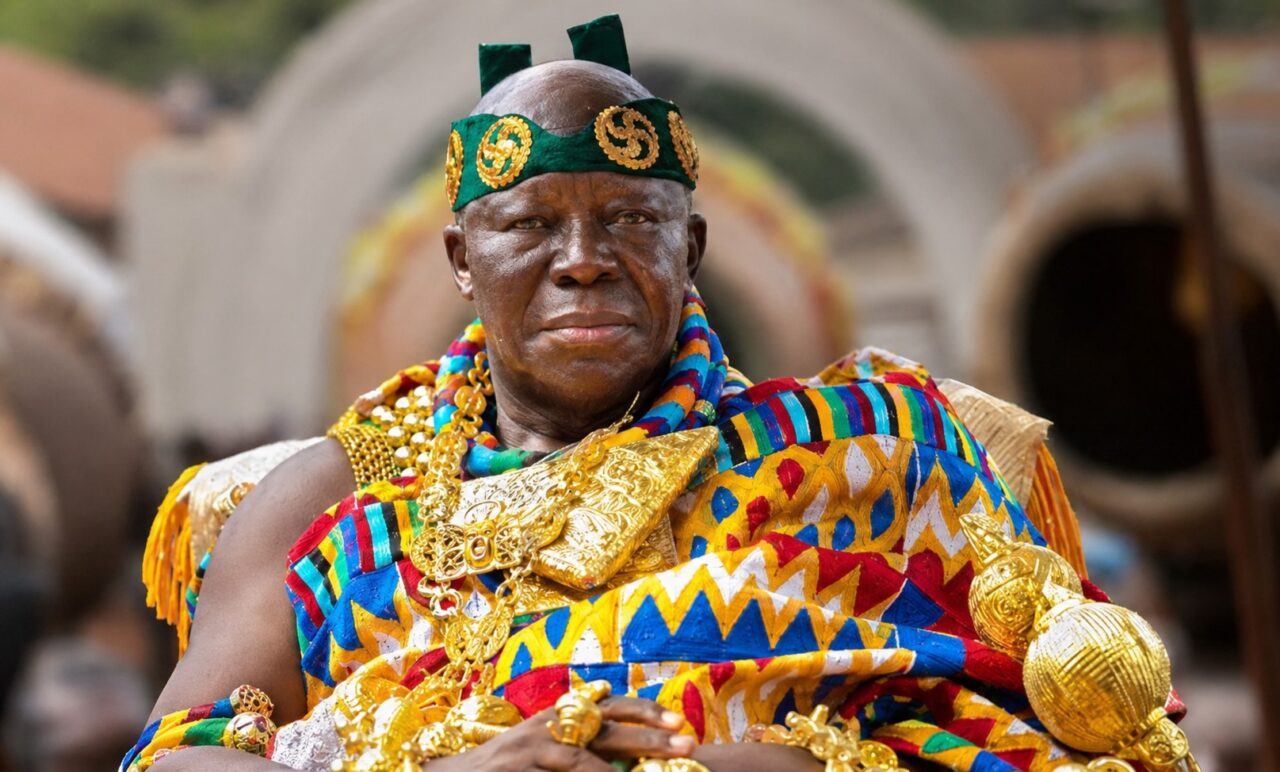
The Asantehene, Otumfuo Osei Tutu II, has destooled Nana Kwabena Nsia Ababio, the Paramount Chief of Kenyase No. 2, after the Asanteman Traditional Council found him guilty of serious customary violations and misconduct.
The decision was announced at the Manhyia Palace in Kumasi on Monday, July 27, 2026, following a formal hearing into allegations involving the treatment and attempted removal of the Kenyase No. 2 Queen Mother.
Nana Kwabena Nsia Ababio, a centenarian, was widely regarded as the longest-serving paramount chief in the Asante Kingdom. Reports place his reign on the stool at between 89 and 93 years.
His removal brings an extraordinary traditional leadership career to an abrupt end and reinforces the Asantehene’s determination to enforce discipline among chiefs and other traditional officeholders within Asanteman.
Dispute Began with Attempt to Remove Queen Mother
The case arose after Nana Kwabena Nsia Ababio allegedly attempted to remove the Omanhemaa, or queen mother, from office without following the required customary procedures.
The paramount chief reportedly accused the queen mother of disrespect and involvement in the unauthorised sale of stool lands. He sought to rely on those allegations as justification for stripping her of her traditional title.
During the hearing, however, the Asanteman Traditional Council found that the accusations had not been adequately proven. The council reportedly concluded that there was insufficient evidence to support the claims against the queen mother.
Instead, attention shifted to the conduct of the paramount chief, his wife and several elders who were accused of subjecting the Omanhemaa to public humiliation and verbal abuse.
Queen Mother Forced to Kneel Before Chief’s Wife
A particularly controversial incident became central to the council’s decision.
According to evidence considered during the traditional proceedings, the paramount chief compelled the queen mother to kneel before his wife as an act of submission.
The action was viewed as a grave violation of Asante custom and a serious insult to the queen mother’s office. Within the traditional structure, an Omanhemaa holds an important constitutional and cultural position that cannot be subordinated to the private authority of a chief’s spouse.
The council determined that forcing the queen mother to kneel publicly undermined the dignity of her stool and breached the customary respect required between royal officeholders.
The incident reportedly became the decisive factor in Otumfuo Osei Tutu II’s judgment against Nana Kwabena Nsia Ababio.
Kingmakers and Stool Elders Also Removed
The sanctions extended beyond the paramount chief. Nearly all the kingmakers and stool elders associated with the matter were also destooled for supporting or participating in the customary violations.
Their removal reflected the council’s finding that the officials had failed to uphold the sacred oaths connected to their positions. As custodians of tradition, kingmakers and elders are expected to protect the integrity of the stool and advise chiefs against conduct that could bring the traditional institution into disrepute.
The mass destoolment demonstrates that traditional officers who assist, tolerate or fail to prevent serious customary breaches may also be held accountable.
Not every official was removed. The Kontihene, Akyeamehene—who serves as chief linguist—and the queen mother’s personal linguist were spared and permitted to remain in office.
Their retention suggests that the council distinguished between those who participated in the misconduct and those who either opposed it or were not directly responsible.
Queen Mother’s Position Restored
The decision effectively restored the queen mother’s traditional authority and rejected the attempt to remove her from office.
The outcome has been viewed as an affirmation of the important role played by queen mothers in Asante governance. Queen mothers are not ceremonial figures; they participate in succession matters, advise chiefs and represent the interests of women, families and communities within the traditional system.
By overturning the attempted removal and punishing those responsible for her humiliation, the Manhyia Palace sent a strong message against the public degradation and marginalization of female traditional leaders.
The ruling also reinforces the principle that allegations against a queen mother or any other traditional officeholder must be properly established through recognized customary procedures.
Manhyia Reasserts Authority Over Asanteman
The destoolment further demonstrates the authority of the Golden Stool and the Asantehene over subordinate stools and paramountcies across Asanteman.
Although paramount chiefs exercise considerable authority within their respective traditional areas, their conduct remains subject to Asante customary law and the supervisory jurisdiction of the Asanteman Traditional Council.
The ruling shows that long service, advanced age or status does not exempt a chief from accountability. Even a traditional ruler believed to have occupied a stool for nearly nine decades can be sanctioned where serious misconduct is established.
Latest in Series of Disciplinary Actions
The Kenyase No. 2 ruling follows a series of disciplinary measures taken by Otumfuo Osei Tutu II against chiefs accused of violating customary rules or abusing their positions.
Recent traditional proceedings have addressed allegations involving illegal mining, fraudulent land transactions, unauthorised land sales and the deployment of armed land guards.
These actions form part of a wider effort by the Asantehene to protect the credibility of the chieftaincy institution and prevent traditional authority from being used for personal enrichment or unlawful activities.
The removal of Nana Kwabena Nsia Ababio and several of his elders is therefore expected to resonate beyond Kenyase No. 2. It serves as a warning to chiefs throughout the kingdom that violations of customary law, attacks on fellow traditional leaders and breaches of sworn responsibility will attract severe consequences regardless of a person’s rank or length of service.
Source: Omanghana