Omanghana
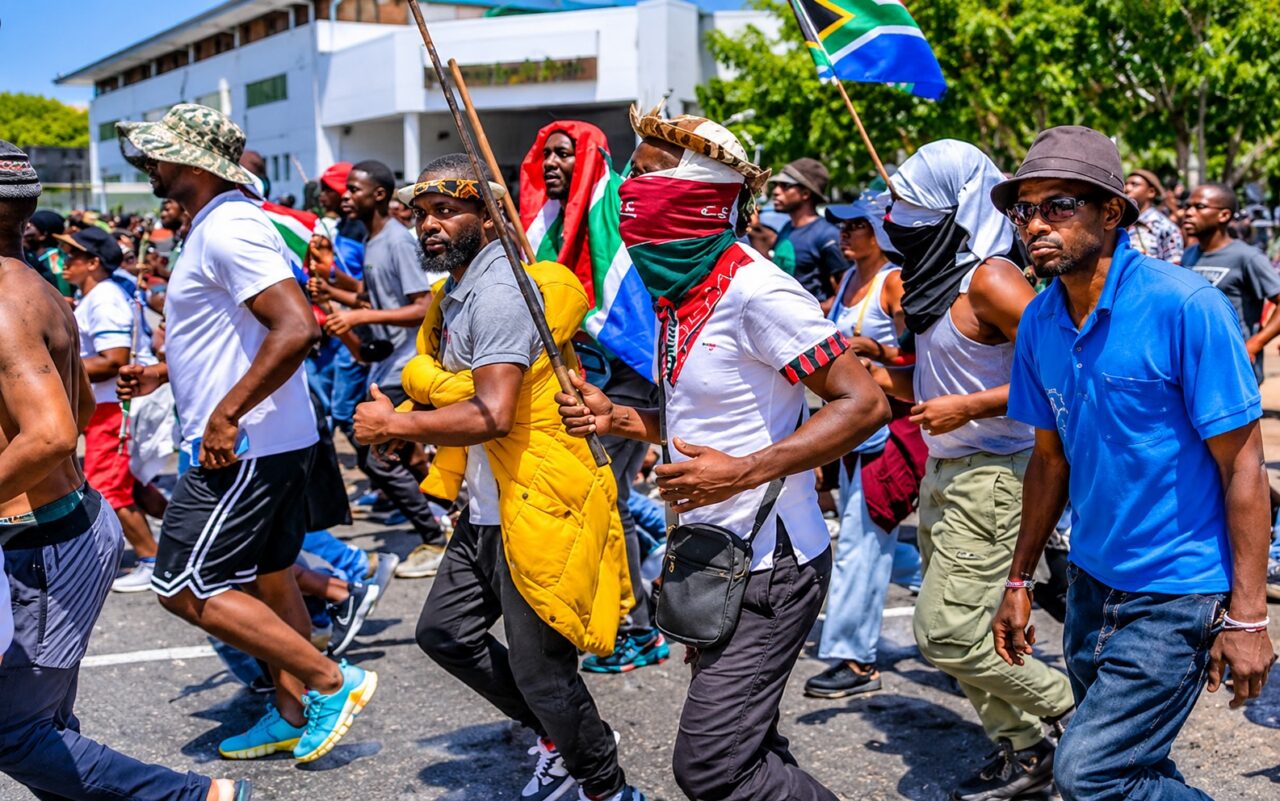
The Durban High Court has issued an interim order placing restrictions on demonstrations by South Africa’s March and March movement following concerns about violence and public safety.
Judge Peter Olsen granted the order on Friday, October 30, 2026, after police sought to halt planned marches by the anti-migrant group. The ruling allows demonstrations under conditions while the wider case remains before the court.
Local reports say the order also requires a pause in protests during the period surrounding South Africa’s local government elections on November 4. The movement’s lawyer, Xolani Zuma, told supporters that demonstrations would resume on November 7 under the court’s conditions.
Conditions for Demonstrations
The restrictions require protesters to follow designated routes and limit marches to daytime hours. Several reports put the permitted hours at 9:00 a.m. to 3:00 p.m., although accounts differ on the precise times.
Participants are also prohibited from carrying weapons, including sticks, or concealing their faces. The order bars violence, damage to property and the burning of buildings.
Judge Olsen stressed that the interim ruling did not establish wrongdoing by March and March or its leaders. The matter is scheduled to return to court on January 18, 2027.
Police Cite Safety Concerns
Acting Police Minister Firoz Cachalia and KwaZulu-Natal Police Commissioner Nhlanhla Mkhwanazi brought the urgent application after weeks of tensions surrounding anti-immigration protests in Durban.
Police cited intelligence about an alleged plan to set fire to the Home Affairs Refugee Reception Centre in Berea, where asylum seekers go to obtain documentation. The alleged plot has not been established as a finding against the movement.
Authorities also told the court that previous deployments had struggled to contain violence and protect residents, businesses and public property.
Movement Defends Right to Protest
March and March has argued that its members have a constitutional right to peaceful assembly and has distanced the organization from violence. Its leaders say their campaign focuses on unauthorised immigration and concerns about crime, employment and public services.
The protests have also followed debate over a July Constitutional Court ruling on access to the asylum system. The judgment removed certain procedural barriers to applying for asylum; the government has clarified that it did not automatically grant refugee status or legalize unlawful migration.
The court proceedings come as South Africa prepares for its local elections. The government has deployed soldiers to KwaZulu-Natal to support police operations.
Source: Omanghana