Omanghana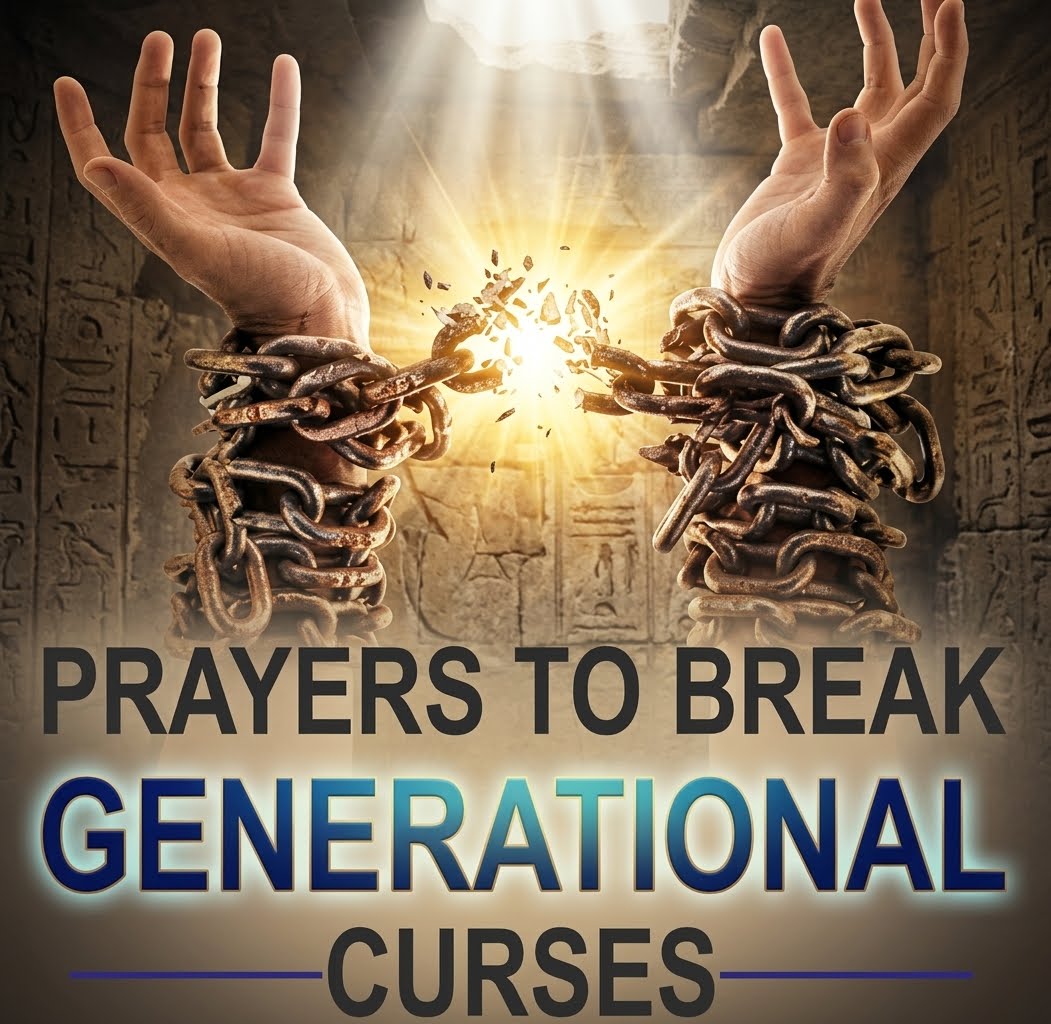
So, should ancestral curses be broken once and for all?
The answer depends partly on what someone means by an ancestral curse and how the term is being used.
If the claim is that a specific spiritual bondage has been broken through prayer, there is no biblical basis for insisting that the same prayer must automatically be repeated every year.
If a person is dealing with an ongoing problem, the person may continue to pray, seek pastoral counsel, repent where necessary, and take practical steps toward change. Repeated prayer, however, does not necessarily mean that the previous prayer failed.
We must also distinguish between a one-time act of deliverance and the continuing process of spiritual growth. Christians pray repeatedly for many things without assuming that God failed to hear them the first time. We pray for wisdom, protection, healing, and strength because our relationship with God is ongoing.
The concern arises when recurring prayers create the impression that believers are never truly free, that their freedom expires, or that they must repeatedly pay spiritual attention to an invisible problem that has never been clearly established.
The New Testament calls Christians to stand firm in their faith, not to live in perpetual uncertainty about whether Christ’s work is sufficient.
What responsibility do pastors have?
Pastors have a responsibility to teach the whole counsel of God. This includes teaching about sin, repentance, spiritual warfare, generational consequences, forgiveness, and the freedom available through Christ.
It also means being careful about the claims made from the pulpit.
When leading an ancestral-curse prayer, a pastor should be able to explain what is meant by the term, which Scriptures support the teaching, and why the prayer is being offered. The congregation should not be made to believe that every problem in their lives is evidence of a hidden curse.
Deliverance ministry should lead people toward faith, repentance, maturity, hope, and a deeper relationship with Christ—not toward an endless cycle of fear and dependence.
Pastors should also help believers recognize destructive patterns that can be stopped through practical decisions. A family may have a history of domestic violence, for example. Breaking that pattern requires more than declaring a curse broken; it also requires accountability, changed behavior, appropriate intervention, and protection for those at risk.
Likewise, a family history of dishonesty can be confronted by choosing integrity. A history of broken relationships can be addressed through healthy boundaries, counselling, and responsible choices.
Prayer and practical action do not have to compete. They can work together.
A better question for the Church
Perhaps the question should not only be, “How often should we break ancestral curses?”
Perhaps we should also ask, “Are we teaching believers how to live in the freedom we proclaim?”
If a church dedicates considerable time to identifying curses but little time to teaching the finished work of Christ, personal responsibility, biblical discernment, and spiritual growth, it may need to reconsider the balance of its teaching.
The Church should not ignore spiritual warfare, nor should it dismiss every believer who seeks prayer for a family struggle. But neither should it turn every hardship into a spiritual diagnosis or leave people perpetually searching for another curse to break.
The gospel is not a message of endless bondage. It is a message of redemption, reconciliation, transformation, and hope.
Conclusion: Let us teach freedom, not fear
So, how often should pastors break ancestral curses?
There is no biblical schedule requiring ancestral curses to be broken every year, every month, or every Sunday. Christians may pray whenever they need God’s help, but recurring prayer should not automatically be interpreted as proof that a previously declared deliverance has failed.
If a curse is understood as bondage from which Christ has delivered a believer, the appropriate response is to trust in Christ’s work and stand firm in faith. If a family continues to experience destructive patterns, the response should include prayer, biblical teaching, personal responsibility, and practical steps toward change.
To our pastors, let us teach with conviction and careful interpretation of Scripture.
To our parents, let us raise children who understand their faith rather than simply inherit our fears.
And to Generation Z and Generation Alpha, your questions are worth answering. Do not be afraid to ask what a teaching means, where it is found in Scripture, and how it should shape the way you live.
The ultimate goal of Christian ministry is not to keep believers returning to the same fear. It is to help them grow into a mature understanding of Christ, walk in the freedom He offers, and live lives that reflect His truth.
If we proclaim that Christ has set us free, let us also teach people how to live as those who have been set free.
“If the Son therefore shall make you free, ye shall be free indeed.” — John 8:36 (KJV)
Source: Omanghana