Omanghana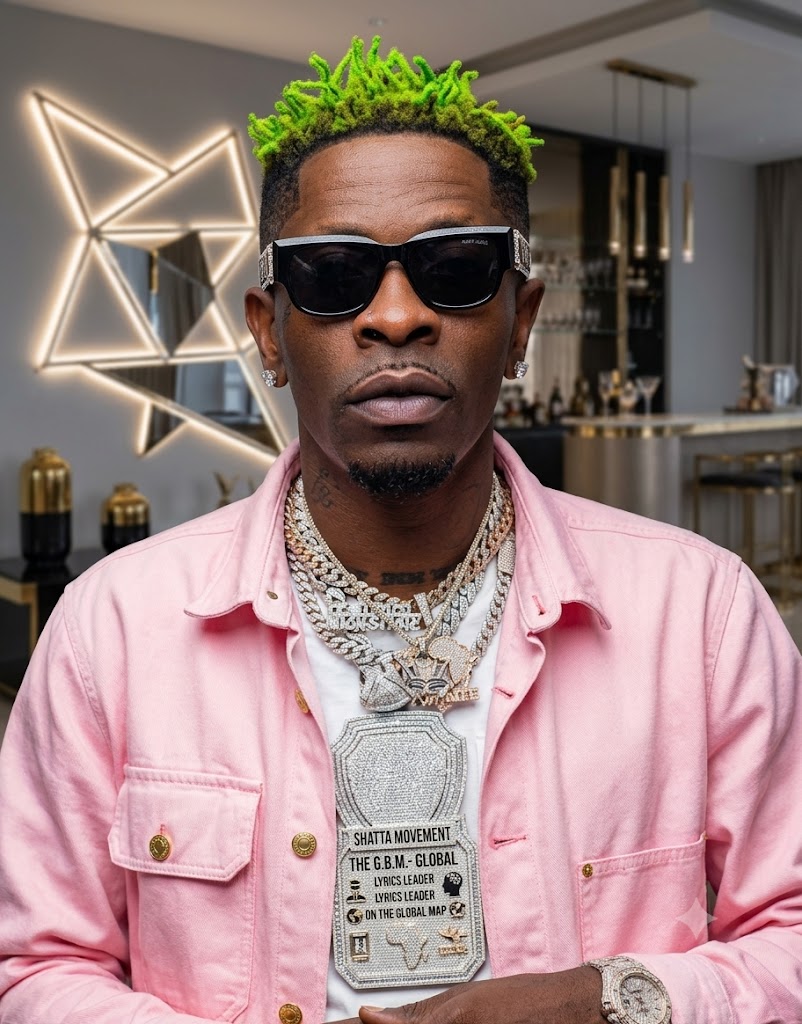
Ghanaian dancehall musician Shatta Wale has claimed that his refusal to accept low performance fees helped change how event organizers value and compensate local artists.
Speaking on Nigeria’s The Honest Bunch Podcast, the outspoken entertainer said Ghanaian musicians were routinely underpaid when he re-emerged as a major force in the industry.
According to Shatta Wale, leading artists were accepting approximately GH¢10,000 for major appearances at the time. Determined to treat music as a serious profession, he demanded GH¢70,000 for a single performance.
He believes the controversial decision encouraged other musicians to reconsider their commercial value and negotiate more aggressively with promoters.
“I refused to perform cheaply because music is my job,” he said, explaining that musicians should not be expected to provide their talent, time and stage production as a favor.
GH¢70,000 Demand Generated Controversy
One of the most prominent examples of Shatta Wale’s campaign for higher compensation occurred ahead of the 2014 Vodafone Ghana Music Awards.
The musician reportedly demanded GH¢70,000 to perform at the ceremony but did not appear after organizers declined the proposed fee. He later argued that Ghanaian performers were not receiving the same financial respect often shown to visiting international artists.
At the time, the demand generated considerable debate. Critics questioned whether paying one performer such an amount was financially sustainable for an event with several artists on its bill.
Supporters, however, viewed his position as an important challenge to an industry culture in which musicians were expected to perform for publicity, awards or recognition rather than appropriate compensation.
Contemporary coverage documented the GH¢70,000 request and the disagreement surrounding his absence from the awards ceremony.
Music Must Be Treated as a Business
Shatta Wale said artists must recognize that performance fees support much more than the individual appearing on stage.
Major performances often require managers, dancers, instrumentalists, disc jockeys, security personnel, stylists, transportation, rehearsal facilities and technical production. Artists may also have to fund music recording, videos, promotion and other costs required to maintain their brands.
He argued that accepting unsustainably low fees makes it difficult for performers to develop professional teams or invest in the quality of their work.
Although exposure can help emerging musicians, Shatta Wale said established performers should not allow major commercial events to present unpaid or poorly paid appearances as charitable opportunities.
In his view, artists must understand contracts, negotiate from positions of strength and assess whether a booking will contribute meaningfully to their careers.
Claims Credit for Changing Industry Expectations
Shatta Wale described himself as a central figure in the shift toward higher booking fees in Ghana.
He said his willingness to reject offers and publicly discuss money made it easier for other entertainers to demand improved terms.
His claim that he single-handedly revolutionized artist compensation is his personal assessment and is difficult to verify independently. Ghana’s performance market has also been influenced by inflation, corporate sponsorship, streaming, social media, larger concerts and the growing commercial power of artist brands.
Other musicians, managers, promoters and industry organizations have similarly advocated for better contracts and compensation.
Nevertheless, Shatta Wale’s repeated public disputes over fees have helped keep artist valuation at the center of conversations about Ghana’s entertainment business.
Shatta Wale Criticizes Low-Paying Foreign Shows
The dancehall artist also criticized Ghanaian musicians who accept what he considers inadequate fees for overseas performances.
He claimed that some established Ghanaian acts travel abroad for bookings worth only US$5,000 to US$7,000. He described those payments as “pennies” compared with the fees commanded by the biggest Nigerian performers.
Shatta Wale urged Ghanaian musicians not to measure international success simply by the number of foreign festivals or concerts on which they appear.
An overseas booking may look impressive on social media, he argued, but it may offer limited financial benefit after flights, accommodation, visas, management commissions and production expenses are deducted.
He advised artists to evaluate the full commercial value of every engagement instead of accepting a show solely because it takes place outside Ghana.
Nigerian Stars Presented as Business Examples
Shatta Wale pointed to Burna Boy, Wizkid and Davido as examples of African artists who have built powerful international touring businesses.
He claimed that leading Nigerian musicians can receive performance offers approaching US$1 million for certain major events.
Actual fees vary according to the artist, venue, country, audience size, production requirements and contractual terms. Such figures are usually confidential and cannot always be independently confirmed.
Shatta Wale’s wider argument was that Ghanaian artists should study how their Nigerian counterparts develop international partnerships, structure tours, market their music and negotiate global contracts.
He said musicians must combine talent with knowledge of branding, publishing, royalties, touring and financial management if they want to compete commercially.
Singer Makes Major Claims About His Own Fees
Shatta Wale has repeatedly described himself as one of Ghana’s most expensive performers.
In a separate 2026 interview, he claimed he could earn as much as US$1 million for a performance in Ghana. He also said he had rejected offers of £20,000 to £30,000 for shows in the United Kingdom because they did not reflect his perceived value.
“If you offer me US$300,000, I’ll tell you to keep the money and come back when you have a bigger budget,” he said while discussing his approach to international bookings.
Those figures represent the musician’s own claims and should not be treated as independently verified standard fees. Booking contracts are generally private, and final payments may differ from an artist’s quoted rate after negotiations.
He has also threatened to charge as much as US$2 million when promoters schedule him as the final act at concerts that run far behind schedule. That statement was made while criticizing delays that force his fans to wait until the early hours for his performance.
Debate Over Ghana’s Music Economy Continues
Shatta Wale’s comments have renewed discussion about the gap between the visibility of Ghanaian music and the income earned by its creators.
Performance fees are only one part of the challenge. Artists have also raised concerns about low royalty payments, weak copyright enforcement, limited touring infrastructure and insufficient investment in music distribution.
Ghanaian rapper Medikal disclosed in April 2026 that his quoted rate could reach GH¢1 million per performance, although he acknowledged that the amount was usually negotiable. He also credited Shatta Wale with helping him understand the business side of music.
For Shatta Wale, the central message remains that musicians should approach entertainment as a profession rather than depend only on popularity and awards.
He maintains that accepting inadequate fees weakens both the individual artist and the wider industry, while stronger negotiation can create better opportunities for performers, managers, dancers, producers and other creative professionals.
Source: Omanghana