Omanghana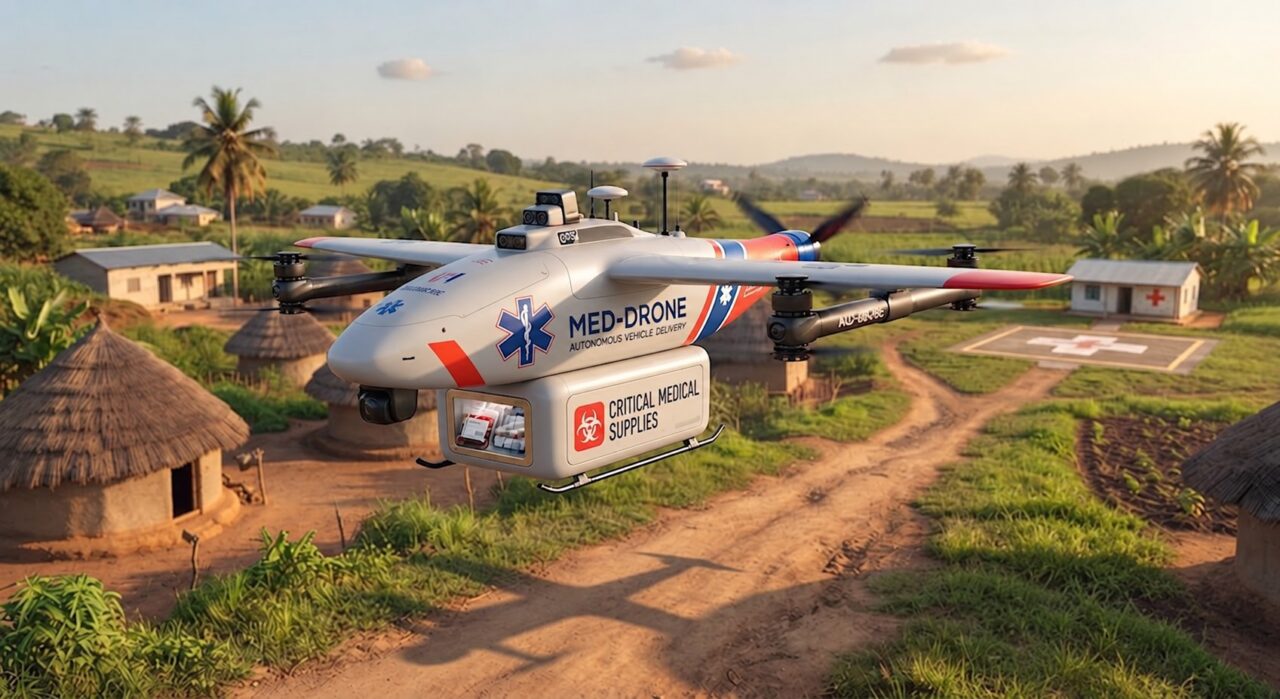
Zimbabwe has authorised daily commercial drone operations for medical deliveries, marking a significant step in the country’s efforts to modernize healthcare logistics and improve access to essential supplies.
The Civil Aviation Authority of Zimbabwe granted Drone Solutions Zimbabwe approval to operate flights beyond the visual line of sight. The authorization allows drones to travel longer distances without remaining within the pilot’s direct view.
The decision follows a long-distance demonstration program conducted in August 2026 between Blue Ridge and Murewa Hospital. The successful trial reportedly showed that medical supplies could be transported safely and quickly between healthcare facilities.
The delivery network will use the KITE uncrewed aircraft system developed by Australian aviation company Kite Aero. Operations will be managed through AXIOM, an American aerospace logistics platform that has recorded more than 41,000 autonomous flights worldwide.
The approval is expected to strengthen Zimbabwe’s position in the Southern African Development Community as countries increasingly explore drone technology to address transportation and healthcare challenges.
Under the program, remote medical facilities could receive urgent supplies in less than 30 minutes. Deliveries by road can take several hours or even days, particularly in communities affected by seasonal flooding and poorly maintained transport networks.
The drones will transport vaccines, blood products, pathology samples, medicines, anti-rabies treatments and emergency maternal health drugs. Specially designed cargo compartments will maintain temperatures between 2°C and 8°C for medical products requiring cold-chain storage.
Maintaining the correct temperature throughout transportation is particularly important for vaccines, blood products and other sensitive supplies that may become ineffective or unsafe when exposed to unsuitable conditions.
The drone service is also expected to help laboratories and hospitals move pathology samples more efficiently, potentially reducing delays in diagnosis and treatment.
Supporters of the initiative say regular commercial flights could create a reliable aerial link between medical distribution centers and underserved communities, reducing the effect of distance and difficult terrain on healthcare delivery.
Zimbabwe’s approval places it among a limited number of jurisdictions that have established a regulatory framework for autonomous commercial flights beyond the operator’s visual range.
However, the rollout comes amid continuing concerns about underfunded public health facilities, shortages of medical professionals and the departure of doctors and nurses seeking better opportunities abroad.
While drone technology cannot resolve all the challenges facing Zimbabwe’s healthcare system, authorities hope the initiative will improve the speed and reliability of medical deliveries, particularly during emergencies and in areas that are difficult to reach by road.
Source: Omanghana