Omanghana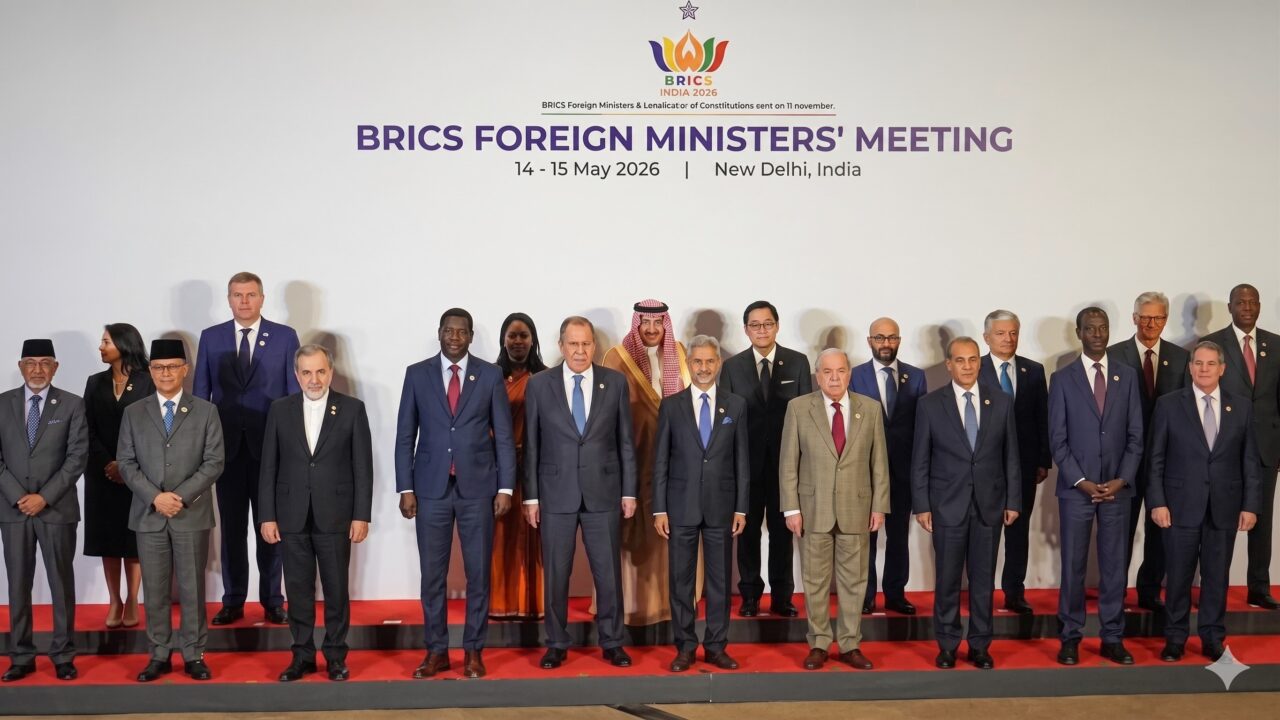
National security advisers and senior officials from BRICS member states have concluded the 16th BRICS National Security Advisers’ Meeting in New Delhi with a commitment to strengthen counterterrorism cooperation, intelligence-sharing, and coordination on emerging global security challenges.
The two-day summit, held under India’s 2026 BRICS Chairship, brought together top security officials from across the bloc, including representatives from Russia, China, Iran, and other member countries, as leaders sought to develop a unified response to an increasingly complex international security environment.
Focus on Emerging Security Threats
A central theme of the discussions was the need to address non-traditional security risks, with delegates examining collaborative approaches to cybersecurity, artificial intelligence-related threats, and the misuse of digital technologies by terrorist organizations and criminal networks.
Participants also explored strategies to improve resilience against evolving technological risks that increasingly transcend national borders.
Enhanced Cooperation on Cross-Border Challenges
The meeting emphasized the importance of safeguarding critical infrastructure and strengthening preparedness against disruptions that could affect global stability.
Security officials discussed coordinated measures to protect energy facilities, improve supply chain resilience, and respond to climate-related challenges that may exacerbate regional instability and humanitarian crises.
In addition, BRICS members agreed to deepen cooperation among their national law enforcement agencies through expanded information-sharing and capacity-building initiatives aimed at improving the prevention and investigation of transnational threats.
India Highlights Regional Stability
In his opening remarks, Indian National Security Adviser Ajit Doval welcomed recent efforts to reduce tensions between the United States and Iran, noting that the reopening of the Strait of Hormuz would be significant for global trade and energy security in West Asia.
He also expressed concern that existing international institutions are struggling to effectively address modern conflicts and geopolitical tensions, calling for greater collaboration among emerging powers to confront shared challenges.
Bilateral Engagements on the Sidelines
On the margins of the summit, Chinese Foreign Minister Wang Yi met with Indian officials and emphasized the importance of accelerating dialogue mechanisms between the two neighboring countries as part of broader efforts to stabilize bilateral relations.
The gathering concluded with participating security chiefs meeting Indian Prime Minister Narendra Modi, who reaffirmed support for expanding BRICS’ role in promoting peace, security, and cooperation while advancing the interests and priorities of the Global South.
The outcomes of the New Delhi meeting reflect the bloc’s growing emphasis on coordinated action against both traditional and emerging security threats as geopolitical dynamics continue to evolve.
Source: Omanghana