Omanghana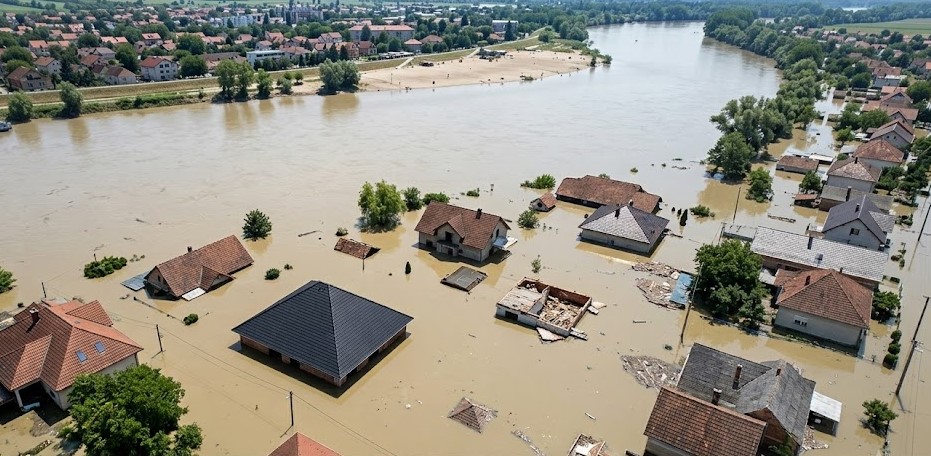
The Ghana Medical Association (GMA) has called on President John Dramani Mahama to take bold and sustained action to address the country’s recurring flooding crisis, warning that the annual disasters continue to threaten lives, public health, and economic activity across the nation.
The appeal follows widespread flooding that recently affected several communities after heavy rains, destroying homes, disrupting businesses, damaging critical infrastructure, and displacing hundreds of residents.
GMA Demands Long-Term Solutions
In a public statement, the GMA stressed that Ghana’s perennial flooding has evolved into a national emergency requiring more than short-term disaster responses.
The Association urged the government to prioritize investments in modern drainage systems, strengthen flood-control infrastructure, and strictly enforce urban planning regulations to prevent indiscriminate construction on waterways, wetlands, and flood-prone areas.
According to the GMA, the recurring floods not only result in the loss of lives and property but also create serious public health risks, including outbreaks of waterborne diseases such as cholera, typhoid, and other sanitation-related illnesses.
The Association further noted that poor waste disposal practices and clogged drainage systems continue to worsen flooding in many urban communities, particularly in Accra and other major cities.
Government Releases GH¢300 Million
Responding to the disaster, the Mahama administration has approved the release of GH¢300 million to support emergency relief operations and finance engineering interventions aimed at reducing the impact of future floods.
The funding is expected to provide immediate humanitarian assistance to affected households while also supporting rehabilitation efforts in damaged communities.
Government officials say part of the allocation will be used to restore damaged infrastructure, improve drainage networks, and implement flood mitigation projects in areas identified as high-risk.
Military Deployed to Clear Waterways
As part of the emergency response, the government has also directed the Ghana Armed Forces to assist in clearing blocked drains, desilting waterways, and removing debris that obstructs the natural flow of water.
The operation is expected to complement ongoing efforts by local assemblies, the National Disaster Management Organization (NADMO), and other state agencies to restore normalcy in flood-affected communities.
Officials believe the intervention will improve drainage capacity ahead of future rainfall and help reduce the likelihood of additional flooding.
Renewed Focus on Urban Planning
The GMA emphasized that lasting solutions will require stronger enforcement of building regulations and land-use planning laws.
The Association urged authorities to prevent unauthorized developments on watercourses and ensure that city planning keeps pace with rapid urban growth.
Urban planners and environmental experts have repeatedly warned that uncontrolled development, inadequate drainage infrastructure, and poor waste management have significantly increased Ghana’s vulnerability to flash floods during the rainy season.
Call for Coordinated National Action
The GMA is encouraging government institutions, metropolitan and municipal assemblies, environmental agencies, and community leaders to work together to develop a comprehensive national flood management strategy.
The Association believes that combining improved infrastructure, effective urban planning, public education, and stronger environmental enforcement will significantly reduce the devastating impact of flooding and better protect lives, property, and livelihoods across Ghana.
With the rainy season continuing, many Ghanaians will be watching closely to see how quickly the government’s relief efforts and long-term mitigation measures are implemented to prevent future disasters.
Source: Omanghana