Omanghana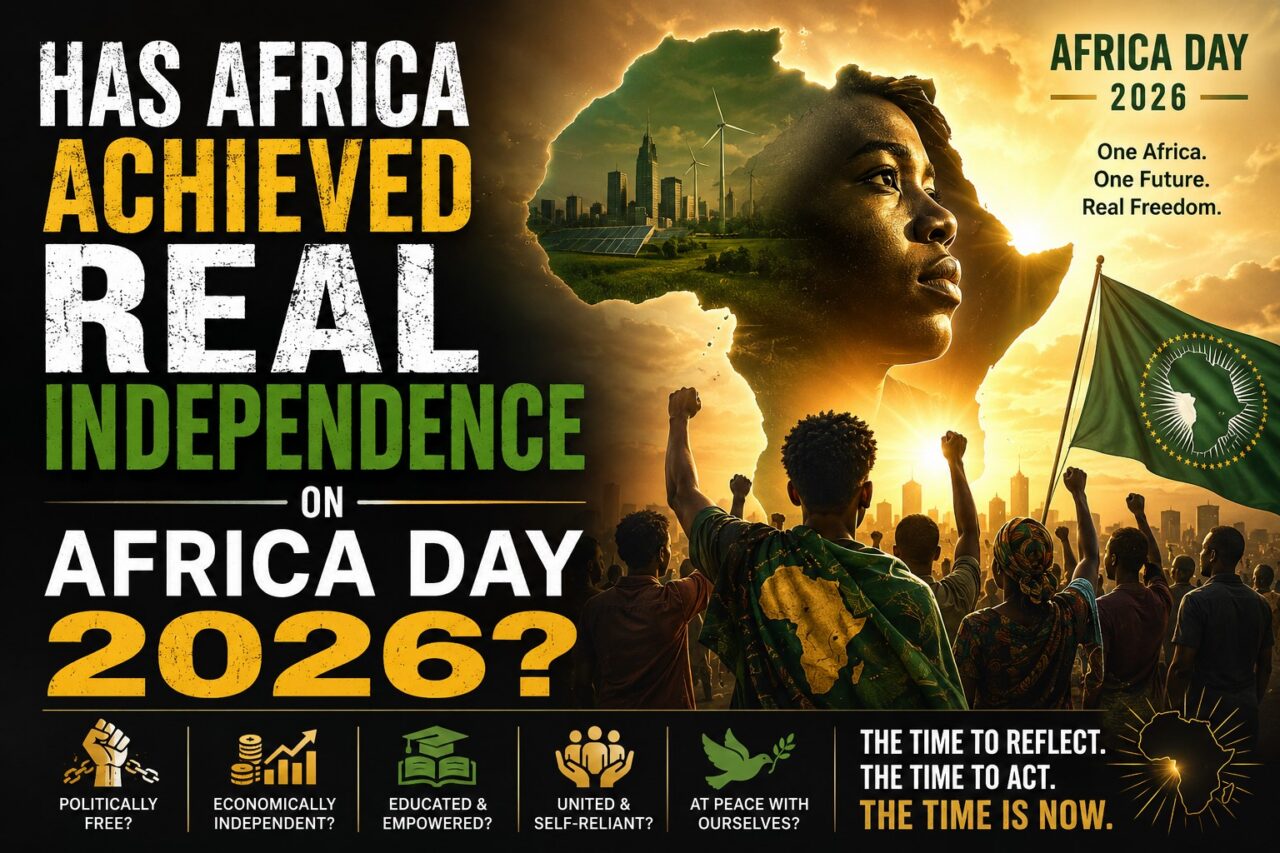
Africa Day 2026 is being commemorated across the continent as leaders, scholars, and citizens reflect on 63 years since the founding of the Organization of African Unity, now known as the African Union. While the anniversary celebrates the historic defeat of formal colonial rule and apartheid systems, a growing consensus has emerged that Africa’s struggle for genuine liberation is far from complete. Across political forums, universities, civil society platforms, and government institutions, discussions surrounding this year’s observance have centered heavily on what many describe as a “second liberation” focused on economic sovereignty, resource control, security, and institutional independence.
As celebrations unfold on May 25, 2026, debates across the continent increasingly argue that political independence alone has not translated into full economic freedom. Critics maintain that many African economies remain structurally dependent on external financial systems, multinational corporations, and foreign geopolitical interests that continue to shape domestic policies and development priorities decades after independence.
One of the most dominant themes surrounding Africa Day 2026 is the growing frustration with dependence on international financial institutions such as the International Monetary Fund. Civil society organizations, economists, and advocacy groups across several African nations argue that repeated IMF bailout programs have weakened fiscal sovereignty by placing national economic decisions under external oversight. Groups such as Ghana’s Integrated Social Development Centre contend that strict structural adjustment measures tied to financial assistance often force governments to reduce public spending, cut subsidies, increase taxes, and implement austerity policies that intensify hardship for ordinary citizens.
Supporters of economic reform movements argue that true liberation requires African governments to reduce reliance on debt-driven development models and establish stronger domestic financial systems capable of supporting long-term industrial growth without external conditionalities. These concerns have become more pronounced as several African economies continue grappling with inflation, currency instability, and mounting debt repayment obligations.
At the same time, resource nationalism has emerged as another defining issue in Africa’s modern liberation debate. For decades, critics say Africa has remained trapped in an extractive economic structure where raw minerals and commodities are exported cheaply while higher-value finished products are imported at significant cost. In response, a growing number of governments are now moving aggressively to reclaim greater control over natural resources and expand local industrial processing.
In the Sahel region, countries including Burkina Faso have introduced state-backed sovereign wealth initiatives and expanded state influence over gold mining assets in an effort to prevent the large-scale outflow of mineral wealth to foreign markets. Across the continent, governments are increasingly insisting that refining and processing occur locally before minerals are exported. Nigeria’s expanding push to attract Turkish investment into its solid minerals sector and Guinea’s refinery agreements with Chinese firms are widely viewed as part of a broader continental effort to create domestic industries, generate skilled employment, and retain more value within African economies.
The issue of security and governance has also become central to conversations about what liberation truly means in the modern African context. Several countries continue to battle armed insurgencies, organized criminal networks, separatist conflicts, and political instability that undermine national sovereignty and public trust in state institutions. In nations such as Nigeria, growing public frustration has emerged over accusations that security agencies devote extensive resources toward policing online criticism, bloggers, and journalists under cybercrime legislation while rural populations remain exposed to banditry, kidnappings, and violent attacks.
Meanwhile, democratic instability across the Sahel has intensified debates over governance and foreign influence. Military-led governments in Mali, Niger, and Burkina Faso continue to justify their coups by arguing that previous civilian administrations failed to protect citizens from jihadist violence and prolonged foreign dependence, particularly on former colonial power France. The rise of military juntas has divided opinion across the continent, with some viewing them as symbols of anti-colonial resistance while others warn they threaten democratic institutions and long-term political stability.
Africa’s position within intensifying global geopolitical competition has further complicated the liberation debate. Analysts note that the continent remains a major arena for influence among global powers including the United States, China, Russia, Türkiye, and the European Union. Recent high-profile diplomatic engagements involving leaders such as Donald Trump and Vladimir Putin in Beijing reinforced perceptions that China’s expanding global economic reach — particularly through the Belt and Road Initiative — has positioned Africa at the center of a new strategic competition for trade routes, infrastructure control, and resource access.
While many African governments have welcomed Chinese investment in railways, ports, highways, and industrial zones, critics warn that replacing historical Western dominance with heavy foreign ownership of strategic assets could create new forms of dependency. Concerns have grown in several countries over large foreign equity stakes in critical infrastructure, including refineries, ports, and mining operations.
Despite these structural challenges, Africa Day 2026 is also highlighting significant signs of progress and increasing continental self-reliance. The African Continental Free Trade Area continues advancing efforts to reduce intra-African trade barriers and establish a unified continental market capable of strengthening regional supply chains and reducing dependence on foreign imports. Economists believe the agreement has the potential to become one of the world’s largest free trade zones and a major driver of industrialization if fully implemented.
Financial innovation is also gaining momentum. Systems such as the Pan-African Payment and Settlement System are allowing countries to conduct cross-border transactions using local currencies rather than relying heavily on the US dollar. Advocates argue that such initiatives could gradually strengthen monetary independence and reduce exposure to external financial shocks.
Across environmental and scientific sectors, African-led innovation is increasingly being celebrated as evidence that locally designed solutions may offer more sustainable results than externally imposed development models. Conservation projects focused on restoring degraded ecosystems using indigenous species and traditional ecological knowledge are being promoted as examples of how African expertise can address climate change and desertification challenges in ways better suited to local realities.
For many observers, Africa Day 2026 has evolved beyond a ceremonial remembrance of political independence into a broader continental reflection on what genuine liberation should mean in the 21st century. While the continent has undeniably broken free from formal colonial rule, the ongoing struggles over economic autonomy, security, governance, industrialization, and foreign influence suggest that Africa’s pursuit of full sovereignty remains an unfinished journey.
Source: Omanghana