Omanghana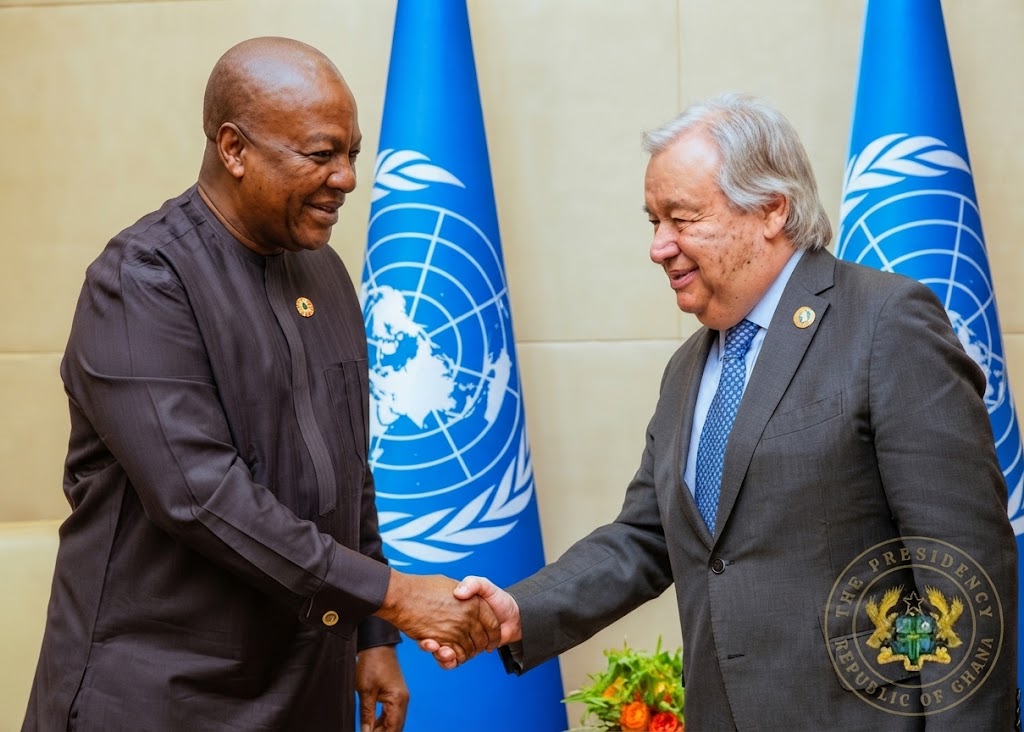
President John Dramani Mahama has clarified that his administration’s “Accra Reset” initiative is not intended to isolate Ghana from the international community but to build a new development model centered on local solutions, national ownership and long-term global partnerships.
Mahama made the remarks on Monday, September 21, 2026, during a high-level dialogue titled “Full Circle: Making Global Development Work Again,” held on the sidelines of the 81st United Nations General Assembly in New York.
He said Africa’s journey towards genuine self-determination would still require structured international cooperation. However, such partnerships must move countries away from long-term aid dependency and support the development of strong, sustainable domestic systems.
The Accra Reset initiative was developed with the involvement of former Nigerian President Olusegun Obasanjo following the economic and social disruptions caused by the COVID-19 pandemic.
It seeks to address what its promoters describe as Africa’s “triple dependency burden” of geopolitical vulnerability, reliance on donors and marginalization within the global decision-making system.
Mahama argued that recent reductions in international development financing had exposed the risks African countries face when essential public services depend heavily on external support.
Ghana, for example, reportedly faced an immediate $78 million financing shortfall affecting maternal healthcare, nutrition and HIV/AIDS programs following the termination of related United States Agency for International Development initiatives.
The President explained that the Accra Reset does not call on development partners and philanthropic institutions to withdraw their support. Instead, it asks them to change how assistance is designed and delivered.
He urged international partners to move away from fragmented, short-term interventions and support country-led transitions that integrate programs into national public systems.
According to Mahama, sustainable development will require countries to build their own research capacity, regulatory institutions, manufacturing industries and distribution networks while maintaining equitable partnerships with the international community.
To translate the initiative into practical results, Ghana and the Accra Reset Presidential Council will convene governments, development institutions, philanthropies, private businesses and civil society organizations in the coming months.
Expected partners include Brazil’s Fiocruz and development institutions from India, Indonesia and the Gulf region.
The proposed engagements are expected to produce customized country-level agreements designed to help participating nations develop self-sustaining systems in critical areas such as healthcare, medicine production, digital infrastructure and mineral development.
The approach is intended to give countries greater control over their development priorities while ensuring that international support strengthens rather than replaces domestic institutions.
Representatives of the World Health Organization and other international partners expressed support for the initiative during the dialogue. They emphasized the need to replace top-down development models with more equitable partnerships led by the countries and communities they are intended to serve.
Mahama said the Accra Reset ultimately seeks to redefine cooperation between Africa and its global partners by replacing dependency with shared responsibility, mutual respect and long-term institutional development.
Source: Omanghana