Omanghana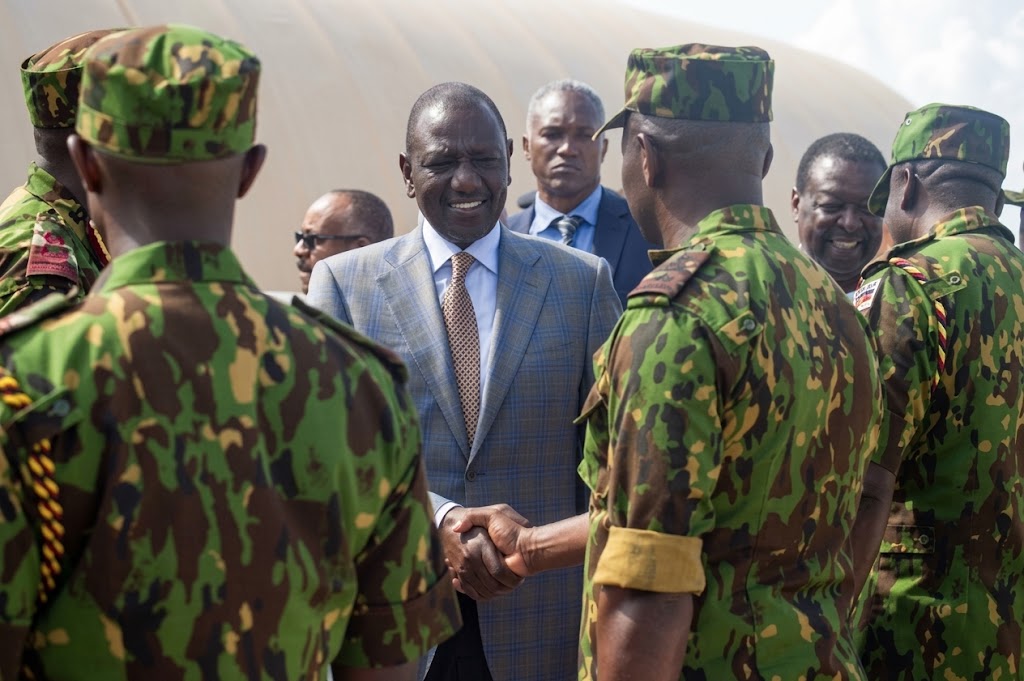
Kenya’s long-running effort to reform the National Police Service has returned to the national spotlight following the publication of a taskforce report that former Chief Justice David Maraga says the government failed to release and fully implement.
Maraga, who chaired the National Taskforce on Police Reforms, published the complete report after issuing President William Ruto’s administration with a seven-day ultimatum. He maintained that the document’s recommendations were essential to securing the independence and effective operation of the police, prison and correctional services.
The report proposes reforms estimated to cost approximately KSh106 billion. Its recommendations cover police leadership, recruitment, remuneration, housing, equipment, training, technology and institutional oversight.
While the government says implementation is progressing, Maraga and other reform advocates argue that greater attention has been given to salaries, equipment and uniforms than to the structural changes required to protect the police command from political interference.
A central concern is the level of presidential authority over senior police appointments. Kenya’s 2010 Constitution sought to establish an independent police service operating within a system of civilian regulation and oversight.
However, amendments introduced through the Security Laws (Amendment) Act of 2014 changed the procedures for appointing senior commanders. Critics argue that the amendments weakened competitive recruitment and increased executive influence over the Inspector-General, deputy inspectors-general and other senior officers.
Maraga described the resulting command arrangement as institutional “capture,” arguing that control over senior appointments and removals undermined the operational independence envisioned by the Constitution.
The National Police Service Act states that the president may remove, retire or redeploy a deputy inspector-general before the officer’s term expires. Reform advocates have called for stronger security of tenure and a more transparent appointment process.
Kenya’s Constitution prohibits national security organs from acting in a partisan manner, advancing the interests of a political party or interfering with a legitimate political cause.
Questions have also been raised about the effectiveness of civilian oversight. The National Police Service Commission is responsible for recruitment, promotions, discipline and other human-resource functions within the service.
Critics claim that some of those responsibilities have been bypassed or contested by the police command and Interior Ministry. The NPSC, however, says progress has been made through salary adjustments, promotions, mental-health support and proposed legislative amendments.
The Independent Policing Oversight Authority has faced similar challenges while investigating alleged police killings, deaths in custody, abductions and enforced disappearances. Human-rights organizations have repeatedly demanded faster investigations, greater cooperation from police commanders and prosecutions where evidence establishes criminal responsibility.
Concerns about police accountability intensified following demonstrations in which officers were accused of using excessive force. During events marking the anniversary of the 2024 anti-government protests, police used tear gas and detained hundreds of people. Civil society organizations and victims’ families continued to demand justice for at least 60 people reported killed during the earlier unrest.
The rollout of redesigned police uniforms has created another dispute over the government’s priorities. Media reports and political critics have placed the cost of the procurement at between KSh2.8 billion and KSh3 billion.
The government has not publicly confirmed the final overall value. The National Police Service has also rejected some claims surrounding the procurement and the identity of the contracted supplier.
Critics contend that changing uniforms offers a visible but limited response to problems involving accountability, command independence and public confidence. Supporters of the program argue that professional clothing can improve officers’ morale, identity, operational suitability and dignity.
President Ruto has defended the new uniforms as one component of a wider police transformation program. His administration previously announced a KSh28 billion modernization plan covering equipment, weapons, digitized police operations, housing and improved working conditions.
The government has also recruited thousands of new officers and expanded specialized training. More than 6,000 recruits participated in recent graduation ceremonies, including officers assigned to the Kenya Police Service and Administration Police Service.
Speaking at an Administration Police passing-out parade in Embakasi, Ruto said all police reforms and related expenditure should be open to scrutiny because they are financed by taxpayers.
He urged critics to base their assessment on evidence and facts, adding that accountability for public expenditure is a constitutional obligation.
The continuing dispute reflects competing definitions of police reform. The government has emphasized welfare, recruitment, equipment, technology and professional identity, while Maraga and civil society groups have placed greater emphasis on independent leadership and enforceable accountability.
Reform advocates are calling for the restoration of transparent recruitment and public vetting for senior commanders, stronger protection for the tenure of police leaders and clearer separation between operational command and executive authority.
They also want the NPSC and IPOA to receive greater institutional support, including mechanisms compelling commanders to cooperate with investigations and provide evidence in cases involving alleged police abuses.
The debate is likely to continue as the government implements selected parts of the taskforce report. The central question remains whether modernization will be accompanied by changes capable of strengthening police independence, civilian oversight and public accountability.
Source: Omanghana