Omanghana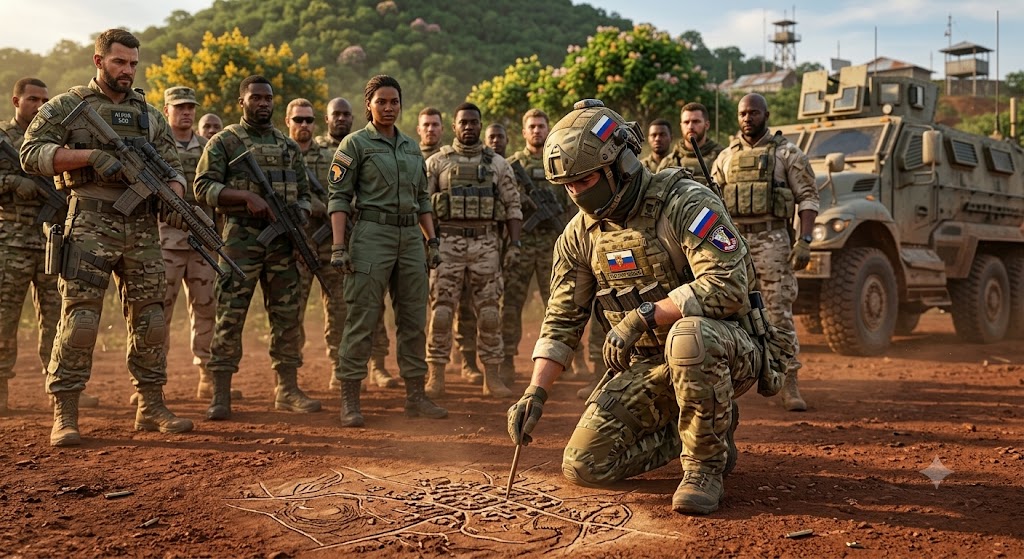
Russian military instructors attached to the state-backed Africa Corps have begun tactical airborne training for the Malian Armed Forces, marking a significant expansion of Moscow’s military partnership with Mali as competition for influence in the Sahel region continues to intensify.
Footage broadcast on Malian state television showed more than 20 soldiers from Mali’s 33rd Airborne Regiment participating in parachute exercises at Bamako International Airport under the supervision of Russian instructors.
The drills featured Russian military equipment, including D-6 Series 4 parachute systems and a Mi-8AMTSh military transport helicopter, highlighting the growing operational cooperation between the two countries.
Russia Deepens Military Cooperation With Mali
The latest exercises underscore Russia’s expanding role in Mali’s defense sector following the withdrawal of several Western military missions from the country.
Unlike earlier advisory missions, the new training program demonstrates closer operational integration between Russian personnel and Malian forces, particularly in specialized airborne operations.
The Africa Corps, which has assumed many of the functions previously associated with the Wagner Group, has become a central component of Russia’s security strategy across several African countries.
Military analysts say the program is intended to strengthen the capabilities of Mali’s airborne units while reinforcing Russia’s long-term strategic presence in the Sahel.
Advanced Russian Equipment Featured
The televised exercises showcased Malian troops training with Russian-made military equipment.
Paratroopers conducted jumps using D-6 Series 4 parachute systems while a Russian-marked Mi-8AMTSh helicopter supported the operation by transporting troops during the drills.
The exercises are designed to improve airborne deployment techniques, rapid insertion capabilities, and coordination between aviation and ground forces.
The display also serves as a demonstration of the growing military partnership between Bamako and Moscow.
Experts Highlight Mali’s Airlift Limitations
Despite the high-profile nature of the exercises, defense analysts note that Mali’s independent air mobility capabilities remain limited.
According to military assessments, Mali’s operational fleet consists of a relatively small number of transport and attack helicopters, including Mi-8 and Mi-171Sh transport helicopters alongside Mi-24 attack helicopters.
These assets are considered sufficient for transporting only limited numbers of troops during a single operation, restricting the country’s ability to conduct large-scale airborne missions without external logistical support.
Analysts suggest that any major airborne operation would continue to rely heavily on Russian equipment, personnel, and logistical assistance.
Africa Corps Expands Presence
To support its operations in Mali, Russia has reportedly deployed approximately 1,500 Africa Corps personnel to the country.
The force is believed to include aviation assets, transport helicopters, and combat aircraft intended to assist Malian forces in counterinsurgency operations against armed groups operating across the Sahel.
The deployment reflects Russia’s broader effort to strengthen security partnerships in Africa following the restructuring of its military presence after the Wagner Group’s withdrawal.
Sahel Becomes Arena for Strategic Competition
The expanding military relationship comes amid increasing geopolitical competition between Russia and Western powers in the Sahel.
Mali, Burkina Faso, and Niger—all members of the Alliance of Sahel States (AES)—have shifted their security partnerships toward Moscow after military-led governments in the three countries ended long-standing defense cooperation with France and other Western allies.
Meanwhile, the United States has signaled continued interest in maintaining security cooperation in the region.
Washington recently announced a security assistance package for neighboring Niger aimed at improving border surveillance and counterterrorism capabilities, a move viewed by analysts as part of broader efforts to retain influence in West Africa.
Russia has responded by expanding military support to Mali through equipment deliveries, operational training, and security cooperation.
Security Challenges Persist
The training exercises come as Mali continues to face persistent attacks from armed groups operating across the country.
Recent coordinated assaults targeted military positions in several regions, highlighting the complex security environment confronting both Malian and Russian forces.
Armed groups have intensified operations in northern and central Mali, where insurgent violence continues to challenge government control despite increased military cooperation with Russia.
The attacks have underscored the ongoing difficulties facing counterinsurgency efforts in the Sahel and the security risks confronting foreign military partners operating in the region.
Russia Strengthens Long-Term Presence
The airborne training initiative reflects Moscow’s broader strategy of expanding defense cooperation with African partners through military instruction, equipment transfers, and operational support.
For Mali, the partnership provides access to specialized military training and equipment as the country seeks to strengthen its armed forces against persistent insurgent threats.
As geopolitical competition in the Sahel continues to evolve, analysts expect Russia’s military engagement in Mali to remain a key element of the region’s changing security landscape.
Source: Omanghana