Omanghana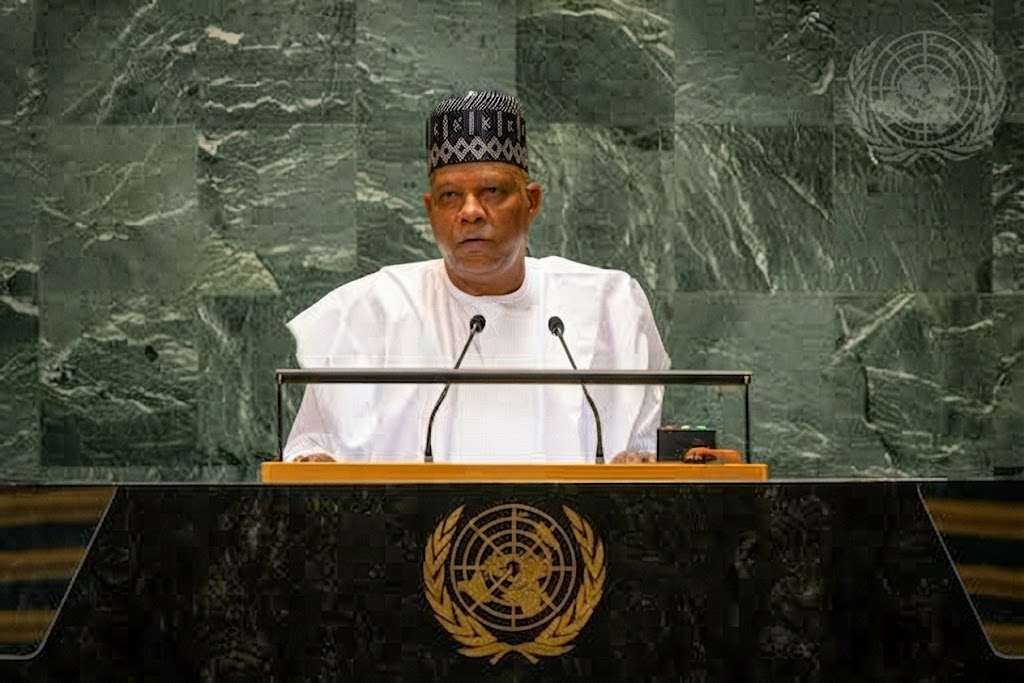
Nigeria has renewed its campaign for a permanent seat on the United Nations Security Council as part of its diplomatic engagements at the 81st United Nations General Assembly in New York.
Vice President Kashim Shettima is leading the Nigerian delegation and representing President Bola Ahmed Tinubu at the high-level gathering.
Ahead of the main engagements, Shettima received a briefing from Minister of Foreign Affairs Bianca Odumegwu-Ojukwu and Nigeria’s Permanent Representative to the United Nations, Jimoh Ibrahim. The discussions focused on Nigeria’s priorities and diplomatic strategy for the General Assembly.
A central part of the country’s agenda is the demand for reforms to the 15-member Security Council, whose permanent membership has remained largely unchanged since the United Nations was established in 1945.
Nigeria maintains that the council’s current structure does not adequately represent Africa’s population, geopolitical importance or contribution to international peace and security. Although African countries account for more than a quarter of the UN’s total membership, the continent does not have a permanent seat on the council.
The campaign is consistent with the Common African Position outlined in the Ezulwini Consensus and Sirte Declaration. Under that framework, African countries are demanding at least two permanent seats and five non-permanent seats on an expanded Security Council.
African leaders have also argued that any permanent seats allocated to the continent should carry the same privileges as those held by the five current permanent members: China, France, Russia, the United Kingdom and the United States.
Nigeria has presented itself as a leading candidate for one of the proposed seats, citing its large population, regional influence and long-standing participation in peacekeeping operations across Africa and other parts of the world.
The country has played prominent roles in conflict mediation and peace missions through the United Nations, African Union and Economic Community of West African States.
Nigeria’s Security Council campaign forms part of a broader reform program being advanced by Shettima at the General Assembly. The delegation is also calling for changes to the international financial system, structured relief for countries facing sovereign debt pressures and fairer global trade policies.
Successive Nigerian administrations have maintained that institutions created after the Second World War must be restructured to reflect present-day demographic, economic and security realities.
Some major powers, including the United States, have expressed support for increasing Africa’s permanent representation on the Security Council. However, negotiations remain divided over the number of additional seats, the countries that should occupy them and whether new permanent members should receive veto power.
African governments argue that excluding new permanent members from veto rights would preserve existing inequalities and leave the continent at a continuing disadvantage within the global security system.
Nigeria is expected to use its meetings with world leaders and international organizations in New York to build support for its candidacy and the wider African demand for meaningful Security Council reform.
Source: Omanghana