Omanghana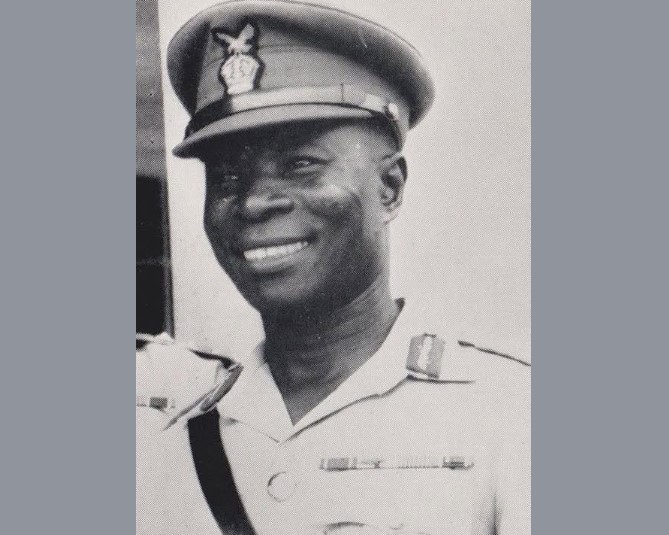
The Government of Ghana has officially renamed the country’s main international gateway, reverting it to Accra International Airport, in a symbolic move timed to coincide with the 60th anniversary of Ghana’s first military coup.
The announcement marks the removal of the name of Emmanuel Kwasi Kotoka, the Major General who led the February 24, 1966 coup that overthrew Ghana’s first president, Kwame Nkrumah.
In a statement, the Ministry of Transport said the renaming was intended to restore the airport’s original 1958 designation and project a neutral, inclusive national identity consistent with Ghana’s democratic values.
According to the ministry, the name Accra International Airport is also the facility’s most internationally recognized identity, predating the political upheavals that followed independence.
“The change reflects Ghana’s commitment to constitutional rule and democratic governance, while restoring a name that predates military intervention in national politics,” the statement said.
Authorities emphasized that the change is purely nominal and will not affect airline operations or international travel. The airport’s International Air Transport Association (IATA) code ACC and International Civil Aviation Organization (ICAO) code DGAA remain unchanged.
As a result, airlines, ticketing systems, air traffic control, and international aviation databases will continue to operate without disruption.
Historical Background
The airport was renamed Kotoka International Airport in 1969 by the ruling military government to honor Kotoka, who was killed at the airport site during a failed counter-coup in 1967.
For decades, the naming has been a source of controversy, particularly among scholars, civil society groups, and political activists who argue that commemorating a coup leader at a national gateway contradicts Ghana’s long-standing reputation for democratic stability.
Proponents of the renaming—including civil society organizations and petitioners who have campaigned on the issue for years—say the decision is a long-overdue correction.
They argue that while Ghana must study and remember its military past, state symbols should reflect constitutional order rather than its overthrow.
“You don’t erase history by renaming an airport,” one civil society advocate noted. “History remains in our books and institutions. What changes is what we choose to celebrate.”
Opposition voices, including members of Kotoka’s family and some former military officers, have criticized the decision as an attempt to diminish Kotoka’s role in Ghana’s history.
They argue that Kotoka acted within the political context of his time and that removing his name risks oversimplifying a complex period in the nation’s past.
The renaming comes at a time when Ghana continues to reflect on its post-independence journey—marked by early coups, years of military rule, and a sustained return to constitutional democracy since 1992.
By restoring the airport’s original name, the government appears to be signaling a desire to separate modern Ghanaian identity from the legacy of military intervention, while keeping historical reckoning within academic and civic spaces rather than national monuments.
As signage is updated and official documents adjusted, Accra International Airport once again becomes the face of Ghana to the world—this time under a name that predates coups, controversy, and political division.
Source: Omanghana