Omanghana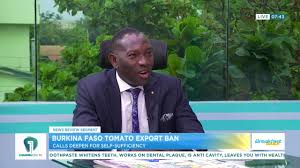
A statement by Lamtiig Apanga, Acting Deputy CEO of the Gaming Commission of Ghana, has highlighted the urgent need for diplomatic engagement between Ghana and Burkina Faso following a disruption in tomato exports that is impacting food prices across the region.
Speaking on March 24, 2026, Apanga emphasized that while long-term food self-sufficiency remains a key objective, immediate dialogue is necessary to cushion the effects of the ongoing supply shock. He noted that finding a diplomatic “middle ground” with Burkina Faso would help stabilize prices and reduce pressure on both traders and consumers in the short term.
The situation stems from a recent decision by Burkina Faso to restrict tomato exports to prioritize its domestic processing industry and support local manufacturing. The move has had immediate ripple effects across West Africa, with countries such as Côte d’Ivoire, Togo, and Benin—all of which rely heavily on imported tomatoes—facing shortages and rising market prices.
Beyond agriculture, Burkina Faso’s broader economic position has strengthened in recent years, giving it greater leverage in regional trade dynamics. The country recorded a significant increase in gold production in 2025, reaching an estimated 94 tonnes, up sharply from 61 tonnes in 2024. This mining boom has contributed to improved fiscal resilience, helping shift the country’s current account into a surplus equivalent to about 1.1 percent of GDP despite ongoing security challenges.
Looking ahead, Burkina Faso has outlined an ambitious $64 billion national development strategy for the 2026 to 2030 period. The plan focuses on expanding infrastructure and boosting local processing of key raw materials such as cotton and gold, reinforcing its push toward greater economic independence and value addition.
Source: Omanghana