Omanghana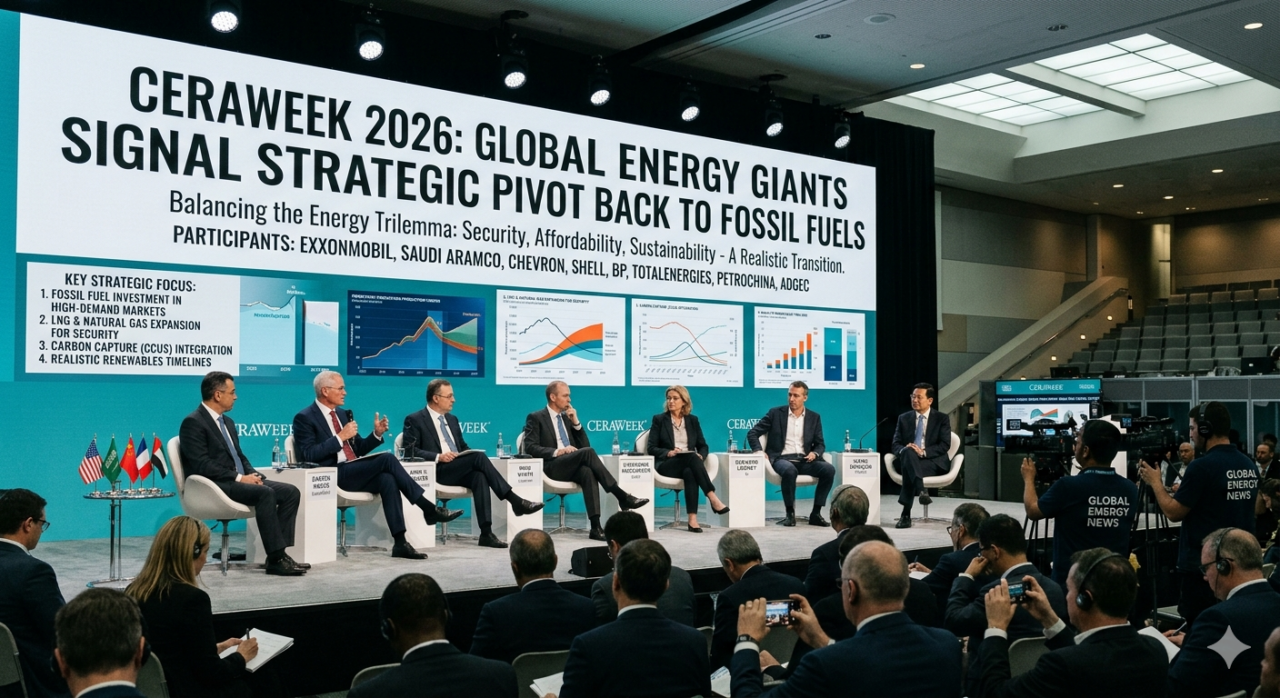
Global energy leaders at CERAWeek 2026 have signaled a major shift back toward traditional oil and gas exploration, marking the end of years of underinvestment in upstream production. The renewed focus comes amid concerns about future supply shortages, particularly as output from key regions such as the Permian Basin is expected to plateau in the coming years.
Executives at the conference emphasized that the industry can no longer rely heavily on mergers and acquisitions to sustain reserves, as the most valuable consolidation opportunities have already been exhausted. Instead, companies are increasingly prioritizing organic growth through direct exploration and development of new oil and gas fields.
Leaders such as Claudio Descalzi of Eni highlighted plans for significant organic expansion, with the company targeting more than 850,000 barrels per day in new production over the next five years. At the same time, firms are leveraging advanced technologies to shorten the time between discovery and production, with companies like Equinor aiming to cut development timelines from five to six years down to just two to three years.
Major industry players are also accelerating exploration efforts worldwide. BP reported multiple discoveries across key regions, while ExxonMobil is targeting production of 5.5 million barrels per day by 2030 with sustained exploration spending. Chevron is expanding into new frontiers after reserves declined to a decade low, and Shell is pursuing new projects to offset expected output shortfalls in the coming decade.
Key exploration prospects for the 2025–2026 period include high-impact projects such as Jazza in Kuwait, Elektra in Cyprus, Korikori in Suriname, and deepwater developments in Libya. These projects reflect a broader global “land grab” for new reserves as companies seek to secure long-term supply in an increasingly competitive and uncertain energy landscape.
Industry forecasts indicate that upstream investment will need to rise significantly, with annual spending projected to increase by more than $135 billion to reach approximately $738 billion by 2030 to meet global demand. At the same time, there has been a noticeable pullback in spending on low-carbon technologies, with investment in that segment declining in 2025 for the first time in nearly a decade.
The renewed emphasis on fossil fuel exploration also reflects broader geopolitical and market pressures, including rising global energy demand, supply disruptions, and shifting policy priorities. While the energy transition remains a long-term objective, industry leaders at CERAWeek made it clear that oil and gas will continue to play a central role in ensuring global energy security for years to come.
Source: Omanghana