Omanghana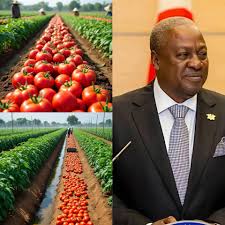
President John Dramani Mahama has announced plans to construct a 60-hectare irrigation facility aimed at supporting year-round tomato production and reducing Ghana’s dependence on imports.
The initiative comes in response to recent market disruptions caused by an export ban on fresh tomatoes by Burkina Faso on March 19, 2026. The restriction led to significant shortages and price increases across Ghana before it was lifted on April 2, 2026, following bilateral discussions. The episode underscored the country’s vulnerability to external supply shocks and the need to strengthen domestic production.
The proposed irrigation facility will provide a reliable water supply, enabling farmers to grow tomatoes throughout the year, regardless of rainfall patterns. In addition to irrigation, the project will include storage and processing infrastructure to help manage surplus production and reduce post-harvest losses that often occur during peak seasons.
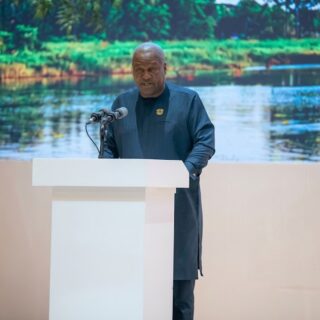
Speaking at the Kwahu Business Forum, President Mahama emphasized that the government is mobilizing both domestic and international resources to deliver tangible results within a short timeframe.
Broader Agricultural Reforms
The irrigation project forms part of a wider set of agricultural interventions being rolled out in 2026 to support farmers and improve food security.
In March, the President inaugurated the first District Farmer Services Centre at Takoratwene in the Kwahu Afram Plains South area. This facility is the first of 50 planned centers designed to provide farmers with access to mechanization services, technical training, and improved market connections.
The government has also introduced a new policy to supply farm inputs at no cost for the 2026 farming season, replacing the previous subsidy system. The move is intended to shield farmers from rising global input prices and encourage increased production.
To further stabilize the market, 3 million Ghana cedis has been allocated to the National Buffer Stock Company. The funding will enable the agency to purchase locally produced crops, ensuring farmers have a guaranteed market while helping to maintain stable food prices.
Together, these measures reflect a broader strategy to build resilience within Ghana’s agricultural sector, enhance productivity, and reduce reliance on imports.
Source: Omanghana