Omanghana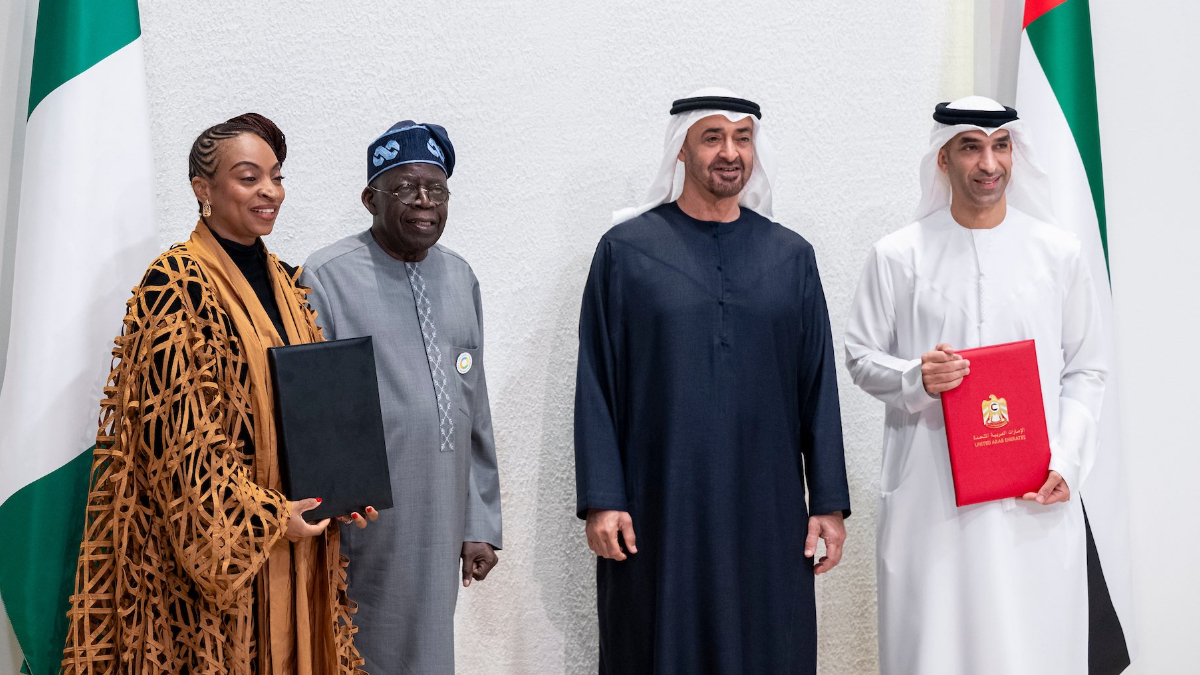
The United Arab Emirates is intensifying efforts to secure and streamline an estimated $70 billion in trade flows with Nigeria, marking a major step in deepening economic ties between the Gulf and Africa’s largest economy. This strategic push, announced in April 2026, is designed to protect critical supply chains from global disruptions and build on the momentum of the landmark Comprehensive Economic Partnership Agreement signed earlier this year.
The initiative centers on a new logistics and customs framework aimed at safeguarding Nigeria’s trade footprint, which recorded a surplus of approximately $70 billion (₦113 trillion) in 2025. By strengthening infrastructure, improving efficiency, and diversifying trade routes, the UAE is positioning itself as a key partner in stabilizing and expanding Nigeria’s international commerce.
A major component of the strategy involves the development of alternative trade corridors to bypass geopolitical chokepoints and domestic bottlenecks that have historically slowed Nigeria’s ports. Facilities such as Apapa and Tin Can Island, long plagued by congestion and inefficiencies, are being supplemented with more resilient logistics pathways designed to ensure smoother and more predictable trade flows. These alternative routes are expected to reduce delays, lower shipping costs, and improve overall supply chain reliability.
In parallel, the UAE is supporting reforms to modernize customs systems, with a focus on accelerating cargo clearance and reducing administrative bottlenecks. By streamlining procedures and leveraging digital technologies, the reforms aim to increase throughput at ports and minimize the inflationary pressures that often arise from prolonged shipping delays. Faster processing times are expected to benefit both exporters and importers, enhancing Nigeria’s competitiveness in global markets.
Maritime coordination is also playing a central role in the strategy. Thani bin Ahmed Al Zeyoudi has led high-level engagements with major global shipping companies to ensure the continuity of trade flows between the two nations. These discussions are focused on maintaining stable shipping routes, optimizing vessel deployment, and mitigating risks associated with geopolitical instability in key maritime corridors.
The broader framework for this cooperation is anchored in the Nigeria-UAE CEPA, signed on January 13, 2026, which represents a transformative shift in bilateral economic relations. Under the agreement, the UAE is eliminating tariffs on more than 7,000 Nigerian products, granting immediate duty-free access for a wide range of goods, including agricultural exports such as seafood and oil seeds, as well as industrial products like chemicals. This unprecedented level of market access is expected to boost Nigerian exports and diversify revenue streams beyond traditional commodities.
The agreement is also driving a surge in investment from the UAE into Nigeria’s economy. Major financial institutions, including First Abu Dhabi Bank, are backing large-scale infrastructure projects such as the Lagos–Calabar Coastal Road, a key development aimed at improving connectivity along Nigeria’s southern corridor. In addition, institutional capital flows from the UAE are projected to exceed $10 billion, targeting high-growth sectors such as artificial intelligence, data centers, and renewable energy infrastructure. These investments are expected to play a critical role in modernizing Nigeria’s economy and supporting long-term industrialization.
Another important dimension of the partnership is the facilitation of business mobility. New visa provisions under the agreement allow Nigerian business visitors to enter the UAE for up to 90 days annually to explore commercial opportunities, while skilled professionals and specialists can relocate for renewable three-year periods. This enhanced mobility is designed to foster closer business ties, encourage knowledge transfer, and support cross-border collaboration.
The deepening relationship positions Nigeria as a strategic gateway for Gulf capital into the African Continental Free Trade Area, potentially unlocking broader regional opportunities. By leveraging Nigeria’s market size and geographic position, the UAE aims to expand its economic footprint across Africa while supporting intra-African trade integration.
However, the evolving partnership has also sparked debate within Nigeria’s industrial sector. Some local manufacturers have expressed concerns about a potential “consumption gateway” effect, where the influx of duty-free imports could outcompete domestic production. While the agreement is expected to stimulate growth and investment, balancing these benefits with the protection and development of local industries will be a key challenge for policymakers.
Overall, the UAE’s push to secure Nigeria’s trade flows reflects a broader realignment in global economic partnerships, with both countries seeking to capitalize on new opportunities in an increasingly interconnected and competitive global marketplace.
Source: Omanghana