Omanghana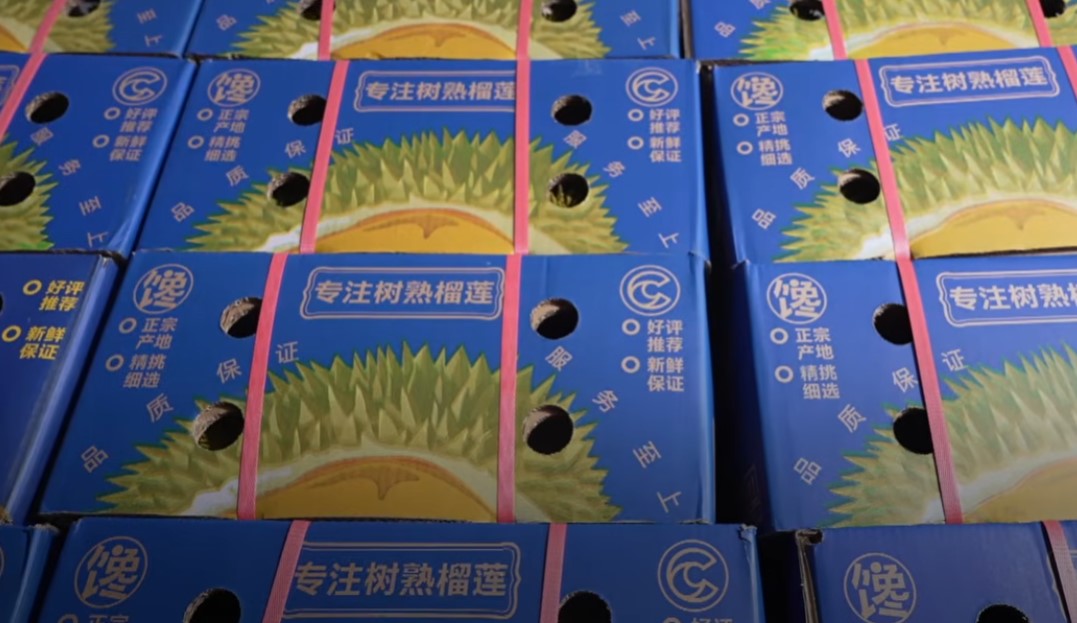
Bilateral trade between China and Vietnam is entering a new era of expansion, driven by cutting-edge “smart border” technologies and deepening diplomatic coordination. In 2025, total trade turnover climbed to an estimated range of $256.4 billion to $290 billion, reinforcing Vietnam’s status as China’s largest trading partner within ASEAN and underscoring the growing economic interdependence between the two countries.
At the core of this surge is a transformation in border infrastructure. High-tech systems deployed at major crossings such as Hekou–Lao Cai and Huu Nghi–Youyi Guan are revolutionizing the movement of goods and people. These smart border solutions combine automation, artificial intelligence, and real-time monitoring to streamline customs processes and reduce delays. Technologies like under-vehicle inspection robots and intelligent life-detection systems have dramatically cut inspection times, reducing processing from around ten minutes per truck to just two or three minutes. This efficiency gain is significantly boosting throughput at some of the busiest trade gateways in the region.
Momentum is also building toward fully automated, round-the-clock operations. Projects such as the Youyi Guan Smart Border Gate are entering trial phases aimed at enabling 24/7 customs clearance. By integrating automated guided vehicles and AI-powered logistics platforms, authorities are working to establish continuous trade corridors capable of handling rising volumes without congestion. On the Vietnamese side, similar modernization efforts are underway at the Mong Cai–Dongxing crossing, where pilot programs are introducing biometric e-gates and dedicated lanes for unmanned vehicles, with phased implementation beginning in 2026.
These technological upgrades are already translating into strong trade performance. In the first two months of 2026, bilateral trade reached $66.7 billion, representing a 30.2 percent year-on-year increase. This growth reflects not only improved infrastructure but also sustained demand across key sectors in both economies. Vietnam’s exports to China are led by agricultural products, with durian emerging as a standout commodity. At peak periods, daily shipments have exceeded 70 containers at the Hekou crossing, illustrating the scale and efficiency of agricultural trade flows. Electronics and textiles continue to play a significant role in Vietnam’s export mix, further strengthening its position in regional supply chains.
Conversely, China’s exports to Vietnam are dominated by high-value industrial inputs essential to Vietnam’s manufacturing sector. Integrated circuits alone accounted for $2.72 billion in February 2026, alongside substantial volumes of machinery and raw materials. This complementary trade relationship—where Vietnam exports consumer and agricultural goods while importing industrial components—has created a mutually reinforcing economic cycle that benefits both economies.
Diplomatic engagement has been instrumental in sustaining this momentum. High-level discussions in April 2026 between Xi Jinping and To Lam reaffirmed a shared commitment to deepening economic integration. A key outcome of these talks was the signing of a new customs cooperation agreement on April 15, replacing a framework that had been in place since 1993. The updated agreement introduces modern tools such as electronic data exchange and “single-window” systems, significantly reducing administrative burdens and improving efficiency for businesses operating across the border.
Financial integration is also advancing alongside these trade facilitation measures. Both countries are implementing cross-border QR payment systems to enable seamless, real-time transactions for businesses, traders, and tourists. This innovation is expected to simplify payments, enhance transparency, and further reduce friction in cross-border commerce, making trade more accessible and efficient for a wider range of participants.
Looking ahead, both governments have set an ambitious target of increasing annual bilateral trade to $500 billion in the coming years. Achieving this goal will require sustained investment in infrastructure, continued technological innovation, and close policy coordination. However, the current trajectory suggests that China and Vietnam are rapidly building one of the most advanced and dynamic trade corridors in the world, setting a new benchmark for cross-border economic integration in the digital age.
Source: Omanghana